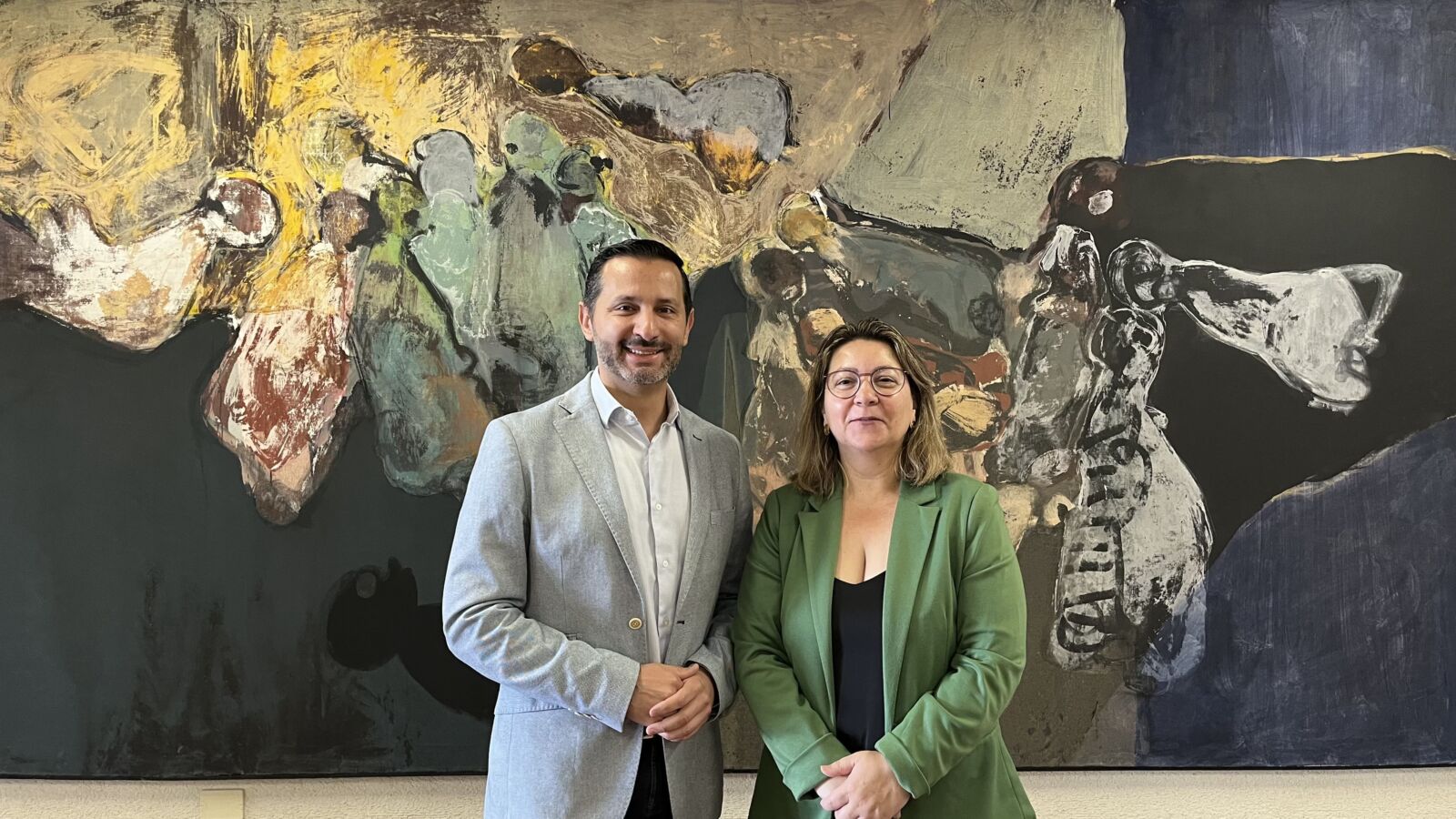
The Professor of Analytical Chemistry at the University of La Laguna, Javier Hernández Borges, has recently assumed the leadership of the Institutional Chair of Environment and Sustainable Development Cabildo de Tenerife–University of La Laguna, a structure created in 2017 with the aim of promoting research, training, knowledge transfer and social awareness in matters of sustainability.
The chair represents a strategic collaboration between the University of La Laguna and the Tenerife Island Council to address some of the island's main environmental challenges and promote the integration of sustainability across various aspects of university and social activity. Its key areas of focus include fostering applied research, innovative teaching, specialized training, knowledge transfer to public administrations and businesses, and raising awareness about issues related to climate change, waste management, water, energy, biodiversity, and the circular economy.
Recently, both institutions renewed their commitment by signing an agreement new collaboration agreement that includes funding of 400,000 euros for the next four years. For the 2026 fiscal year, a total of 11 projects linked to strategic areas of sustainability have been programmed, thus consolidating the role of the chair as a tool to generate knowledge and contribute to decision-making based on scientific evidence.
Javier Hernández Borges has extensive academic, research, and university administration experience. He has held various institutional positions at the University of La Laguna, including Director of the International Outreach Secretariat of the Vice-Rectorate for Internationalization (2015-2017), Director of the Departmental Unit of Analytical Chemistry in 2015, and Secretary of the University Institute of Tropical Diseases and Public Health of the Canary Islands, a position he held from 2019 until recently. In addition, since 2019 he has been President of the Canary Islands Territorial Section of the Royal Spanish Society of Chemistry.
Her research focuses primarily on the development of advanced analytical methodologies for determining contaminants in environmental, food, and biological samples. In recent years, a particularly significant part of her scientific work has centered on monitoring microplastics in different environmental compartments, including air, water, soil, sediments, and biota. She also works on developing and optimizing methodologies for their identification, characterization, and quantification, as well as studying contaminants associated with plastics and assessing their potential environmental and health impacts.
The change in leadership of the chair has taken place after several working meetings between Javier Hernández Borges and Norena Martín Dorta, tenured professor in the area of Graphic Expression in Engineering and director of the chair for the past several years. Both emphasized the constructive nature of this transition process, aimed at ensuring the continuity of ongoing activities and projects. In the words of Hernández Borges, Norena Martín Dorta She has done an extraordinary job leading the chair since joining in 2023, promoting numerous initiatives and consolidating this space as a benchmark for sustainability within the University of La Laguna. I am extremely grateful for all the work she has done and the dedication she has shown during these years, as well as throughout this transition process.”.
Among the first lines of action proposed by the new director are the creation of a Steering Committee and an Advisory Committee for the chair, in accordance with current regulations, as well as the development of a census of affiliated faculty and researchers to strengthen the participation and coordination of the university community. Efforts will also be made to enhance the visibility and dissemination of the activities carried out, fostering interdisciplinary collaboration and bringing the knowledge generated by the university closer to society. “We want to continue consolidating the chair as an open forum for dialogue between the university, government agencies, businesses, and the public, capable of promoting cutting-edge research, specialized training, and knowledge transfer to contribute to a more sustainable, resilient, and innovative Tenerife,” says Hernández Borges.

 Spanish
 English
 French