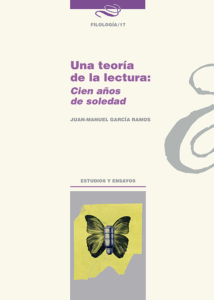
A theory of reading: One Hundred Years of Solitude
In 1967, One Hundred Years of Solitude, by Gabriel García Márquez, winner of the 1982 Nobel Prize in Literature, was published for the first time. "The best novel in Spanish after Don Quixote" (Pablo Neruda), this "book as profound as the cosmos" (Juan Gustavo Cobo Borda), is undoubtedly a text "where the plausible and the implausible, the logical and the absurd, the rational and the irrational are explored," a text that generates interpretations (Juan Manuel García Ramos).
Juan Manuel García Ramos, Professor of Spanish Philology at the University of La Laguna (ULL), winner of the 6 de Septiembre Prize for Americanist Research in 1995, the José Vasconcelos International Prize in 1997, and the Canary Islands Literature Prize in 2006, presents us with a thought-provoking text that captures personal and collective reflections resulting from more than ten years of discussions between the professor and students in his courses "Contemporary Hispanic American Texts" and "Contemporary Hispanic American Narrative: Great Voices" at the former Faculty of Philology, now the Philology Section of the Faculty of Humanities at the University of La Laguna.
The author proposes several levels for reading One Hundred Years of Solitude: the extratextual (analysis of cultural contexts), the pretextual (the set of images that inspire the writing of a literary work), the intratextual (analysis of the text's internal elements), and the intertextual (its relationship to other texts by the same or other authors). The methodology used in writing this book was "read, think, debate, compare, and write." The result is a gift for the reader on the eve of the 50th anniversary of One Hundred Years of Solitude.
Collection:
Series: