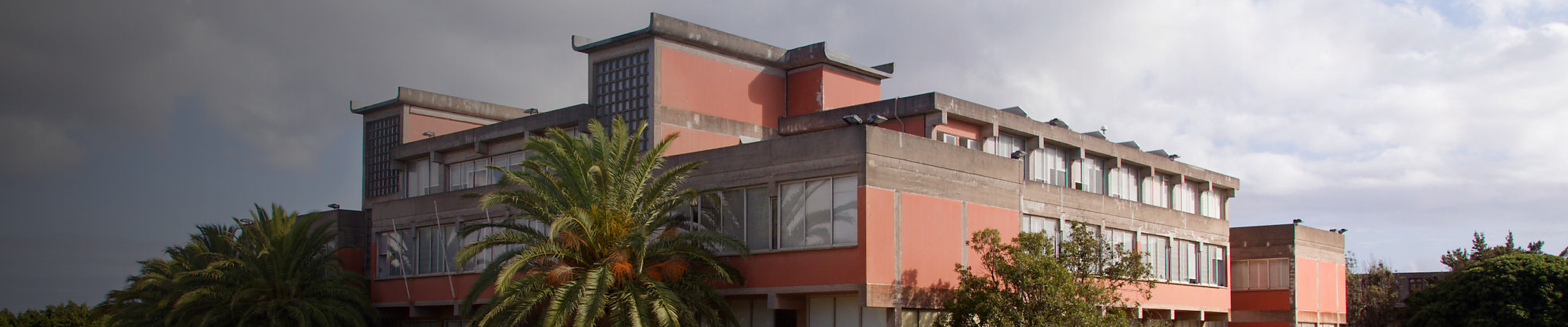
Higher Polytechnic School of Engineering
Central Campus and Santa Cruz
Quality Assurance System
Agricultural Engineering Section
The Internal Quality Assurance System (SGIC) In university institutions, it is one of the fundamental elements upon which the construction of the European Higher Education Area is based. The Quality Assurance System for the Bachelor's Degree in Agricultural and Rural Engineering has taken as its reference the criteria and guidelines proposed by the National Agency for Quality Assessment and Accreditation (ANECA) for the establishment of the Quality Assurance System.
In accordance with Royal Decree 1393/2007 and the process designed by ANECA for the VERIFICA Program, the following criteria will be addressed in this SGIC: structure for the development of the SGIC and quality objectives, planning, development and results of teaching, academic staff, results of the training program and dissemination of results.
The basic document of the SGIC to be implemented in the Higher Technical School of Agricultural Engineering is the Quality Manual (QM); It defines the general characteristics of the system, the requirements it addresses, its scope, and references to the generic documentation it is based on or the procedures that develop it, which received the favorable report from ANECA.
The SGIC documentation is completed with a Procedures Manual (PM) composed of a series of documents that are continually referenced in the MC and the list of indicators that will allow the measurement of the results of the Center's activity.
The Internal Quality Assurance System (IQAS) in university institutions is one of the cornerstones of the European Higher Education Area. The IQAS for the Bachelor's Degree in Agricultural and Rural Engineering has adopted the criteria and guidelines proposed by the National Agency for Quality Assessment and Accreditation (ANECA). In accordance with Royal Decree 1393/2007 and the process designed by ANECA for the VERIFICA Program, this IQAS will address: the structure for the development of the IQAS and quality objectives, planning, development and outcomes of teaching, academic staff, program outcomes, and their dissemination.
Those responsible for the Internal Quality Assurance System
This section outlines the structure established for the development of the SGIC of the degree, which is organized into two levels: the institutional level of the ULL and the Center level.
Organizational Structure for the development of the Internal Quality Assurance System
Quality Council. The ULL will establish a Quality Council that will be responsible for proposing, promoting, coordinating, evaluating and updating the evaluation and training processes necessary to guarantee the optimal development of teaching, research and administration and services activities leading to the achievement of its goals.
Vice-Rectorate for Faculty and Teaching Quality (VPCD). It supports the implementation and development of Quality Assurance Systems (QAS), as these strengthen quality assurance and continuous improvement of degree programs, facilitating the accreditation process. The Rector's Team provides support through the Quality Assessment and Improvement Unit (QAI), which is responsible for supplying generic documentation and collaborating on the review, implementation planning, and monitoring of QAS. It also provides the necessary information (reports, surveys, etc.) for the ongoing analysis of results.
Management Team. This body, and in particular its Dean/Director, assumes responsibility for establishing the Center's quality policy and objectives proposal, will appoint a Quality Coordinator to represent it in matters relating to the monitoring of the SGIC, and will propose to the Center Board the review of the composition and functions of the Center Quality Commission (CCC).
Quality Coordinator (DC). To assist the Dean/Director in tasks related to the design, implementation, maintenance, and improvement of the Quality Management System, a Quality Coordinator will be appointed. Their responsibilities include:
Center Quality Commission (CCC). It is a body that participates in the planning and monitoring of the Internal Quality Assurance System (SGIC) and acts as one of the internal communication channels for its policies, objectives, plans, programs, responsibilities, and achievements. It is composed of the Dean/Director, who acts as Chair; the Quality Coordinator; one representative from each degree program (undergraduate and postgraduate); five representatives from the departments with teaching responsibilities in the degree program (three from the Department of Agricultural Engineering, Production, and Economics and the rest from the other departments); two representatives from the Administrative and Service Staff (one administrator and one other); and one student representative (preferably a graduate or postgraduate student). The Center Secretary will act as Secretary of the Quality Assurance Committee. The functions of the Quality Assurance Committee are:
Coordination of Quality and Innovation in Teaching
Composition of the Quality Committee of the Section
Teachers
Student body
PTGAS
He Quality Manual It constitutes the basic document that serves as a reference and from which all the necessary actions to guarantee the teachings given by the Higher Technical School of Computer Engineering originate.
| TRENDS | ||||||
|---|---|---|---|---|---|---|
| Bachelor's Degree in Agricultural and Rural Engineering | ||||||
| Memory Data Verification |
Course 10-11 |
Course 11-10 |
Course 12-13 |
Course 13-14 |
Course 14-15 |
|
| Graduation rate | 15 | 11,1 | – | – | – | – |
| Dropout rate | 25 | 35,2 | 29,3 | 33,3 | 23,3 | – |
| Efficiency rate | 70 | – | – | – | 100 | 91,2 |
| Rate of return | – | 39,5 | 45,2 | 49,2 | 55,2 | 51,4 |
| Title success rate | – | 65,8 | 65,4 | 66,8 | 76,1 | 74,1 |
| LEVEL OF SATISFACTION OF STAKEHOLDER GROUPS | ||||||
|---|---|---|---|---|---|---|
| Bachelor's Degree in Agricultural and Rural Engineering | ||||||
| Course 12-13 |
Course 13-14 |
Course 14-15 |
||||
| Overall student satisfaction with the degree | 2,99 | 2,96 | 3,06 | |||
| Level of student satisfaction with the teaching staff | 3,11 | 2,78 | 2,70 | |||
| Level of student satisfaction with the resources | 2,51 | 2,72 | 2,54 | |||
| Level of teacher satisfaction with the degree | – | 3,08 | 3,33 | |||
| Graduate satisfaction level with the degree | – | – | 2,90 | |||
| Employer satisfaction level with the degree | – | – | 3,57 | |||
| LEVEL OF SATISFACTION OF STAKEHOLDER GROUPS | ||||||
|---|---|---|---|---|---|---|
| Bachelor's Degree in Agricultural and Rural Engineering | ||||||
| Course 12-13 |
Course 13-14 |
Course 14-15 |
||||
| Overall student satisfaction with the degree | 2,99 | 2,96 | 3,06 | |||
| Level of student satisfaction with the teaching staff | 3,11 | 2,78 | 2,70 | |||
| Level of student satisfaction with the resources | 2,51 | 2,72 | 2,54 | |||
| Level of teacher satisfaction with the degree | – | 3,08 | 3,33 | |||
| Graduate satisfaction level with the degree | – | – | 2,90 | |||
| Employer satisfaction level with the degree | – | – | 3,57 | |||