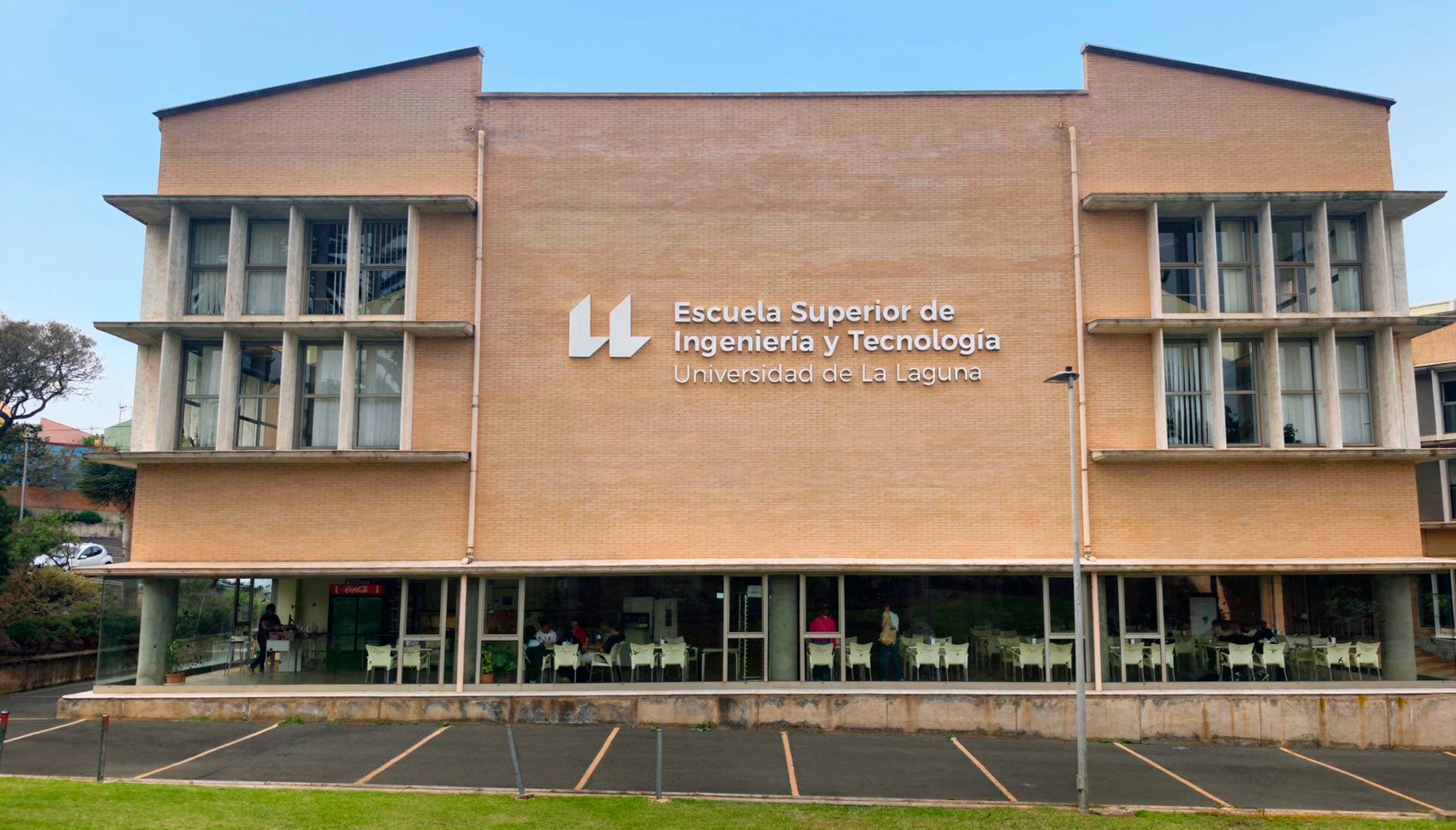
Higher School of
Engineering and Technology
Anchieta Campus
Mobility programs
Students who complete a period of study outside the University of La Laguna enrich them both personally and professionally. In their training, they broaden their understanding of engineering studies and benefit from new curricular approaches that contribute to achieving their objectives and progressing toward the development of the competencies outlined in their degree programs. Furthermore, student participation in mobility programs, along with the contribution to their individual development, enhances their resumes and improves their chances of entering the workforce.
Among the objectives of the mobility program, it is important that students benefit from the social and cultural experience of living in other countries, improve their curriculum focused on employment, and strengthen their communication, cooperation, adaptation and understanding skills in other cultures.
There are two programs that allow, respectively, national mobility, in the case of SICUE exchanges, or international mobility, in the case of the ERASMUS Program.
Through this system, students from Spanish universities can complete part of their studies at a university other than their own, with guarantees of academic recognition and achievement, as well as suitability to their curriculum profile.
Information
All the information (procedures, mobility coordinators at the centers, SICUE offer, application forms, academic agreements, etc.) can be found in this link.
Students who ultimately wish to apply for the SICUE exchange will need to contact their studies' mobility coordinator to check the compatibility of their studies with the destination university and explore the possible academic agreement.
ERASMUS
Within the framework of Lifelong Learning Program (LLP), ERASMUS It focuses its efforts on higher education, universities, and advanced vocational training. The Programme aims to stimulate exchange, cooperation, and mobility among education and training systems within the Community, so that they become a global benchmark for quality.
The most successful actions are those related to mobility, not only of students but also of professors and administrative and service staff of universities.
Erasmus grants are small-amount aid., These grants are intended to cover additional expenses (travel, language preparation, cost of living difference) associated with studying/teaching/training abroad. Being awarded an Erasmus place, that is, the opportunity to study/teach/train at another university, does not necessarily imply the granting of financial aid.
All the information for graduating students (application, catalogs of places, mobility coordinators of the centers, instructions, forms, etc.) can be found in this link.
If you are particularly interested in the ULL's ERASMUS and ERASMUS+ mobility agreements, you can find them here. link.
Erasmus+ 2025-2026
National mobility
Mobility Coordinator for Industrial Studies (Degree in Industrial Electronics and Automation Engineering, Degree in Mechanical Engineering and Degree in Industrial Chemical Engineering)
María Hernández Molina
Mobility Coordinator for Computer Science Studies
Jonay Tomás Toledo Carrillo
International mobility
Mobility Coordinator for Industrial Studies (Degree in Industrial Electronics and Automation Engineering)
Oswaldo Bernabé González Hernández
Mobility Coordinator for Industrial Studies (Degree in Mechanical Engineering)
María Hernández Molina
Mobility Coordinator for Industrial Studies (Degree in Industrial Chemical Engineering)
Luis Enrique Rodríguez Gómez
Mobility Coordinator for Computer Science Studies
Jonay Tomás Toledo Carrillo