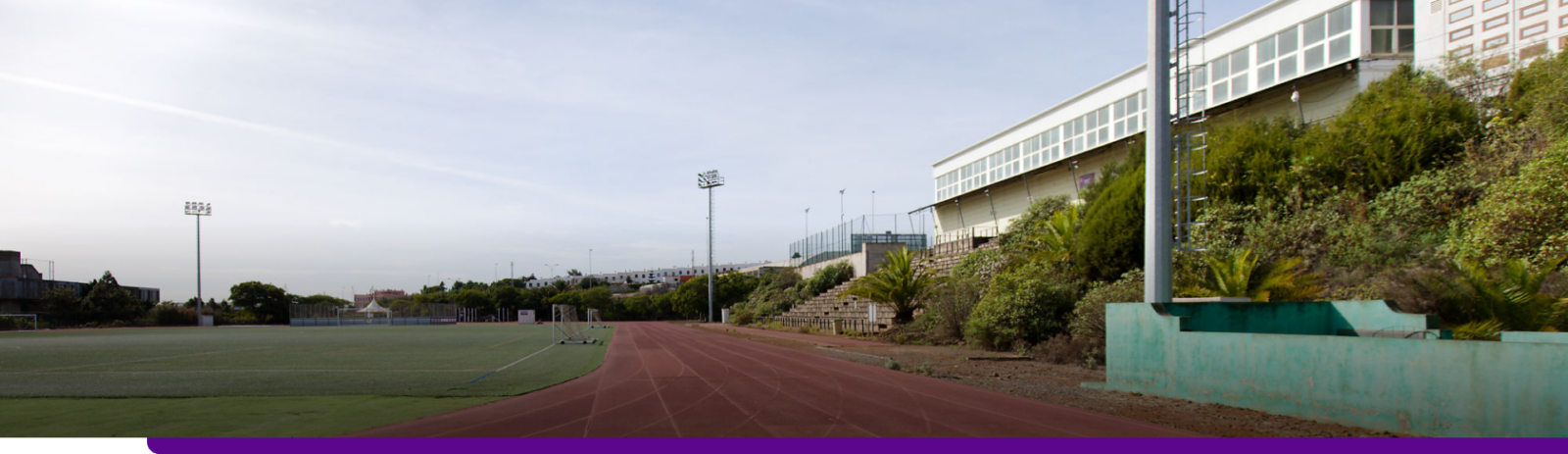
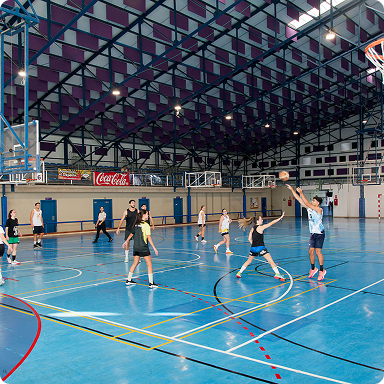
It is widely recognized that participation in recreational and competitive sports activities promotes cognitive and motor learning, constitutes a preventive action for health, and also entails a notable affective-social benefit for university students.
In this regard, the University of La Laguna, in the Regulations for the Recognition of Credits for participation in university activities in official undergraduate studies, establishes the general criteria and corresponding procedural aspects to enable academic recognition in credits for participation in various university activities, including sports activities, including sports training activities organized by the Sports Service of the University of La Laguna.
Article 13. Recognition of credits for the performance of university activities.
1) Undergraduate students may obtain up to a maximum of 6, 7.5 and 9 credits in degrees of 240, 300 and 360 credits, respectively, for their participation in university activities of cooperation, solidarity, cultural, sports and student representation, as well as for other academic activities that the university organizes with a teaching character under the terms indicated in articles 14 to article 20 of this regulation.
ACTIVITY
CREDITS
REQUIREMENT
CERTIFICATION
Sports training (includes directed activities and internal competitions)
1 ECTS credit for every 25 hours
In-person attendance
Certification by the Sports Service of the University of La Laguna
Sports training (includes directed activities and internal competitions)
1 ECTS credit for every 25 hours
In-person attendance
Certification by the Sports Service of the University of La Laguna
Belonging to the high-performance athletes program
2 ECTS
Certificate from the Autonomous Community
Belonging to the high-level athletes program
3 ECTS
Certificate from the Higher Sports Council
A maximum of 3 credits per academic year may be recognized for this type of activity.
Credits may be awarded for participation in sports training activities in compliance with article 13.8 if, according to a report from the person in charge of the activity, attendance of at least 90% of the total hours established by the activity is certified.
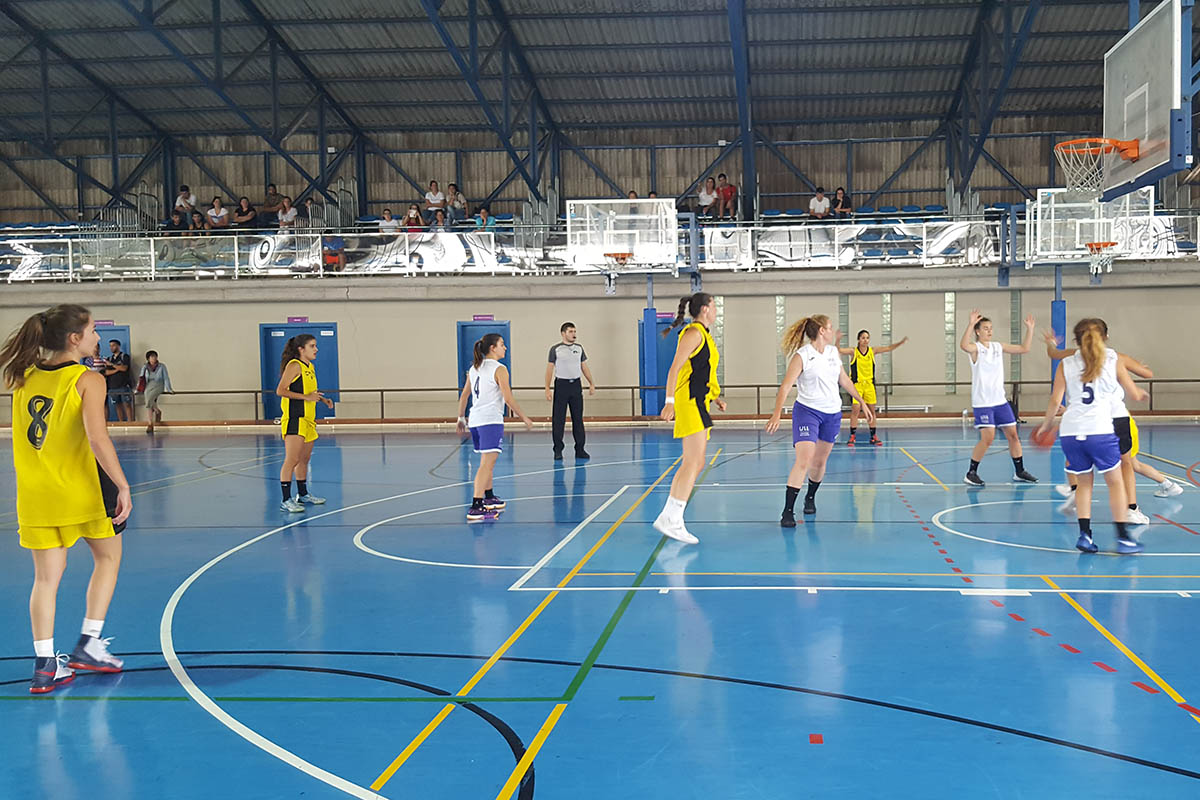
In this sense, the Sports Service of the University of La Laguna organizes physical-sports activities, tournaments and internal/own sports competitions in any modality (individual, in pairs or in teams) for university students, where skills are applied and transmitted in the acquisition of values such as health, equality, inclusion and education for all people through compliance with the general regulations.
In internal competitions in any modality (individual, pairs, or team), athletes who have successfully completed the sports training competencies in acquiring values such as health, equality, inclusion, and education are awarded a total of 12.5 hours per competition. This estimated number of hours, established by the Sports Service, includes in-person attendance at scheduled matches, the dates of which cannot be changed. These hours may vary depending on whether or not the athlete progresses through the competition rounds, as students commit to participating according to the published schedule. Furthermore, the workload includes the individual's independent learning of game strategies, both individually and as a team, as well as the set of values of university sport that pertain to fair play and respect among athletes, referees, and spectators. Failure to attend a match, whether by a team or an individual in individual sports, or failure to acquire the set of values of university sport, will result in not successfully completing these competencies.
For courses prior to the one in which the old Regulations for the Recognition, Adaptation, and Transfer of Credits remained in effect, the catalogs approved for each academic year will continue to apply. The credit summary for these courses is available in the following Comparative table of credit allocation according to academic year.
Catalogue history

Academic Year 2022-2023 to 2023-2024
Academic Year 2020-2021
Academic Year 2021-2022
Academic Year 2017-2018 to 2019-2020


