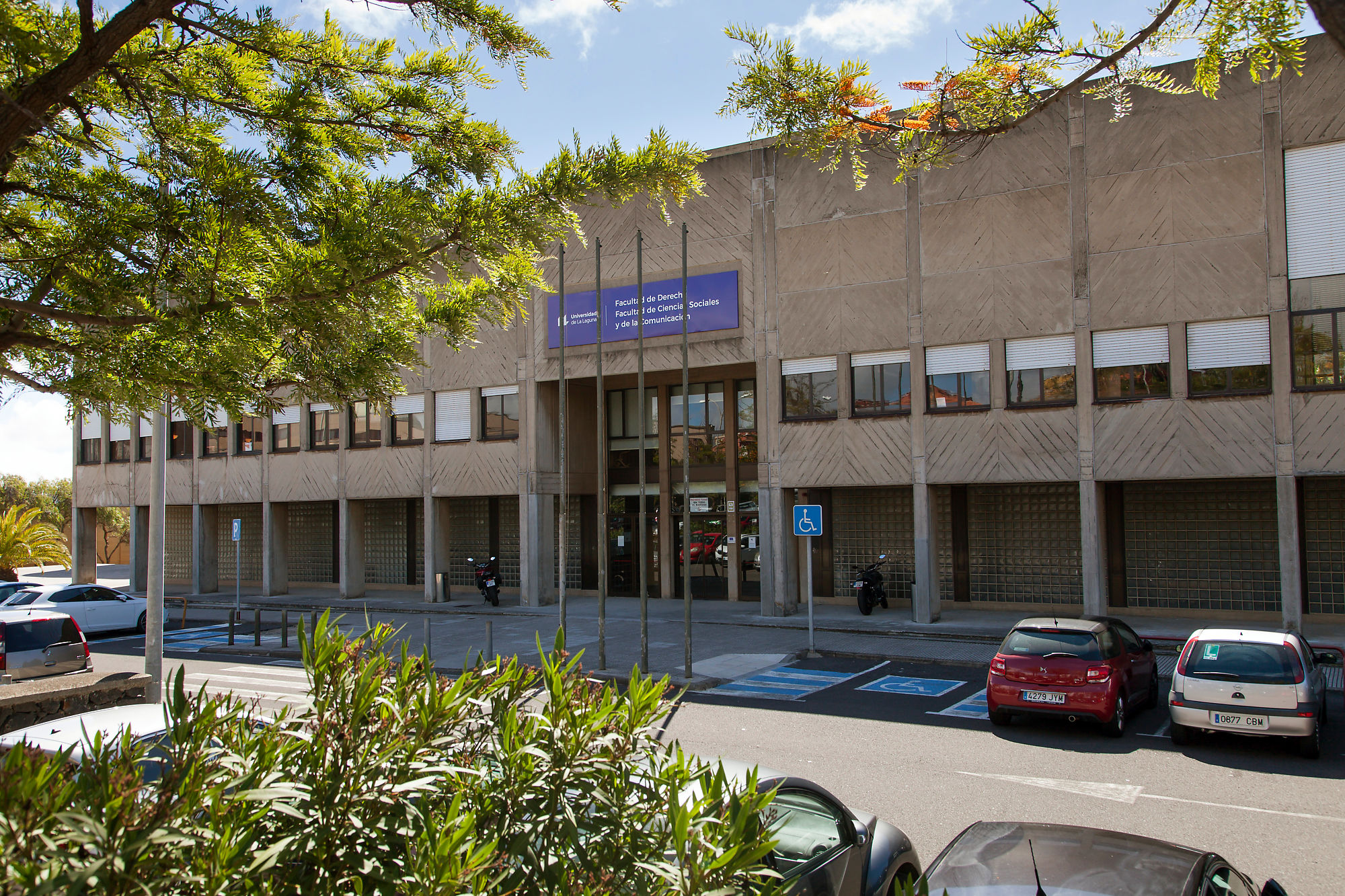
Law school
Guajara Campus
Quality Assurance System
One of the primary objectives of the Faculty of Law at the University of La Laguna (ULL) is the quality of its teaching, to which it is committed in order to meet and maintain the educational needs and expectations of our students. The Faculty's Internal Quality Assurance System (SGIC) is geared towards this goal.
According to the procedure designed by the National Agency for Quality Assessment and Accreditation (ANECA), the accreditation of an official Bachelor's or Master's degree program is based on quality criteria; one of these is the Internal Quality Assurance System (SGIC), which forms the cornerstone upon which the other criteria are based. The SGIC allows for the analysis of deviations from the planned curriculum and areas for improvement, as well as the definition and implementation of proposals for its continuous improvement. Therefore, the SGIC entails:
The Dean must ensure that teaching and research staff, administration and services, students and other interest groups have access to the SGIC documents that apply to them, particularly the MC.
The structure established for the development of the SGIC of the degrees is organized in two levels: the institutional level of the ULL and the Center level:
Quality Council. The ULL has a Quality Council that is responsible for proposing, promoting, coordinating, evaluating and updating the evaluation and training processes necessary to guarantee the optimal development of teaching, research and administration and services activities leading to the achievement of its goals.
Vice-Rectorate for Faculty and Teaching Quality (VPCD). It supports the implementation and development of Quality Assurance Systems (QAS), as these strengthen quality assurance and continuous improvement of degree programs, facilitating the accreditation process. The Rector's Team provides support through the Quality Assessment and Improvement Unit (QAI), which is responsible for supplying generic documentation and collaborating on the review, implementation planning, and monitoring of QAS. It also provides the necessary information (reports, surveys, etc.) for the ongoing analysis of results.
Management Team. This body, and in particular its Dean/Director, assumes responsibility for establishing the Center's quality policy and objectives proposal, will appoint a Quality Coordinator to represent it in matters relating to the monitoring of the SGIC, and will propose to the Center Board the review of the composition and functions of the Center Quality Commission (CCC).
Quality Coordinator (CC). To assist the Dean/Director in tasks related to the design, implementation, maintenance, and improvement of the Quality Management System, a Quality Coordinator will be appointed. Their responsibilities include:
Center Quality Commission (CCC). It is a body that participates in the planning and monitoring of the Internal Quality Assurance System (SGIC) and acts as one of the internal communication channels for its policies, objectives, plans, programs, responsibilities, and achievements. It is composed of the Dean/Director, who acts as Chair, the Quality Coordinator, one representative from each degree program (undergraduate and postgraduate), one representative from each department with a teaching load exceeding 7%, two representatives from the Administrative and Service Staff (an administrator and another), and one student representative (preferably a graduate or postgraduate student). Up to two members external to the University may also be part of the Center's Quality Committee if their expertise in the subject matter of the Center's degree programs is deemed necessary for the optimal achievement of the Center's objectives as outlined in the SGIC. The Center's Secretary will serve as Secretary of the Quality Committee.
INSTRUCTIONS FOR THE OPERATION OF THE COURSE COMMITTEES OF THE FACULTY OF LAW
With the purpose of creating a space for dialogue between students and faculty in order to coordinate academic activity and as an integral part of its Internal Quality System, the Faculty of Law of the University of La Laguna has established Course Committees and the figure of the Coordinating Professor, figures necessary in the organizational chart of said system, which although they are not provided for in our Internal Regulations, it is necessary, pending their regulation through the future revision thereof, to provide a procedural framework of reference that enables the normal development of their functions.
Composition.-For each course and group of the degrees taught at the Faculty of Law, with a duration equal to that of each of the semesters in which the teaching is distributed in each academic year, a Coordination Committee will be formed.
Each coordination committee will be composed of:
Each committee will be coordinated by a professor from one of the subjects taught in the semester.
Sessions and call.-The committees will have at least two ordinary meetings per four-month period: an initial one for constitution, and a final one for monitoring and evaluation of the same.
However, as many extraordinary meetings of the Commission as necessary may be convened, at the discretion of the Coordinator or at the request of the teaching staff or students who are members of the Commission.
Functions.- The Course Commission will have as its main objective to analyze the programming and development of teaching activity in order to ensure that it is carried out under conditions of quality teaching and better learning, collecting the suggestions or proposals that its members make for such purposes and are approved by the Commission, submitting them, where appropriate, to the competent bodies of the Faculty, when it comes to matters on which the Commission lacks competence.
The Course Commission will ensure the proper compliance with the academic calendar and the agreements reached in the academic organization commission of the center, adopting all measures that are conducive to this function, urging, where appropriate, the exercise of the powers of other competent bodies through the channels and procedures provided.
The Commission will approve in its final session the Coordination Report which will include the development of the four-month period, the incidents detected as well as the measures adopted, in addition to the final result and the proposals for improvement that they deem pertinent.
From the Coordinating Professor.-The course coordinator, appointed by the Faculty Board, has the following functions:
Certification of the activity.- Once the final course coordination report has been submitted, the corresponding merit will be certified for the course coordinator.
Supplementary law.- In matters not covered by this Instruction, the provisions of the Internal Regulations of the Faculty of Law shall apply.
The Center's Quality Commission (CCC) It is a body that participates in the planning and monitoring of the Internal Quality Assurance System (SGIC) and acts as one of the internal communication channels for its policies, objectives, plans, programs, responsibilities, and achievements. It is composed of the Dean/Director, who acts as Chair, the Quality Coordinator, one representative from each degree program (undergraduate and postgraduate), one representative from each department with a teaching load exceeding 7%, two representatives from the Administrative and Service Staff (an administrator and another), and one student representative (preferably a graduate or postgraduate student). Up to two members external to the University may also be part of the Center's Quality Committee if their expertise in the subject matter of the Center's degree programs is deemed necessary for the optimal achievement of the Center's objectives as outlined in the SGIC. The Center's Secretary will act as Secretary of the Quality Committee. The functions of the Quality Committee are:
The CCC will meet at least quarterly, upon the Secretary's call. The Secretary will prepare minutes for each meeting, which will be sent to all CCC members, who will have one week to propose corrections. If no corrections are made, the minutes will be considered approved, and they will be published on the Center's website so that they are available to the entire university community.
The Faculty of Law of the University of La Laguna, within the framework of the Quality Policy and objectives set by it, establishes quality as the interest that will govern all its activity and the use of all its technical, economic and human resources to ensure that its graduates acquire the skills and have the recognition of society in general and, in particular, to satisfy the reasonable expectations of the interest groups in relation to its Bachelor's and Postgraduate degrees.
The Faculty Board, at the request of the Dean, establishes the following Guidelines for its Quality Policy:
First: Formulate a Quality Policy with the commitment to develop a university culture that gives importance to quality and its guarantee, informing and involving all the staff of the Faculty of Law (teaching staff, students and administrative and service staff) in the fact that the inspiring axis of the center's activities is quality, to whose achievement the Center's Quality Commission is committed.
Second: To promote the continuous improvement of the degrees taught at the Faculty, guaranteeing a level of quality that ensures their accreditation through the permanent review of the available indicators on them and the implementation of improvement actions.
Third: To keep the University Community and Society permanently informed of its actions in matters of Quality, consolidating a culture of quality in the Faculty.
Quarter: Establish the necessary procedures to promote efficiency in decision-making by the Faculty.
Fifth: Monitor and periodically review the Faculty's Internal Quality Assurance System.
Sixth: Design and implement monitoring and evaluation actions, as well as any preventive and corrective actions necessary to ensure that the training processes developed are appropriate for the purposes they pursue.
Therefore, determine the following GENERAL QUALITY OBJECTIVES:
B) In the field of research quality
C) In the area of Management Quality
D) In the field of Social Projection
9.1.2. Procedure for defining the quality policy and objectives of the Center
- Object:to establish the systematic approach to be applied in the development and review of the Center's Quality Policy and Objectives.
- Scope:It will apply to the initial definition of the Quality Policy and Objectives and to their periodic modifications, which will be carried out annually.
- Development:The Quality Committee (CC), on an annual basis or more frequently in situations of change, will prepare a draft of the Center's Quality Policy and Objectives based on the elements considered at the institutional level. This document must be reviewed by the Quality Coordination Committee (CCC) and may be sent to the European University Council (UEMC) for review. If the CCC considers the draft unsuitable, it will return it to the CC for revision, incorporating the suggestions made. The draft must be approved by the Center Board. Once approved, the Management Team will disseminate it through the established procedure (Public Information Policy, section 9.5.4).
- Review, monitoring and improvement:The quality policy and objectives will be assessed annually by the Quality Committee, resulting in a report with the review findings and proposed improvements. These proposals will be considered in the Center's and degree programs' annual planning. The Quality Committee will monitor the implementation of these proposals and evaluate the extent to which they have been incorporated into the new planning.
- Evidence and file:The documents generated in this procedure will be archived by the CC
| Record identification | File support | Responsible for custody | Storage time |
|---|---|---|---|
| Quality Policy and Objectives | Paper or computer | DC | 6 years |
| Document of amendments and suggestions regarding the inadequacy of the draft | Paper or computer | DC | 6 years |
| Minutes of approval of Quality Policy and Objectives at the Center Board | Paper or computer | DC | 6 years |
| Justification for the dissemination of the Quality Policy and Objectives | Paper or computer | DC | 6 years |
| Report with review results and improvement proposals | Paper or computer | DC | 6 years |
| Justification for disseminating results Policy and Objectives Quality | Paper or computer | DC | 6 years |
- Responsibilities:
– CCC: Review and validate Draft the quality policy and objectives. Follow up on the established improvement proposals.
– DC: Prepare and Propose a draft Quality Policy and identify objectives. Submit to the CCC.
– Management Team: Disseminate the document outlining the Center's quality policy and objectives.
– Center Board: Approve the draft of the quality policy and objectives.
– UEMC: Review the documents.
9.2 Procedures for evaluating and improving the quality of teaching and teaching staff
The Bachelor of Laws degree guarantees the evaluation and improvement of the quality of teaching and teaching staff through the procedures established for this purpose:
9.2.1 Procedure for quality assurance of the training program
- Object: establish the systematic approach to be applied in the periodic review and control of training programs in order to guarantee compliance with the objectives.
- Scope:It will be applicable in the review and control of the training program.
- Development:The Management Team defines the body, units, and/or stakeholder groups involved in quality assurance for training programs. In this case, it designates a Degree Committee (or, failing that, the CCC), which will be responsible for:
- Review the training offer of the Center and, where appropriate, propose the necessary improvements.
- Analyze and prepare a report on the coherence of the study plan, at least with the following aspects: entry and exit profiles; structure and planning of the study plan; and teaching guides and their development.
The remaining aspects to be reviewed and improved will be done annually when the CCC analyzes the results and indicators that allow the monitoring of the different procedures (PR):
- PR for the assessment of student progress and learning outcomes (section 8.2)
- PR for the evaluation of the teaching activity of the teaching staff (section 9.2.2)
- PR for quality assurance of external internships integrated into the study plan (section 9.3.1)
- PR for the management of student mobility (section 9.3.2)
- PR for the collection and analysis of information on labor market integration (section 9.4.1)
- PR for the analysis of the satisfaction of the different groups involved (section 9.5.2)
- PR for the management and review of incidents, complaints and suggestions (section 9.5.3)
The reports must be approved by the Faculty Board, where suggestions may be proposed and a decision will be made regarding the appropriateness of suspending instruction and/or developing a new curriculum. If the proposed measures involve modifying the curriculum, they must be jointly approved by the Faculty Board and the Governing Council, in accordance with current regulations, before being submitted to ANECA for evaluation. If ANECA considers that the modifications do not entail a change in the nature and objectives of the degree registered in the Register of Universities, Centers and Degrees (RUCT), or if three months have passed without an express decision, the proposed modification will be considered accepted. Otherwise, it will be considered a new curriculum, and the procedures corresponding to a new degree will be followed. The Management Team must inform the stakeholders of the results and decisions made. In accordance with the Public Information Guidelines (section 9.5.4), the results will be made known to all stakeholders through the established mechanisms.
- Review, monitoring and improvement:The review and improvement processes for the training program will be carried out annually by the CCC. The measurement of the relevant indicators will be done in accordance with the procedure for Measuring and Analyzing Results (section 9.5.1). The proposals will be considered in the annual planning of the degree program. The CCC will be responsible for monitoring the implementation of these proposals, assessing the extent to which they have been incorporated into the new planning and whether they have had an impact on the results of the training process.
- Evidence and file:The documents will be archived by the CC.
| Record identification | File support | Responsible for custody | Storage time |
|---|---|---|---|
| Report on the review and improvement of the training offer | Paper or computer | DC | 6 years |
| Minutes of the approval of the training offer | Paper or computer | DC | 6 years |
| Results reports | Paper or computer | DC | 6 years |
| Minutes of the approval of the overall results | Paper or computer | DC | 6 years |
| Justification for disseminating the results of the training program | Paper or computer | DC | 6 years |
- Responsibilities
– CCC: Analyze results and indicators.
– CT: Review and prepare reports and proposals for improvement on the training program.
– Management Team: Define the body, units and/or interest groups involved in the quality assurance of training programs and be accountable to the parties involved.
– UEMC: Advise and support the review and proposals for improvement of the training program.
9.2.2. Procedure for the evaluation of the teaching activity of the teaching staff
The ULL develops the Program to support the evaluation of the teaching activity of the teaching staff (DOCENTIA) proposed by ANECA.
- Object: to establish the system by which the teaching work of the Teaching and Research Staff (PDI) of the ULL is evaluated, promoted, recognized and incentivized.
- Scope: will apply to academic staff who provide their services in the centers of the ULL.
- Development:The Governing Team defines the body, units, and/or stakeholder groups involved in the processes of faculty evaluation, promotion, recognition, and incentives. The Vice-President for Teaching and Research (VPCD) annually issues the call for faculty evaluations through the DOCENTIA Program. This process is managed by the UEMC and the Evaluation Committee created for this purpose, taking into account the review and improvement of previous calls. Faculty members with more than five years of teaching experience may apply, regardless of their professional category or contractual status. The proposed implementation of the ULL's teaching activity evaluation process is as follows:
– Start of the call for applications. In the first half of September, the VPCD will publicize the opening of the call for applications.
– Submission of applications. Application forms must be completed and submitted via on-line and submitted in paper format to the VPCD.
– Preparation and submission of reports. UEMC will collect the reports from the Dean/Director. UEMC will have sent each professor's personalized template via email.
The UEMC will prepare a report for each faculty member, which will be sent to the Evaluation Committee. The Committee will analyze the reports and assess the criteria and dimensions established in the DOCENTIA ULL Manual. Evaluated faculty members will receive their results confidentially and may request a review. To do so, they must complete an application and send it to the UEMC, who may access their file if needed. After reviewing the appeals, the Evaluation Committee will issue a report with its decision. The reports issued by the Evaluation Committee will be sent to the ULL Human Resources Department for inclusion in each faculty member's file, serving as proof of their evaluation. Faculty members may appeal the Evaluation Committee's decision to the Rector within the established timeframe. While respecting the confidentiality of individual results, the UEMC will prepare a general report of the results and make it available to the university community through its website. The list of professors evaluated with excellence may be disseminated for the purpose of their public recognition, with the prior consent of the interested party, through the institutional website.
- Review, monitoring and improvement:The procedure will be reviewed and improved annually. The measurement of the indicators that affect it will be carried out in accordance with the PR for Measurement and Analysis of Results (section 9.5.1)..The proposals will be considered in the degree program's annual planning. Their implementation will be monitored by the CCC, who will assess the extent to which these proposals are included in the new annual plan and whether they improve the program's outcomes.
- Evidence and file:The generated documents will be archived by UEMC.
| Record identification | File support | Responsible for custody | Storage time |
|---|---|---|---|
| Annual call for teacher evaluation | Paper or computer | UMEC | 6 years |
| Evaluation request | Paper or computer | UMEC | 6 years |
| Student satisfaction surveys | Paper or computer | UMEC | 6 years |
| Self-report for teachers | Paper or computer | UMEC | 6 years |
| Report from academic leaders | Paper or computer | UMEC | 6 years |
| Technical reports | Paper or computer | UMEC | 6 years |
| Teacher evaluation reports | Paper or computer | UMEC | 6 years |
| Request for review | Paper or computer | UMEC | 6 years |
| Final evaluation report | Paper or computer | UMEC | 6 years |
| Justification for the dissemination of teacher evaluation results | Paper or computer | UMEC | 6 years |
| Report on the review and improvement of the PDI evaluation | Paper or computer | UMEC | 6 years |
| Paper or computer | DC | 6 years |
- Responsibilities
– CCC: To monitor, review and improve the procedure.
– Evaluation Committee: Prepare the teacher evaluation reports.
– UEMC: Collect/channel information and prepare technical reports on teacher evaluation.
– VPCD: Conduct the annual evaluation process and report to the parties involved.
9.3 Procedure to ensure the quality of external internships and mobility programs
Within the European Higher Education Area, the management of external internships and mobility programs is of particular importance.
9.3.1. Procedure for quality assurance of external internships integrated into the study plan
The performance of external internships, for the purposes of recognition as credits (Art. 12.6, RD 1393/2007), will be regulated in accordance with the regulations for the management of agreements at the ULL.
- Object:to establish the systematic approach to be applied in the management and review of external practices integrated into the study plan of the Bachelor of Laws degree.
- Scope:It will be applicable in the management and review of the development of external practices integrated into the study plan.
- Development:The Management Team defines the body, units, and/or groups involved in managing external internships. In this case, it appoints an Internship Committee, which defines the objectives, content, and minimum requirements for the internships. The Degree Committee reviews the objectives, content, and requirements defined by the Internship Committee, and these are then approved by the Faculty Board. Once approved, the Internship Committee selects the companies or institutions with which to establish collaboration agreements. The Internship Committee will plan the internships and prepare the materials for distribution to students after the agreements are signed, following the established procedure (section 9.5.4). When the call for applications is published, students will be assigned to companies (by the Internship Committee), and the internships will begin. These internships will be supported by the necessary student guidance activities, and their progress will be monitored. The Management Team will report periodically on the results obtained and, consequently, on any improvement proposals deemed appropriate, through the PR for Public Information (section 9.5.4).
- Review, monitoring and improvement:The review and improvement of the management of external internships is carried out annually by the CCC, based on the measurement of indicators according to the PR for Measurement and Analysis of Results (section 9.5.1). The proposed improvements will be used in the annual planning of internships for the following academic year by the Internship Committee. In accordance with the PR for Public Information (section 9.5.4), the results will be made public through the established mechanisms. The CCC is responsible for monitoring the process, assessing the extent to which the proposals have been incorporated into the new internship plan and whether they have had an impact on the results.
- Evidence and file:The documents will be filed by the CC and the Administrator, as appropriate.
- External internships in the Courts and Tribunals of Justice.Six credits will be distributed in mandatory internships in the Courts and Tribunals of Justice, with said internships being assigned to the Professors of the Procedural Law Area.
| Record identification | File support | Responsible for custody | Storage time |
|---|---|---|---|
| Documents with objectives, content and requirements for company internships | Paper or computer | DC | 6 years |
| Minutes of approval of objectives, content and requirements of internships in company | Paper or computer | DC | 6 years |
| Justification/Suggestions for non-approval… external internships | Paper or computer | DC | 6 years |
| Agreement signed between the University and companies/institutions. | Paper or computer | DC | 6 years |
| External internship planning document | Paper or computer | DC | 6 years |
| Justification for the dissemination of information on external practices | Paper or computer | DC | 6 years |
| Student assignment document to companies/institutions | Paper or computer | DC | 6 years |
| Report on the review and improvement of external practices | Paper or computer | DC | 6 years |
| Justification for the dissemination of the results of external practices. | Paper or computer | DC | 6 years |
- Responsibilities:
– CCC: Review, propose and monitor improvements on the development of external practices in companies/institutions.
– Internship Committee: Define the objectives, content, and requirements of external internships. This also includes: searching for and selecting companies and institutions with which to establish agreements; planning and managing internships; and developing student guidance activities.
– CT: Review, together with the Internship Committee, the objectives, content and requirements of the external internships.
– Management Team: Define the body, units, and/or stakeholder groups involved in the management of external internships. Be accountable to the parties involved.
– Center Board: Approve the objectives, content and requirements of the external internships.
9.3.2. Procedure for the management of student mobility
The University of La Laguna (ULL) centralizes its student mobility programs through the International Relations Office (ORI) and the Scholarship Office (SICUE National Mobility Program / SENECA Scholarships). The Faculty of Law has a coordinator in charge of mobility programs.
- Object:to establish the system to be applied in the management and review of the mobility programs of the students of the Bachelor's Degree in Law.
- Scope:It will be applicable in the management and review of the development of student mobility programs for the degree.
- Development:The Governing Team and the Management Team define the body, units, and/or stakeholder groups involved in student mobility management processes. At the institutional level, the International Relations Office (ORI) and the Scholarship Office will inform students about mobility programs through their websites. Within the Center, the role of the mobility program coordinator will be defined. This coordinator will be responsible for promoting activities to encourage student participation in these programs and keeping the Student Coordination Committee (CCC) informed of the results. The Center's mobility coordinator will analyze the information necessary to manage mobility processes (universities with which to establish agreements, student preferences, etc.). The ORI will establish the necessary agreements with the corresponding universities, either on its own initiative or at the Center's request, through the mobility coordinator. Subsequently, mobility activities will be planned, and promotional materials for the mobility programs will be developed. Students will process their participation in the programs through the ORI. Once the outgoing student has been selected and accepts the mobility grant, the International Relations Office (ORI)/Scholarships Office manages the documentation for submission to the host university and, together with the coordinator, resolves any issues that may arise. The student will be supported by the mobility coordinator at the center. Upon completion of the stay, participating students will have their completed courses recognized, in accordance with current regulations, based on the evaluation assigned by the host university. Mobility agreements for students from other universities (incoming students) are established by the International Relations Office (ORI)/Scholarships Office. These students will be welcomed by the ORI and the mobility coordinator for international and national programs, respectively. Registration, orientation, and information for these students are handled jointly by the ORI, the mobility coordinator, and the Center's Secretariat. The mobility coordinator will be responsible for resolving any issues that arise during the student's stay at the ULL. Any issues that do occur will be taken into account to improve the mobility programs. The Management Team will report periodically on the results of mobility and, consequently, on the improvement proposals it considers appropriate, through the PR for Public Information (section 9.5.4).
- Review, monitoring and improvement:The review and improvement of mobility processes is carried out annually by the CCC, based on relevant indicators determined according to the PR for Measuring and Analyzing Results (section 9.5.1). A report is prepared and must be approved by the Faculty Board and disseminated to stakeholders, in accordance with the PR for Public Information (section 9.5.4). The proposals will be considered in the annual planning for the degree program in general and for mobility programs in particular. The CCC is responsible for monitoring the implementation of these proposals, assessing the extent to which they have been incorporated into the new planning and their impact on the results.
- Evidence and file:The generated documents will be kept by the CC.
| Record identification | File support | Responsible for custody | Storage time |
|---|---|---|---|
| Agreements or contracts signed by both parties | Paper or computer | DC | 6 years |
| Mobility activities planning document | Paper or computer | DC | 6 years |
| Information document on mobility programs | Paper or computer | DC | 6 years |
| Justification, dissemination of information, mobility programs | Paper or computer | DC | 6 years |
| Document on student support activities for mobility programs | Paper or computer | DC | 6 years |
| Report on the review and improvement of student mobility actions | Paper or computer | DC | 6 years |
| Justification for disseminating the results of student mobility | Paper or computer | DC | 6 years |
- Responsibilities
– Mobility Coordinator: Define the policy, objectives and agreements of the mobility programs, as well as their management and development.
– CCC: Review and propose improvements.
– Management TeamDefine the body, units, or individuals involved in managing student mobility. Be accountable to the stakeholders.
– ORI/Scholarship Office: Establish agreements with other universities and process student participation in mobility programs.
9.4 Procedure for analyzing the employment placement of graduates and satisfaction with the training received
The Permanent Observatory for Monitoring Labor Market Integration (OPSIL) and the Analysis and Planning Office (GAP) are the bodies responsible for carrying out labor market integration studies of ULL graduates, as well as collecting their satisfaction with the training received.
- Object:to establish the systematic way in which the Center receives, analyzes and uses the results of the labor market integration of ULL graduates and their satisfaction with the training received.
- Scope:the employment rate of graduates and their satisfaction with the training received after completing the Bachelor of Laws degree
- Development:Information gathering on job placementThe UEMC, GAP, and OPSIL will be primarily responsible for developing the necessary mechanisms for collecting and statistically analyzing employment placement results. The UEMC and GAP will annually identify the graduate groups to be studied and transmit this information to OPSIL. Together with OPSIL, the UEMC and GAP will determine the categories, indicators (graduates' employment status; relationship between job type and degree; time to first job, etc.), and data collection methods. OPSIL will be responsible for data collection and measurement, as well as cross-referencing with the Canary Islands Employment Service and Social Security databases, whenever possible in the latter case. To gather information on graduate satisfaction with the employment placement process, OPSIL will conduct surveys of the relevant groups every two years. OPSIL will send the data to GAP, which will centralize the information. The GAP is the service responsible for sending it to the ULL Centers.
Analysis of the results of Labor Market Integration. The CCC, upon receiving the job placement and training satisfaction reports, will analyze the results and propose any necessary improvements. Ultimately, the Faculty Board will approve these improvements for implementation. The Management Team will disseminate the results of its graduates to all relevant stakeholders through the Public Information Protocol. The OPSIL will disseminate the general results to the university community as established by its policy.
- Review, monitoring and improvement:The procedure will be reviewed by UEMC, GAP, and OPSIL regarding the collection and technical analysis of job placement and satisfaction data. The CCC will analyze and review the results, propose improvements, and monitor their implementation. This review will be conducted every two years. Based on this review, appropriate decisions will be made to improve the process. Information will be disseminated through the channels deemed appropriate.
- Evidence and file:The documents will be filed by the OPSIL and CC manager.
| Record identification | File support | Responsible for custody | Storage time |
|---|---|---|---|
| Database | Paper or computer | OPSIL | 6 years |
| Graduate satisfaction questionnaires | Paper or computer | OPSIL | 6 years |
| Technical reports of results | Paper or computer | DC | 6 years |
| Report analyzing job placement results and proposing improvements | Paper or computer | DC | 6 years |
| Dissemination of analysis of job placement results and proposal for improvement | Paper or computer | DC | 6 years |
| Document that includes the review and improvement of the procedure | Paper or computer | DC | 6 years |
| Evidence of the dissemination of the review and improvement of the procedure | Paper or computer | DC | 6 years |
- Responsibilities
– CCC: Analyze the results of the Labor Insertion of the qualifications and of satisfaction with the training program and prepare a report of proposals for improvement.
– Management Team: To be accountable to the parties involved.
– OPSIL: Collect information on the employment process of ULL graduates and cross-reference data with the relevant public administrations. Send the data to the GAP. Disseminate the employment studies of ULL graduates within the university community.
– GAP: Send files to OPSIL, receive data from OPSIL and send results to the Centers.
9.5 Procedure for analyzing the satisfaction of the various groups involved (students, academic and administrative and service staff, etc.) and for addressing suggestions and complaints. Specific criteria in the event of degree discontinuation
The SGIC takes into account the various groups involved in the training program. Therefore, it has procedures and tools in place to collect and assess their satisfaction and suggestions. It also has resources that allow it to guarantee the regular publication of updated information. In the event of the termination of a training program, it has mechanisms to safeguard the rights and commitments made to the students.
9.5.1. Procedure for measuring and analyzing results
The SGIC must have procedures that allow it to ensure that the results are measured, analyzed and used for decision-making and improvement of the quality of the training program.
- Object:establish how the Center ensures that indicators related to the results generated in the SGIC are collected, measured and reviewed.
- Scope:It will cover the Bachelor's Degree in Law.
- Development:The relevant Vice-Rectorate and the Management Team define the body, units, and/or stakeholder groups involved in the processes of measuring and analyzing results. The UEMC, the GAP, and, where applicable, the OPSIL, will be primarily responsible for defining, compiling, and reviewing the indicators. The information regarding the indicators (quantitative, documentary, and evaluative) will specify: the definition of each indicator; the formulas for determining them (in the case of quantitative indicators); the corresponding procedure; and the entities responsible for their measurement: UEMC, GAP, OPSIL, etc. The indicators are compiled, reviewed, and their validity verified by the appropriate parties according to the schedule established in the indicator definition document. If any omissions or unreliability are detected in the information, it is communicated to the source for correction. The GAP, and where applicable, the OPSIL, provides the information regarding quantitative indicators, while the UEMC provides the information regarding evaluative and/or documentary indicators. The information is sent to the CCC, which will analyze the results. The Management Team will decide on the dissemination of the results through the Public Information Protocol.
- Review, monitoring and improvement:The UEMC will review and improve the procedure for measuring and analyzing results annually. The UEMC, GAP, and OPSIL, as applicable, will review the indicators. Based on these reviews, appropriate improvements will be considered in the annual planning of the process and its accompanying documents. The UEMC will monitor these improvements, assessing the extent to which the proposals have been implemented and their impact on the results obtained.
- Evidence and file:The documents will be archived by the CC.
| Record identification | File support | Responsible for custody | Storage time |
|---|---|---|---|
| Document outlining the indicators and the organizational units that provide them | Paper or computer | DC | 6 years |
| Technical reports | Paper or computer | DC | 6 years |
| Procedure review and improvement report | Paper or computer | DC | 6 years |
| Dissemination of results of the measurement and analysis procedure | Paper or computer | DC | 6 years |
- Responsibilities
– CCC: Collect and analyze the information.
– Management Team: To be accountable to the parties involved.
– GAP/OPSIL: Define indicators and collect and analyze information.
– UEMC: Define indicators, collect and analyze information, and track improvement proposals. Review and improve the PR.
9.5.2. Procedure for analyzing the satisfaction of the different groups involved
Understanding and analyzing the satisfaction of different stakeholder groups and having information about their needs and expectations allows for decisions to be made aimed at improving the quality of the teaching provided.
- Object:Establish the system to be applied to collect and analyze the satisfaction results of the different groups involved in the training program: students, academic and administrative and service staff, graduates, employers, etc.
- Scope:It will apply to the Bachelor's Degree in Law.
- Development:UEMC will be primarily responsible for: developing the instruments for measuring the satisfaction of internal stakeholders (students, academic and administrative staff); conducting the survey process; and preparing and sending the technical reports to the centers. OPSIL will be responsible for collecting data from external stakeholders: graduates and employers. GAP will be responsible for receiving the data provided by OPSIL and forwarding it to the centers. The CCC must review and analyze the satisfaction results of the groups involved and make the appropriate decisions for improving the degree program. The Center Board will approve the suitability of the improvements, and the Management Team will be responsible for disseminating the information in accordance with the Public Information Guidelines (section 9.5.4).
- Review, monitoring and improvement:The procedure will be reviewed by UEMC/GAP/OPSIL regarding the collection and technical analysis of satisfaction data. The CCC will be responsible for analyzing and reviewing the results and for developing and implementing improvement proposals. The review will be conducted annually, and the proposals will be considered in subsequent planning.
- Evidence and file:The documents will be archived by those responsible for the different services (UEMC/OPSIL) and by the CC.
| Record identification | File support | Responsible for custody | Storage time |
|---|---|---|---|
| Annual call for teacher evaluation | Paper or computer | UEMC | 6 years |
| Evaluation request | Paper or computer | UEMC | 6 years |
| Student satisfaction surveys | Paper or computer | UEMC | 6 years |
| Self-report for teachers | Paper or computer | UEMC | 6 years |
| Report from academic leaders | Paper or computer | UEMC | 6 years |
| Technical reports | Paper or computer | UEMC | 6 years |
| List of communication channels and information dissemination | Paper or computer | UEMC | 6 years |
- Responsibilities
– CCC: Interpret the data on the satisfaction of the groups involved.
– UEMC/GAP/OPSIL: Plan, manage, review and report on the satisfaction analysis processes of the groups involved.
– Vice-Rectorate involved: Define the body or units involved in the satisfaction analysis processes.
9.5.3. Procedure for the management and review of incidents, complaints and suggestions
Complaints and suggestions are considered a source of information for gathering the satisfaction of stakeholders.
- Object:to establish the system to be applied in the management and review of incidents, claims and suggestions of the Bachelor's Degree in Law.
- Scope:It will apply to the Bachelor's Degree in Law.
- Development:The Management Team defines the body, units, and/or stakeholder groups involved in managing incidents, complaints, and suggestions. In this case, the Management Team itself will manage this procedure at the Center, together with the services/bodies affected by the incident. First, the incident reporting channels are defined. Incidents may be submitted to the Management Team through the appropriate channel, preferably in writing, by completing the corresponding incident report form. Upon receiving the incident, the Management Team will send it to the Incident and Complaint Committee (CCC), which will analyze it and communicate it to the involved/affected Service/Department. The service will then consider whether to resolve the issue (complaint/claim) or consider its feasibility (suggestion). In the case of a compliment, it will be communicated to all members of the Service/Department, and the person submitting the compliment will be thanked. Once actions have been taken to resolve the complaint/claim or implemented to apply the suggestion received, the relevant Service/Department will inform the complainant/claim/suggestion of the solution adopted. If action cannot be taken, the CC will be notified so that the CCC can forward it to other relevant bodies. The relevant Service/Department will open a file on the incident, which will remain open until the actions are completed. Once resolved, the complete files will be sent to the CCC for its information, archiving, and follow-up, if necessary.
- Review, monitoring and improvement:The CCC will review the procedure annually and, based on the results obtained, will propose improvements. The measurement of the relevant indicators will be carried out in accordance with the PR for Measurement and Analysis of Results (section 9.5.1). Pursuant to the PR for Public Information (section 9.5.4), information suitable for dissemination will be disseminated through the established mechanisms.
- Evidence and file:The documents will be filed by the CC and by the head of the Service/Department involved.
| Record identification | File support | Responsible for custody | Storage time |
|---|---|---|---|
| Incidents received | Paper or computer | CC/Service | 6 years |
| Analysis report | Paper or computer | DC | 6 years |
| Communication to the proponent | Paper or computer | CC/Service | 6 years |
| Document that includes the review and improvement | Paper or computer | DC | 6 years |
- Responsibilities
– CCC: Review and propose improvements to incident management.
– DC: Analyze and report incidents directed to the Center to the affected Department/Service. File incident reports.
– Management Team: Receive allegations, complaints and proposals.
– Head of Service/Department: Analyze, define, develop, archive and account for corrective, preventive or improvement actions.
9.5.4. Procedure for public information
It is a fundamental requirement of the SGIC that information reaches all stakeholders, both internal and external to the university community: governing team, management team, students, teachers and administrative and service staff, prospective students, graduates, employers and society in general.
- Object:Establish the method by which the Faculty of Law makes public the updated information relating to the degrees it offers for the knowledge of the interested parties
- Scope:This will apply to information relating to all degrees at the Faculty of Law.
- Development:The Governing Team and/or Management Team define the body, units, and/or stakeholder groups involved in the public information process. At the Center, it is the Management Team that decides what information to publish, which stakeholder groups it is directed to, and how to make it public. The body involved (in the case of the Center, this will be the CC) must obtain the required information either from the Center itself (the SGIC contains and generates a significant portion of this information) or from the corresponding University Services. The CCC reviews the information, verifying its reliability and sufficiency, and makes it available to the Management Team for dissemination. The information published by the CC is periodically checked for updates, and any observations are forwarded to the relevant service or to the CCC for attention.
- Review, monitoring and improvement:The measurement of the indicators affecting this procedure will be carried out according to the frequency established in the indicator definition document, in accordance with the PR for Measurement and Analysis of Results (section 9.5.1). Annually, the CCC will review the procedure based on the results obtained and propose improvements accordingly. The CC is responsible for monitoring the improvement actions and will assess the extent to which these proposals have been incorporated into the new procedure plan.
- Evidence and file:The generated documents will be archived by the CC.
| Record identification | File support | Responsible for custody | Storage time |
|---|---|---|---|
| List of communication channels for disseminating information | Paper or computer | DC | 6 years |
| Report on the review and improvement of the public information procedure | Paper or computer | DC | 6 years |
- Responsibilities
– Management Team: Approve the content of the information to be published, who it is directed to, and how to do and disseminate said information.
– CCC and involved body/unit: Propose what information to publish, to whom and how, and validate the information obtained.
– DC: Obtain information derived from the SGIC for review, keep it updated, and monitor improvements to the procedure.
9.5.5. Procedure and criteria for the termination of the degree
The Bachelor of Laws degree program has established the criteria for interrupting the delivery of the degree and the mechanisms to safeguard the rights and commitments acquired with the students.
- Aim:to establish the criteria for the discontinuation of a degree or course of study and the mechanisms by which the Center guarantees that, in the event of the suspension of an official degree, students will have the appropriate effective development of the same until its completion.
- Scope:It will be applicable to the Bachelor's Degree in Law.
- Development:
- Criteria for the discontinuation of a degree: The suspension and termination of the qualification may occur due to:
– Assumption 1Failure to obtain a positive accreditation report from the National Agency for Quality Assessment and Accreditation (ANECA). Royal Decree 1393/2007 establishes that initially accredited degrees must undergo an evaluation process by ANECA or by the evaluation bodies determined by the various laws of the Autonomous Communities, every six years from the date of their registration in the Register of Universities, Centers, and Degrees (RUCT), in order to maintain their accreditation. As indicated in Article 27 of the aforementioned Royal Decree, the accreditation of degrees will be maintained when they obtain a positive accreditation report. In the event of a negative report, the University, the Autonomous Government, and the Council of Universities will be notified so that the deficiencies found can be corrected. If these deficiencies are not corrected, the degree will be removed from the RUCT and will lose its official status and validity throughout the national territory. The corresponding resolution will establish the necessary guarantees for students currently enrolled in these studies. Therefore, a study plan will be considered discontinued when it does not pass this accreditation process.
– Assumption 2Because the degree program is considered to have undergone modifications that produce a significant change in its nature and objectives. The degree program will also be suspended when, after modifying the curricula and notifying the Council of Universities for evaluation by ANECA (Article 28 of the aforementioned Royal Decree), ANECA considers that such modifications represent a significant change in the nature and objectives of the degree previously registered in the RUCT, which implies that it is a new curriculum and will be treated as a new degree program.
– Assumption 3: By agreement of the Autonomous Community of the Canary Islands that determines the suspension and termination of a degree, either at the proposal of the Social Council of the ULL or on its own initiative, with the agreement of the aforementioned Council.
- Mechanisms in place to safeguard the rights and commitments made to students: When an official degree program is suspended, universities are obligated to guarantee the proper and effective continuation of the studies their students have begun, until their completion. The Management Team must propose to the Faculty Board, for its approval, the criteria that guarantee the proper continuation of the studies their students have begun until their completion. These criteria will include, among other points: not admitting new students to the degree program; providing specific tutorial and guidance services to repeat students; and the right to assessment up to the number of exam opportunities regulated by the ULL Statutes.
- Review, monitoring and improvement:In the event of the suspension of an official degree program in which students are enrolled, the CCC will establish appropriate mechanisms to guarantee the safeguarding of the rights and commitments made to the students. The CCC will verify the effectiveness of these mechanisms at the intervals established in the indicator definition document, proposing any necessary improvements if necessary. The CC is responsible for monitoring these improvement actions.
- Evidence and file:The documents generated in this procedure will be archived by the CCC
| Record identification | File support | Responsible for custody | Storage time |
|---|---|---|---|
| Negative report document for accreditation (ANECA) | Paper or computer | DC | 6 years |
| ANECA document on deficiencies found in accreditation processes | Paper or computer | DC | 6 years |
| Minutes/document with criteria that guarantee the proper development of teaching | Paper or computer | DC | 6 years |
| Minutes of the follow-up to the implementation and development of actions to suspend the title | Paper or computer | DC | 6 years |
| Minutes/document relating to the request for suspension of a title | Paper or computer | DC | 6 years |
- Responsibilities:
– ANECA: Report any deficiencies detected during monitoring to the University of La Laguna (ULL), the Autonomous Community, and the Council of Universities. Issue accreditation reports. Evaluate modifications to study plans.
– CCC: Analyze the monitoring of the teaching actions of the students enrolled in the suspended degree.
– Autonomous Community of the Canary Islands: To agree to the suspension of a degree, if applicable.
– Governing Council: Issue a report on the suspension of a degree, if applicable.
– Social Council: To propose the suspension of a degree.
– Management Team: Define the criteria to establish the necessary guarantees for students who are pursuing studies that are being discontinued.
– Center Board: Approve the criteria defined by the Center's Management Team. Propose the suspension of a degree program, if applicable.
Documentation and evaluation of the Law Degree
Documentation and evaluation of the Degree in Labor Relations
DOCENTIA Reports
General Teaching Report ULL 2014-2015
Docentia Report Faculty of Law ULL 2014-2015
Docentia Report Faculty of Law ULL 2013-2014
Docentia Report Faculty of Law ULL 2012-2013
Docentia Report Faculty of Law ULL 2010-2011
Docentia Report Faculty of Law ULL 2010
Satisfaction results reports
Satisfaction results reports
Bachelor of Laws - 2010/2015
Degree in Labor Relations - 2012/2015
Reports on the results of the Law degree
Bachelor of Laws
| TRENDS | ||||||
| Bachelor of Laws | ||||||
|
Memory Data Verification |
Course 10-11 |
Course 11-12 |
Course 12-13 |
Course 13-14 |
Course 14-15 |
|
| Graduation rate | 17 | 31 | ||||
| Dropout rate | 44 | 13,2 | 10,5 | 12,7 | 18,3 | |
| Efficiency rate | 62 | 98,8 | 93,3 | |||
| Rate of return | 60,8 | 58,6 | 60,7 | 62,3 | 61,2 | |
| Title success rate | 73,1 | 71,0 | 72,6 | 79,0 | 81,6 | |
| LEVEL OF SATISFACTION OF STAKEHOLDER GROUPS | |||
| Bachelor of Laws |
Course 12-13 |
Course 13-14 |
Course 14-15 |
| Overall student satisfaction with the degree | 3,36 | 3,08 | 3,12 |
| Level of student satisfaction with the teaching staff | 3,20 | 3,04 | 3,15 |
| Level of student satisfaction with the resources | 2,65 | 2,67 | 2,71 |
| Level of teacher satisfaction with the degree | 3,32 | 3,41 | |
| Graduate satisfaction level with the degree | 3,65 | ||
| Employer satisfaction level with the degree | 3,85 | ||
| EVOLUTION OF INDICATORS | |||||
| Bachelor of Laws | |||||
|
Course 10-11 |
Course 11-12 |
Course 12-13 |
Course 13-14 |
Course 14-15 |
|
| New students | 258 | 220 | 220 | 224 | 261 |
| Average entry grade | 7,283 | 7,740 | 7,707 | 7,483 | 7,468 |
| Total number of students enrolled | 395 | 634 | 843 | 1019 | 1111 |
| Number of graduating students | 63 | 86 | |||
| Number of graduating students (excluding adapted students) | 53 | 75 | |||
| Average duration of studies | 3,943 | 4,387 | |||
Degree in Labor Relations
| TRENDS | ||||||
| Degree in Labor Relations | ||||||
|
Memory Data Verification |
Course 10-11 |
Course 11-12 |
Course 12-13 |
Course 13-14 |
Course 14-15 |
|
| Graduation rate | 26 | 29,5 | ||||
| Dropout rate | 18 | 24,4 | 16,3 | 19,7 | 30,6 | |
| Efficiency rate | 71 | 94,8 | 89,8 | |||
| Rate of return | 46,6 | 60,7 | 60,6 | 67,4 | 67,6 | |
| Title success rate | 69,0 | 77,6 | 80,0 | 84,8 | 85,2 | |
| LEVEL OF SATISFACTION OF STAKEHOLDER GROUPS | |||
| Degree in Labor Relations |
Course 12-13 |
Course 13-14 |
Course 14-15 |
| Overall student satisfaction with the degree | 3,43 | 3,22 | 3,20 |
| Level of student satisfaction with the teaching staff | 3,09 | 3,15 | 3,12 |
| Level of student satisfaction with the resources | 2,49 | 2,52 | 2,59 |
| Level of teacher satisfaction with the degree | 3,11 | 3,41 | |
| Graduate satisfaction level with the degree | 4,00 | 2,85 | |
| Employer satisfaction level with the degree | 3,70 | ||
| EVOLUTION OF INDICATORS | |||||
| Degree in Labor Relations | |||||
|
Course 10-11 |
Course 11-12 |
Course 12-13 |
Course 13-14 |
Course 14-15 |
|
| New students | 176 | 141 | 142 | 121 | 151 |
| Average entry grade | 6,300 | 6,604 | 6,679 | 6,267 | 6,241 |
| Total number of students enrolled | 207 | 311 | 436 | 501 | 555 |
| Number of graduating students | 49 | 83 | |||
| Number of graduating students (excluding adapted students) | 27 | 65 | |||
| Average duration of studies | 4 | 4,354 | |||
| Fees for the Law Degree - breakdown by subject |
| Fees for the Degree in Labor Relations - detailed by subject |