The Experimental Garden with Native Plants of Tenerife
A sustainable space for the study of Canary Island flora from an ornamental point of view at the University of La Laguna
Garden description
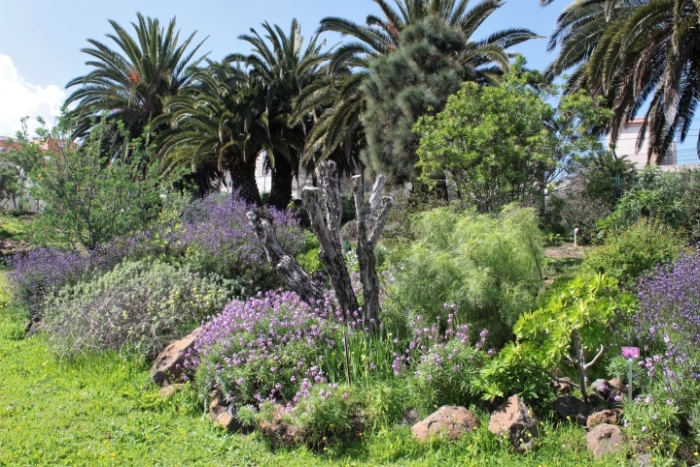
Located 550 meters above sea level in a southeast orientation and subject to the trade winds, the enclave has some ecological interest.
The potential vegetation is thermophilic, although we are very close to the ecotone (contact zone) with the laurel forest. This unique characteristic allows us to cultivate plants from different vegetation zones by choosing the most suitable orientation and soil and applying differentiated irrigation to each type of plant.


The garden is bordered by large specimens of Canary Island date palm (Phoenix canariensis), beautiful native ladies, but quite 'aggressive' when competing for resources with smaller plants.
The different areas are connected by paths of cut grass, walkways made of cut logs, and rustic staircases. A wider track allows access for the machinery needed to carry out maintenance work.
As structural elements, in addition to the stone walls and steps, the garden features concrete ponds lined with stone to achieve a more natural integration. These serve as a visual focal point for the small ravine that runs through the central area, adding dynamism to the overall design. Strategically placed rustic benches allow visitors to enjoy the various plant arrangements in the sun or shade.
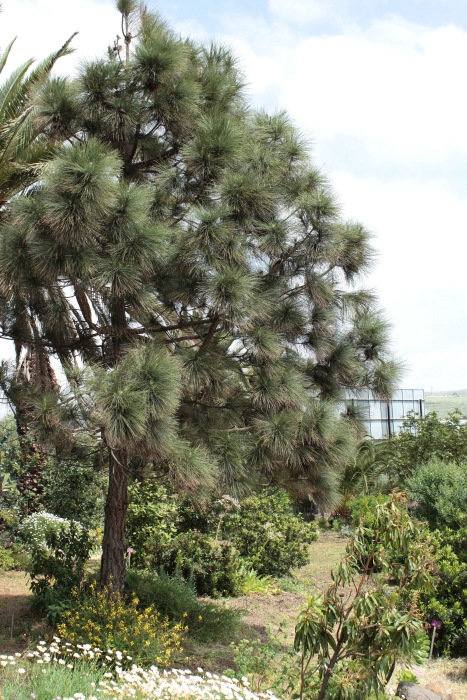
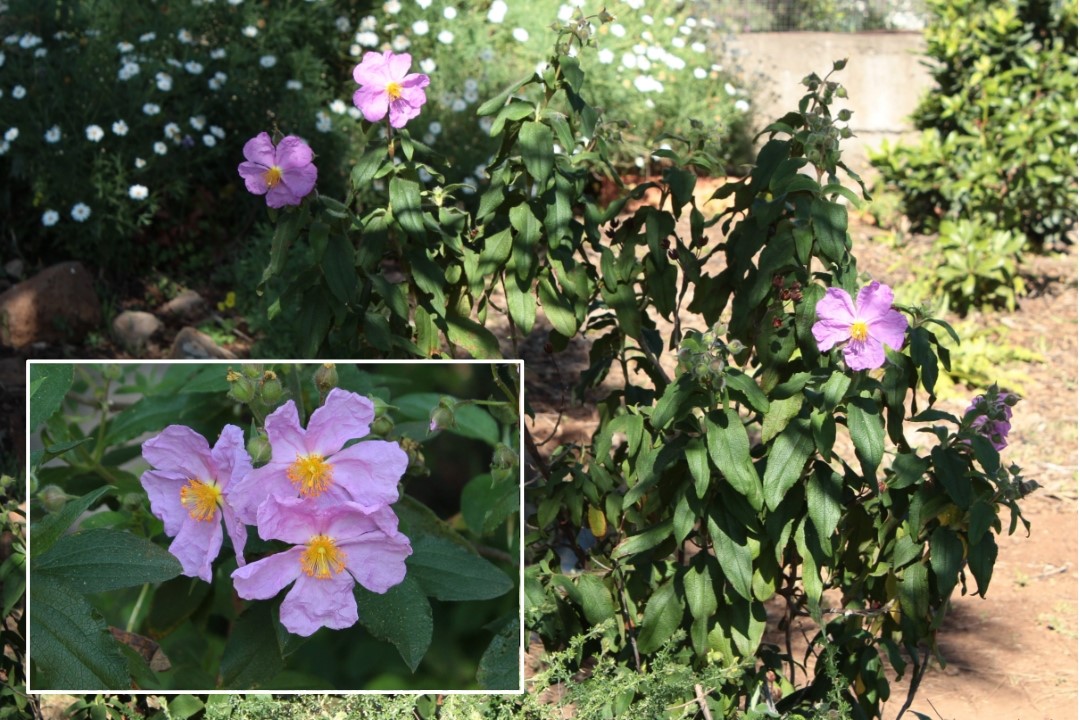
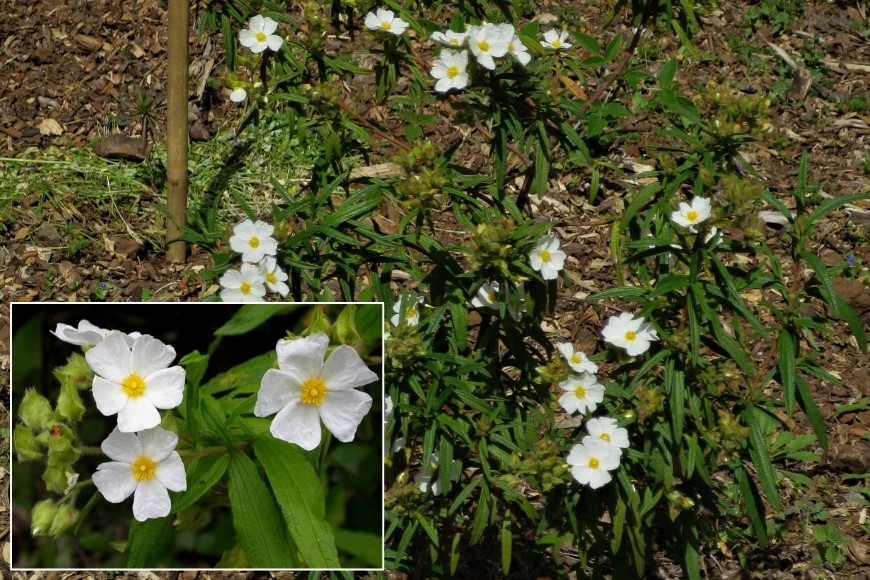
Although the main protagonist of these plant formations is the Canary pine (Pinus canariensis), an endemic species of the archipelago, in the garden are represented some characteristic shrubs with beautiful flowering such as the mountain broom (Adenocarpus foliolosus), the threatening one (Cistus symphytifolius) and the blue tajinaste of Tenerife (Echium virescensThe pine needles completely cover the ground, but some pine nuts manage to germinate without problems in spring.
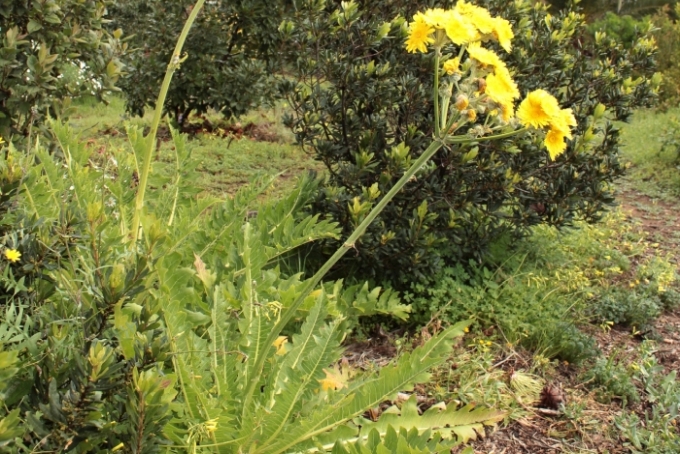
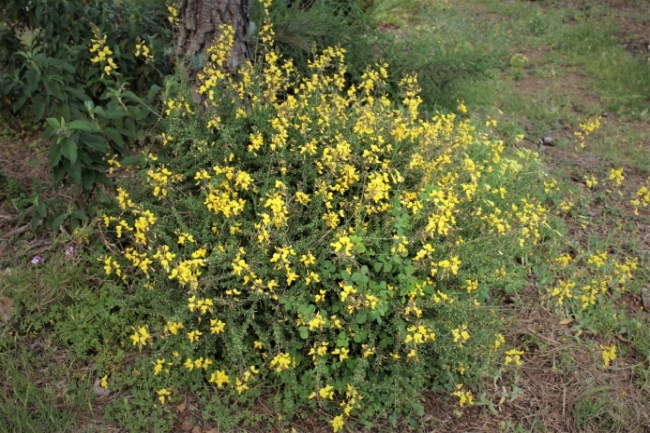
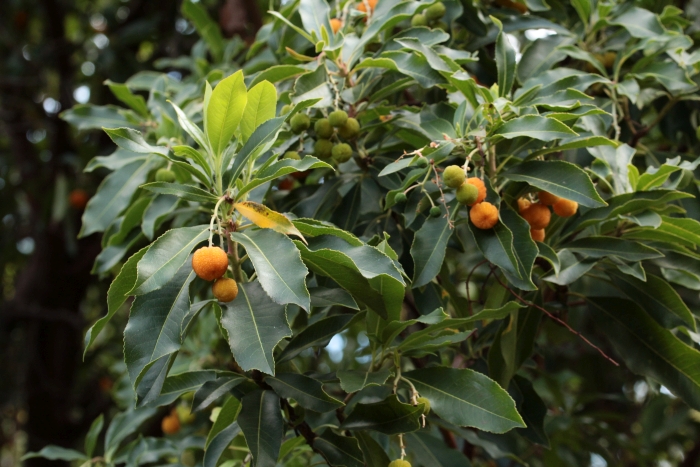
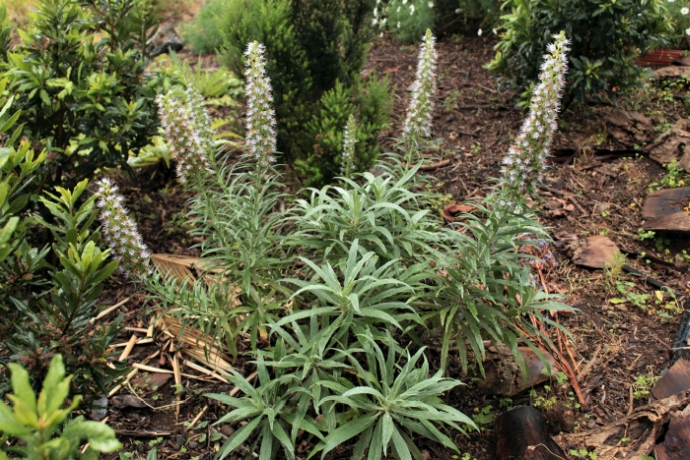
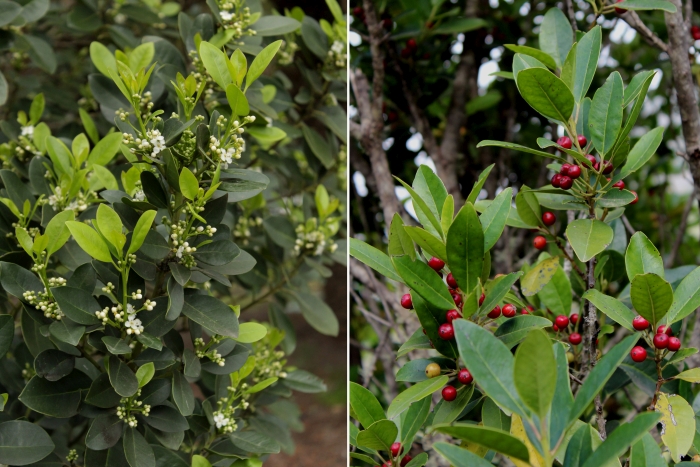
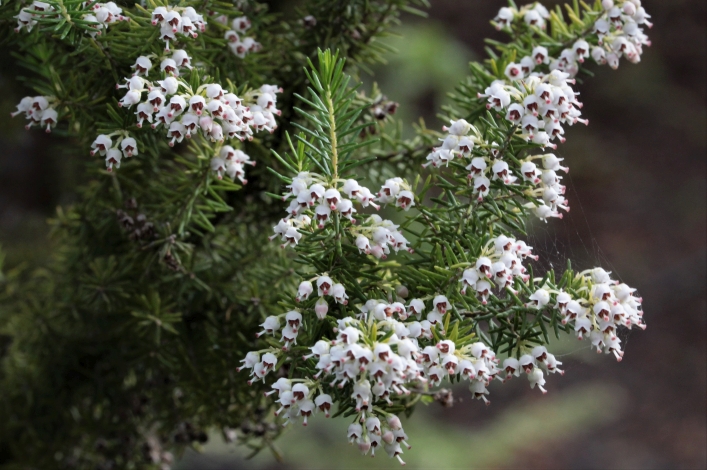
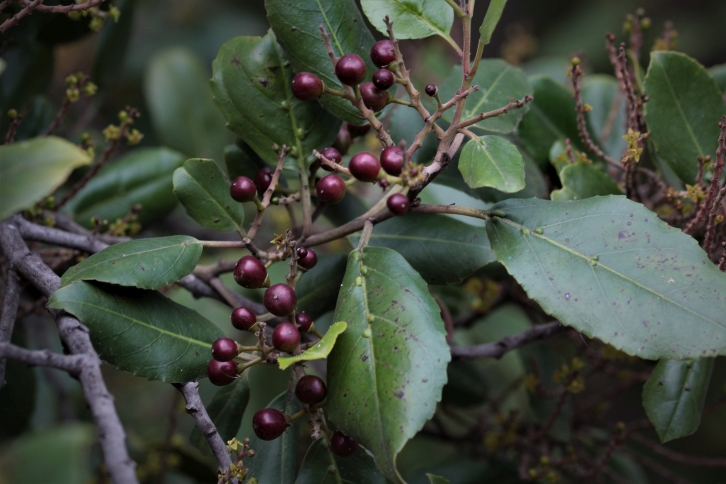
Located on the upper terrace of the garden, young seedlings of Canary Island heath (Erica canariensis) and faya (Morella faya) grow slowly beneath the large, pre-existing Canary Island date palms (Phoenix canariensis), forming a windbreak. The rich evergreen laurel flora is represented by other species such as the Canary Island date palm (Apollonias barbujana), the Canary Island laurel (Persea indica), the Canary Island holly (Ilex canariensis), the Canary Island mocanera (Visnea mocanera), the Canary Island spurge (Picconia excelsa), the Canary Island viburnum (Viburnum rigidum), and the Canary Island laurel (Laurus novocanariensis).
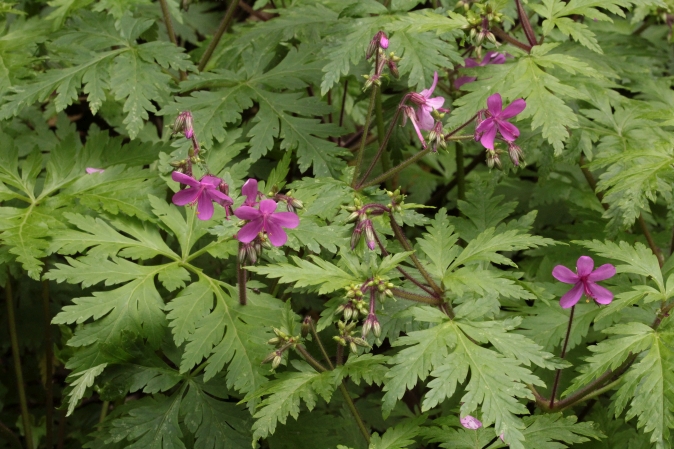
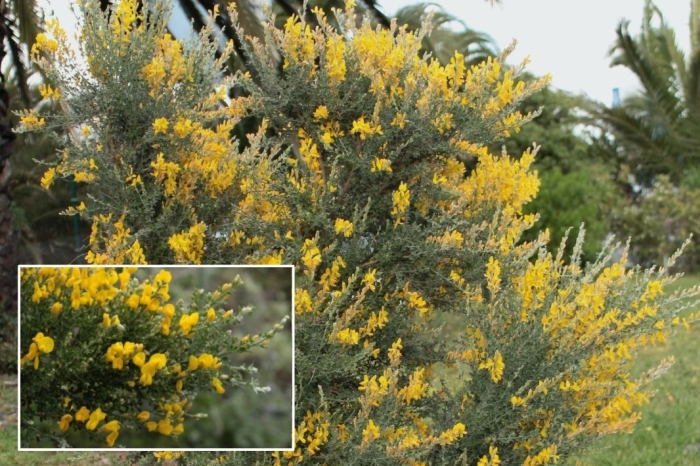
We can also find shrubby species. Some thrive in shadier spots, like the Canary Island St. John's wort (Hypericum grandifolium); others tolerate brighter exposures, such as the Canary Island broom (Teline canariensis). More frequent watering allows for the development of some understory perennials with interesting blooms, such as the Canary Island geranium (Geranium reuteri) or the Canary Island buttercup (Ranunculus cortusifolius).
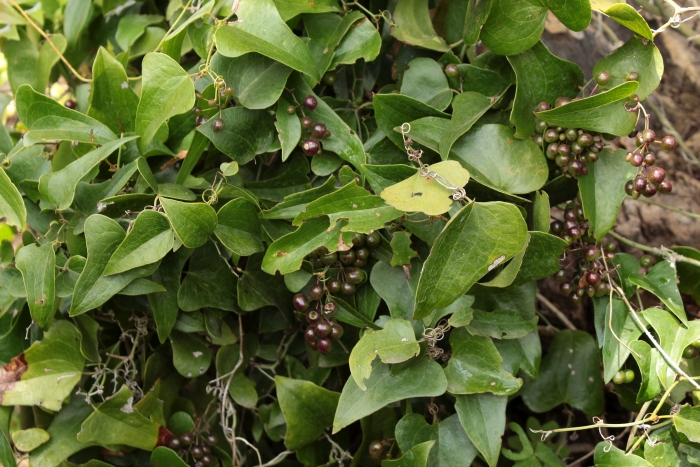
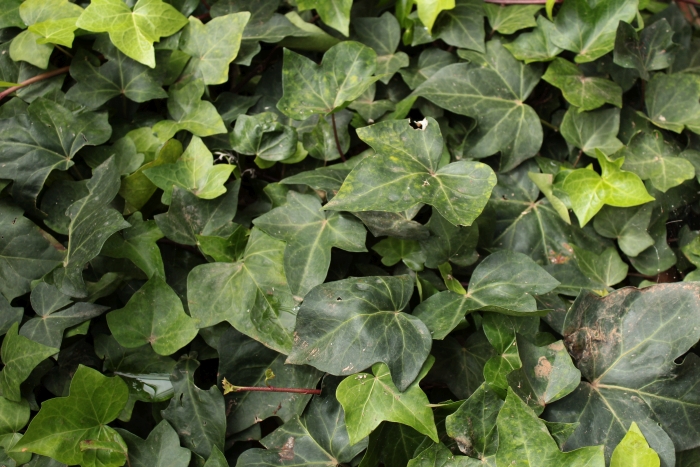
Some climbing plants and vines find their place here, such as the emblematic Canary Island vine (Canarina canariensis), the spiny sarsaparilla (Smilax aspera subsp. mauritanica) and the Canary Island ivy (Hedera canariensis), a wonderful carpeting plant.
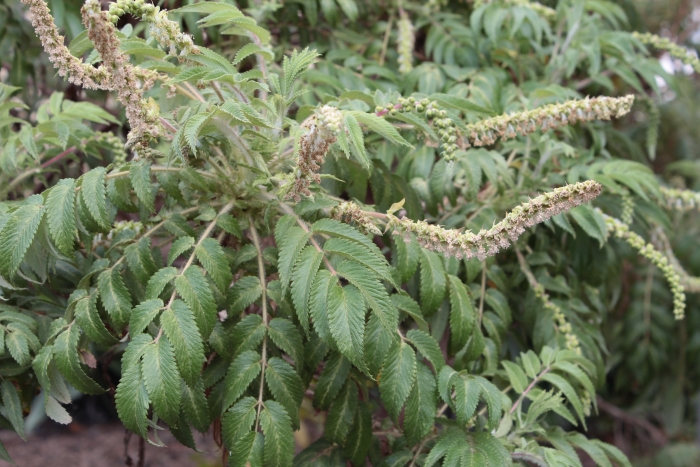

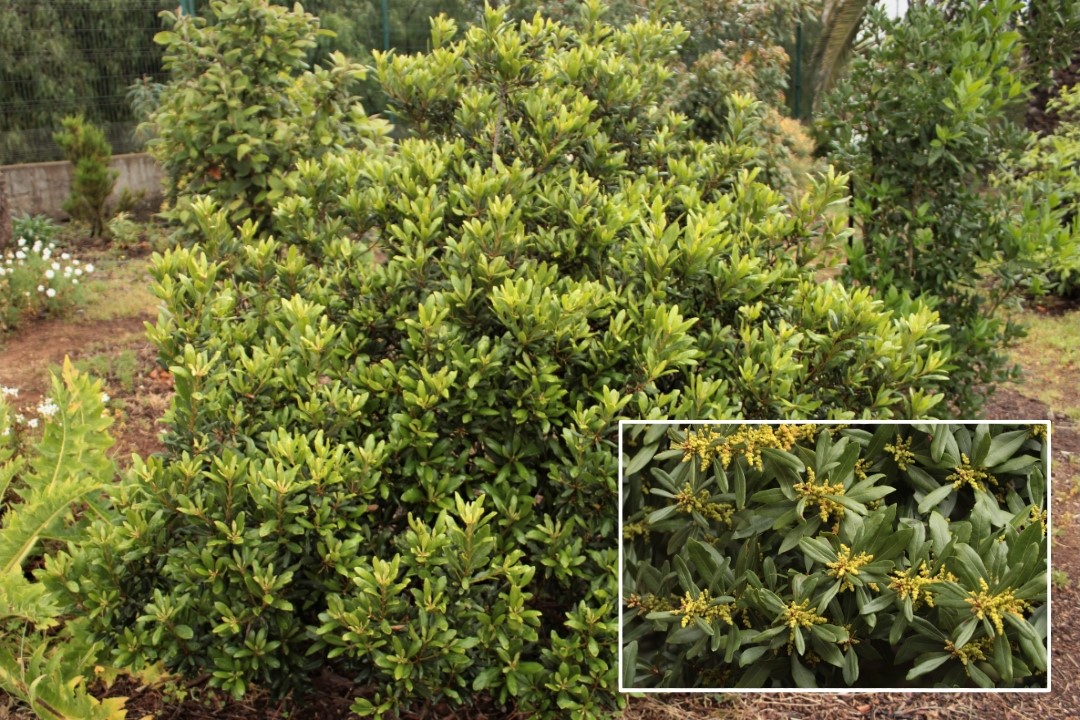

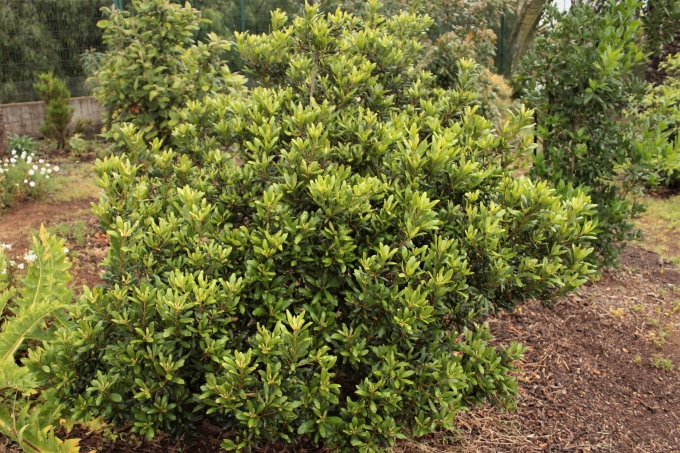
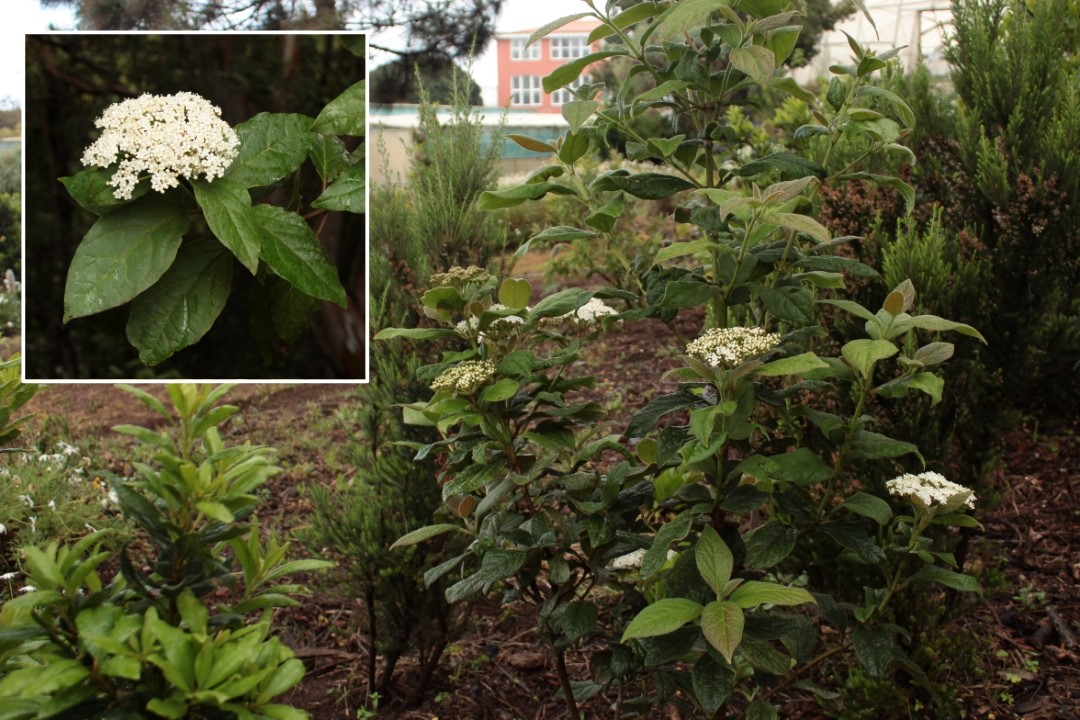
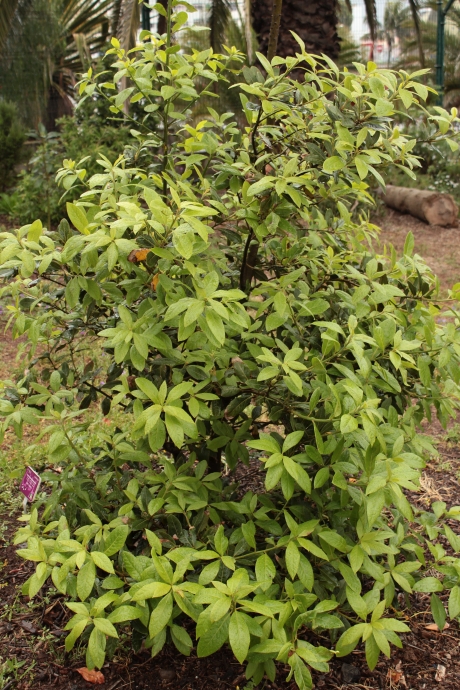
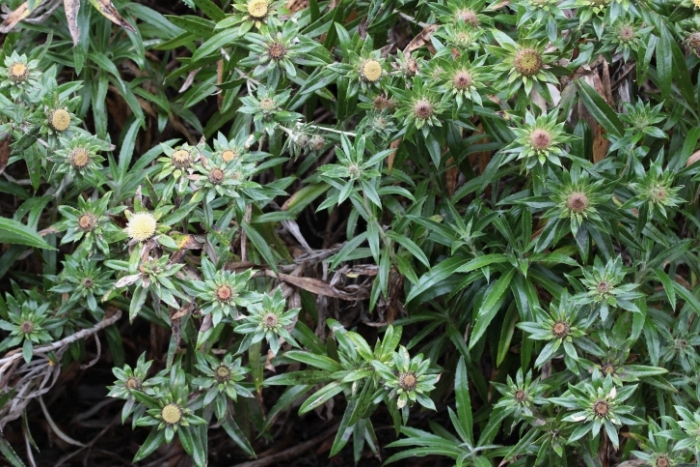
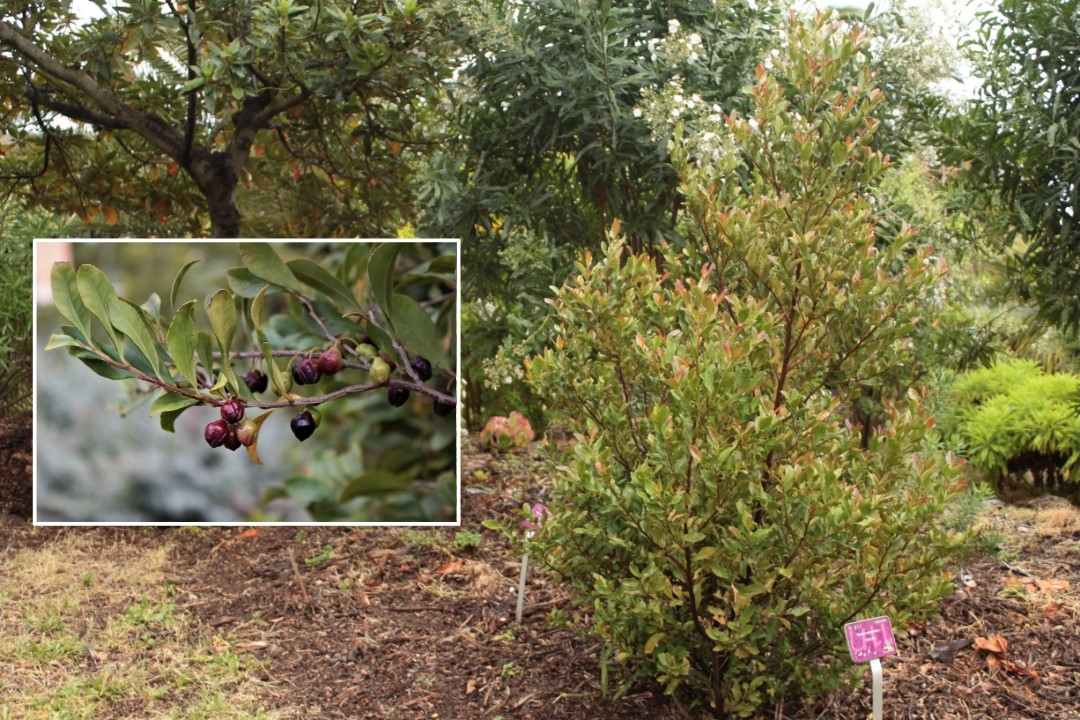
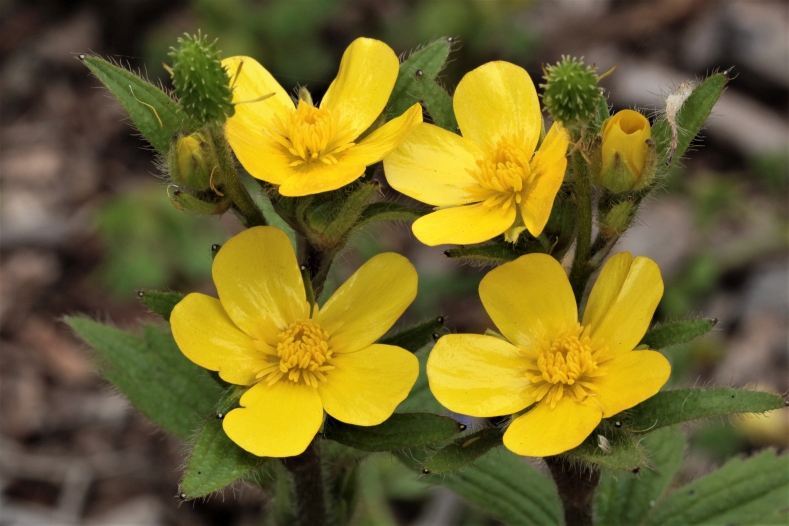

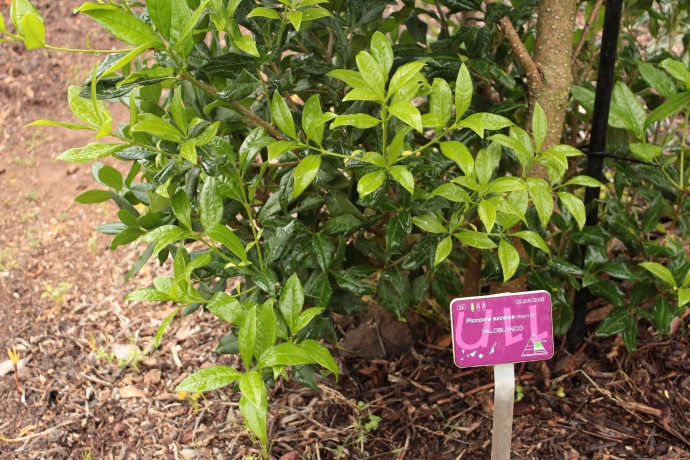
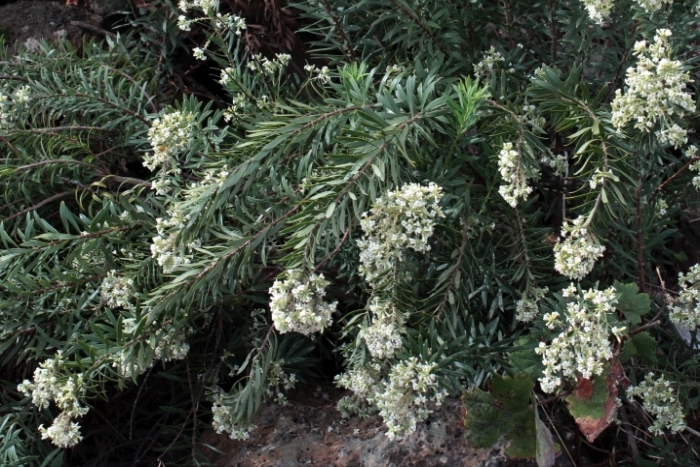
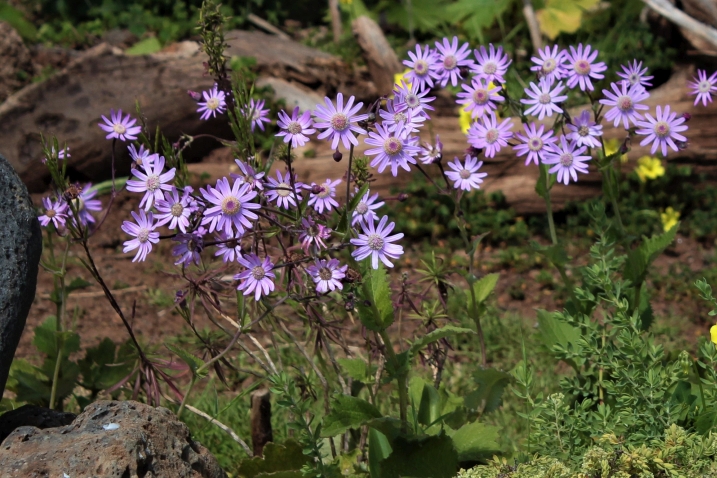
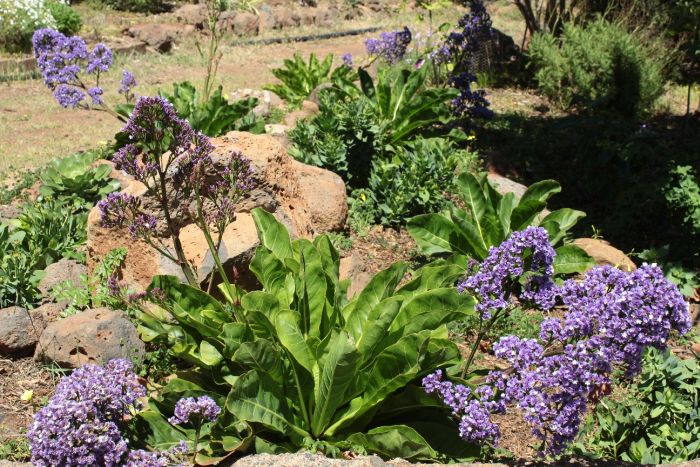
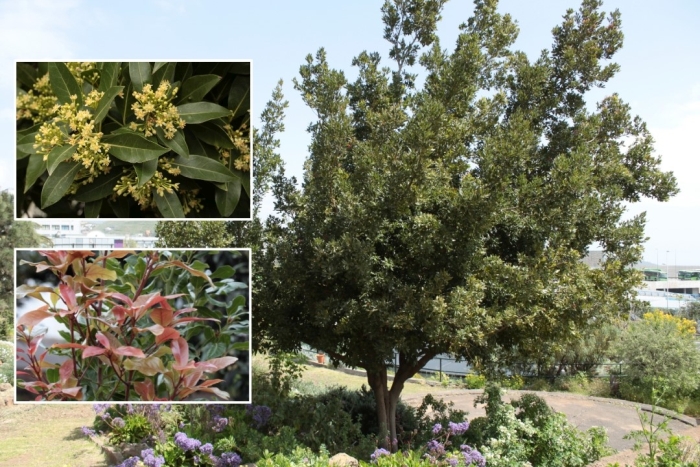
This semi-shaded space is comprised of several natural stone terraces. The barbusano (Apollonias barbujana) is an evergreen laurel-like tree characteristic of the less water-demanding plant communities of the laurel forest. Surrounding it are various accompanying endemic species, the most prominent being the large-leaved sea lavender (Limonium macrophyllum) with its blue-violet inflorescences.
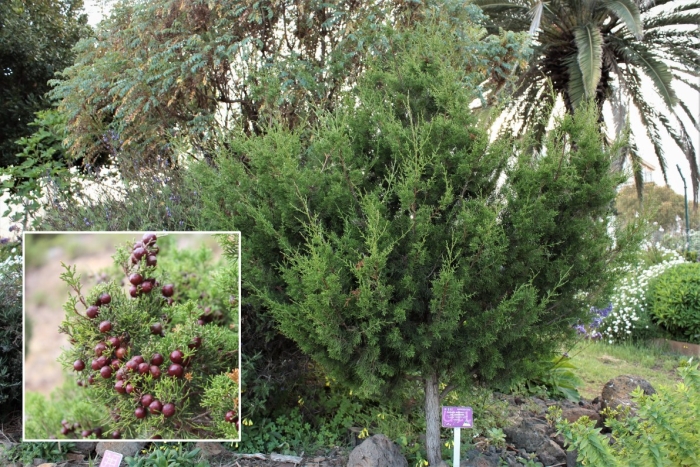
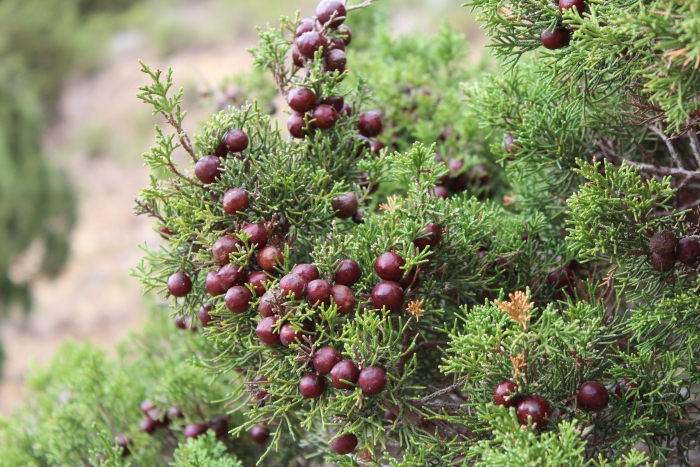
Along the side extends a simulated lava field crowned by a palo sangre tree (Marcetella moquiniana) and a juniper tree (Juniperus turbinata subsp. canariensis).
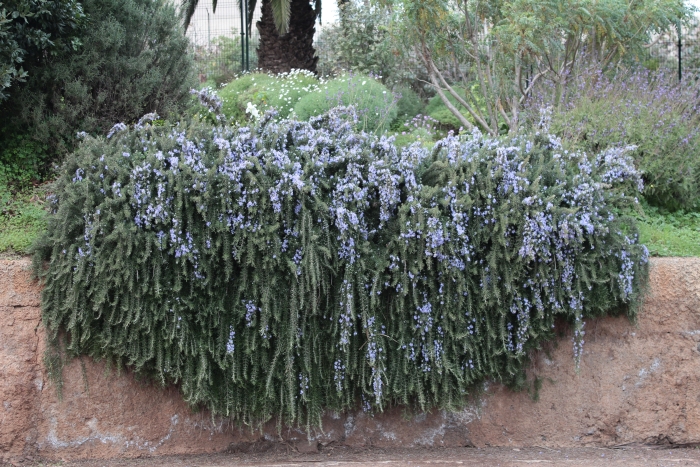
As a curiosity we can mention the presence of the only non-native plant saved from the previous garden, a huge creeping rosemary with striking blue flowers whose branches cascade down to the lower level (Rosmarinus officinalis 'Prostratus').
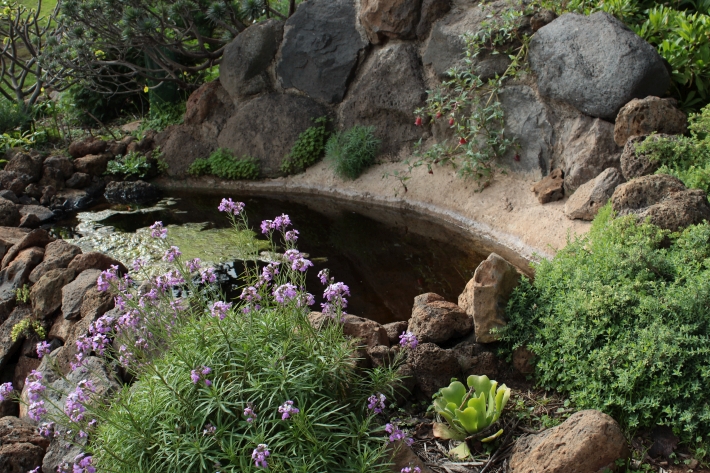
From a landscape perspective, one of the most representative features of the Canary Islands is the ravine. Water flows through it seasonally after the rains, leaving only a trail of stones, sand, and gravel during the summer. Sometimes the water is retained in pools, creating small oases.
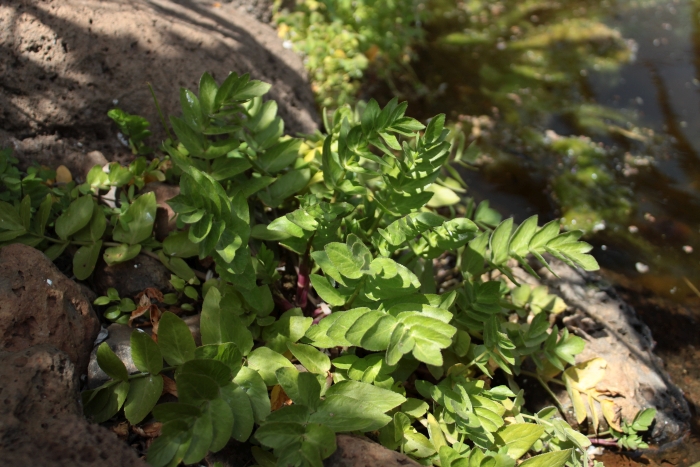
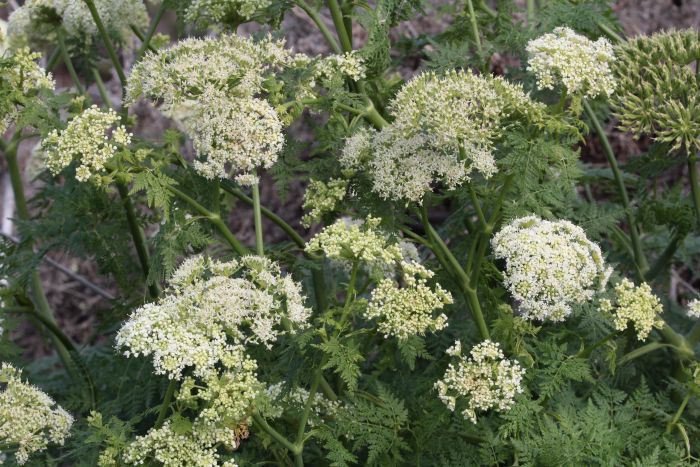
Barranco Seco aims to pay homage to this natural element. In the headwater pools, one with water and the other with damp earth, some aquatic species grow, such as sedge (Cyperus sp.), the cabbage (Helosciadium nodiflorum) or the tiny duckweed (Lemna gibba).
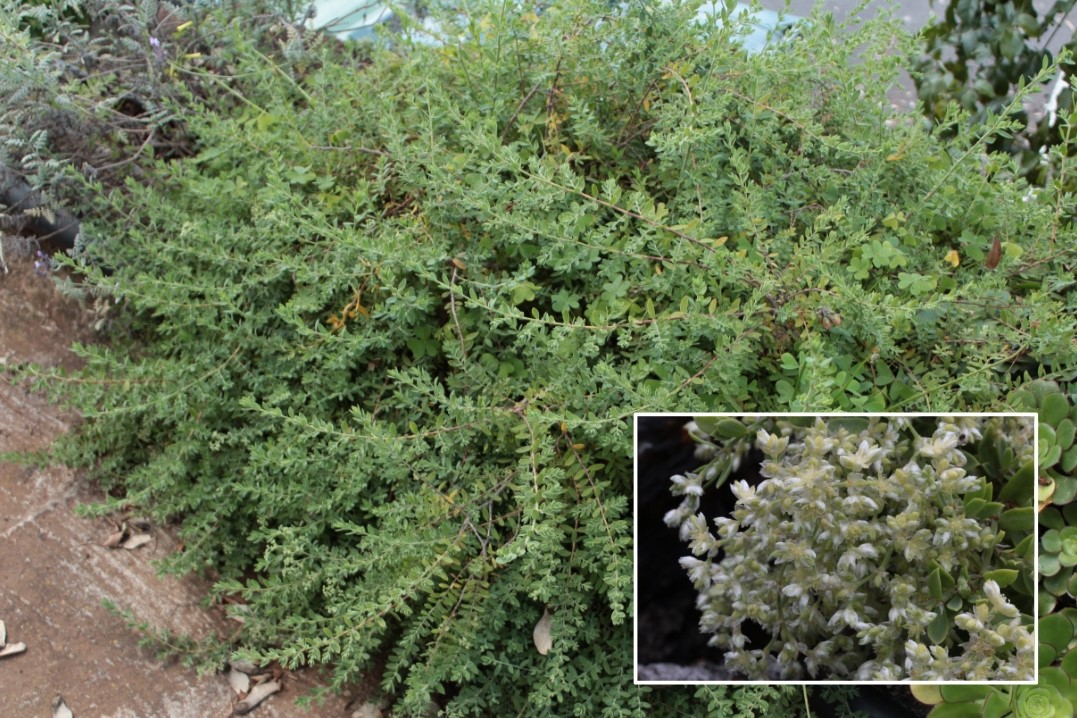
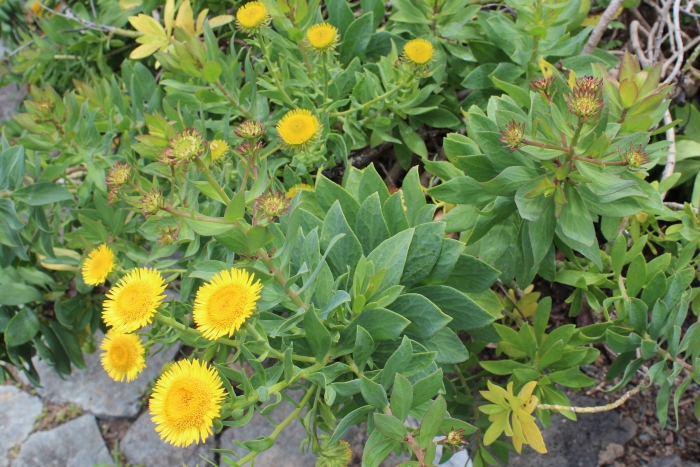
Its irregular and uneven course crosses different areas, interrupting the paths as happens in nature. Small shrubs and native perennials with showy blooms, such as the snowdrop, grow along its banks.Paronychia canariensis) the lighthouse (Gonospermum fruticosum), the cliff madam (Allagopappus canariensis) and the daisy (Argyranthemum frutescens).

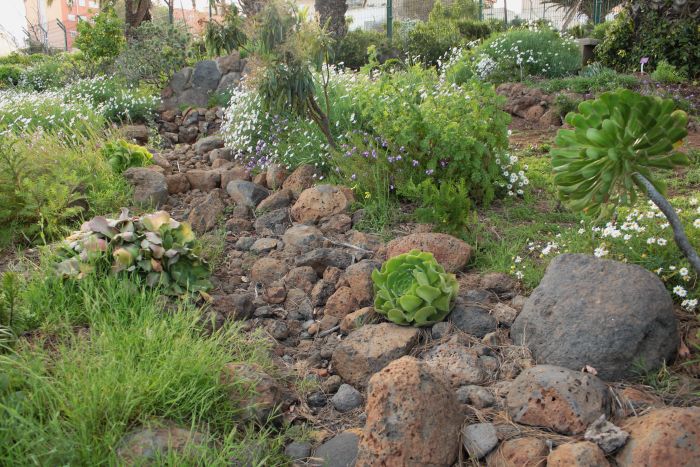


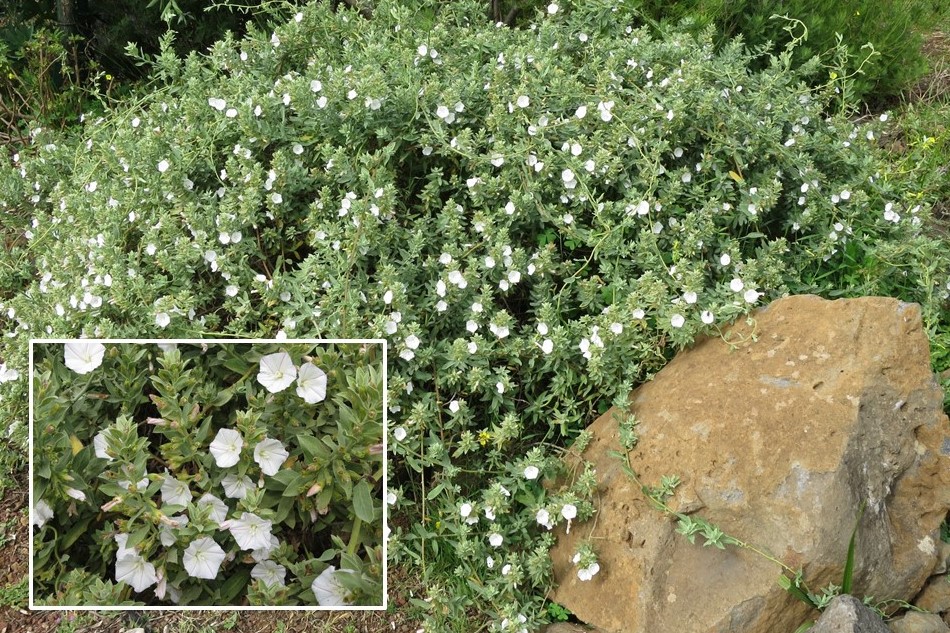
This inviting path, flanked by guaidiles (Convolvulus floridus), is the undisputed heart of the garden. Crossing the ravine via a flagstone walkway, the path allows us to enjoy the unique and varied thermophilic flora almost year-round.
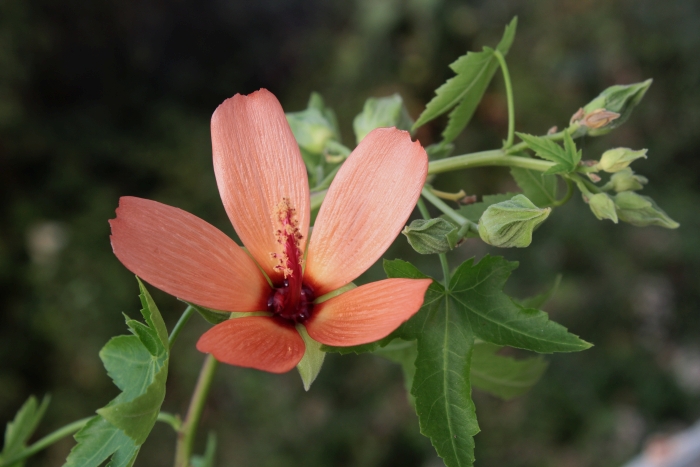
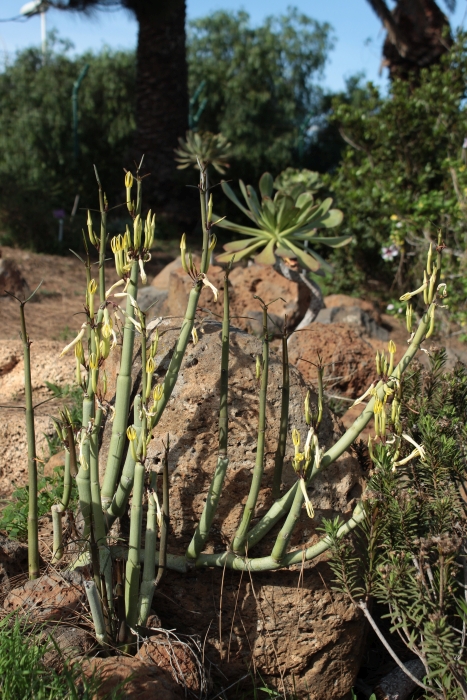
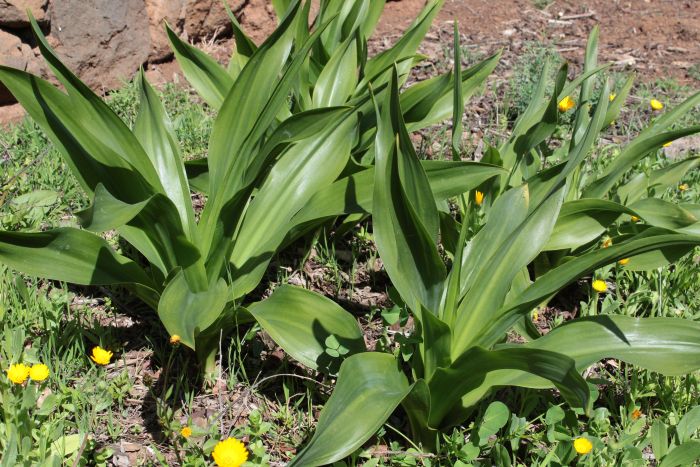
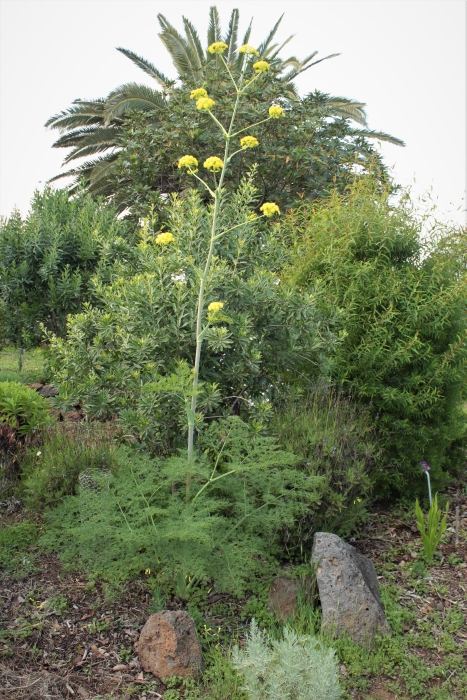
In the foreground, we find the rock mallow (Lavatera acerifolia), with its showy white flowers, with a pinkish-fuchsia center, reminiscent of hibiscus. Next to it, a group of naked hemorrhoids (whoever named them!) or drimias (Drimia hesperia), a curious bulbous plant that loses its leaves in summer, then producing its long flower spikes that sometimes exceed one meter in height.
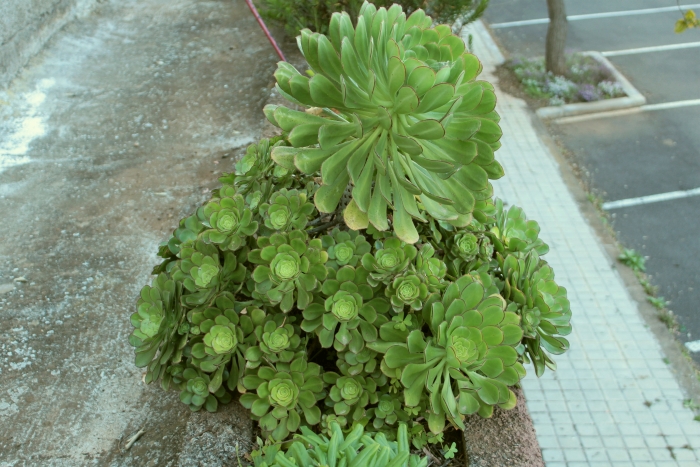
The path runs alongside the wall of the góngaros (Aeonium canariense subsp. canariense), a cliff endemic of a succulent nature in the form of a rosette perfectly adapted to growing among the stones.

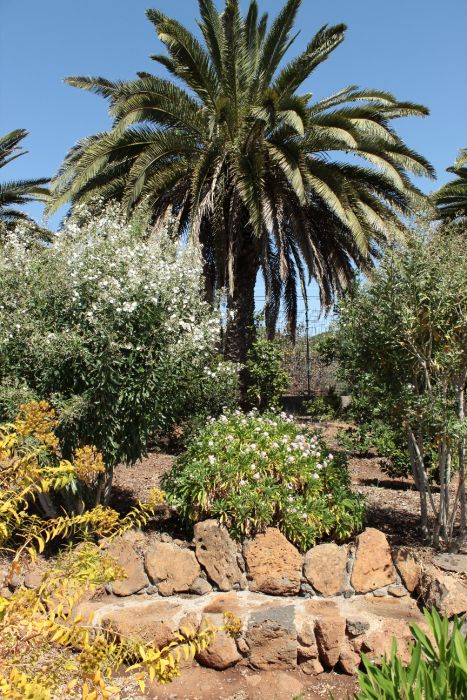

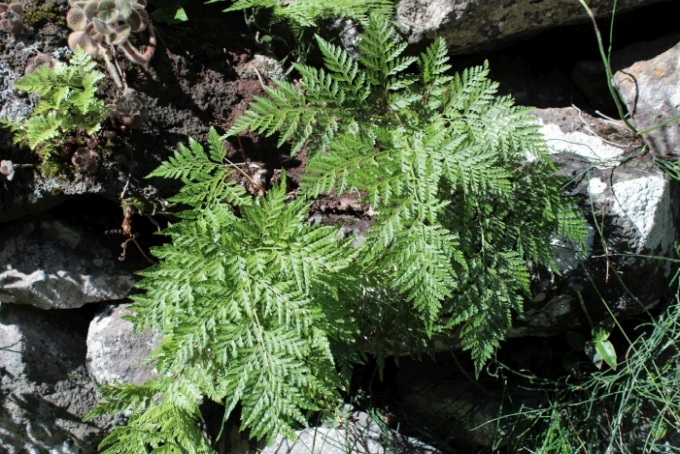

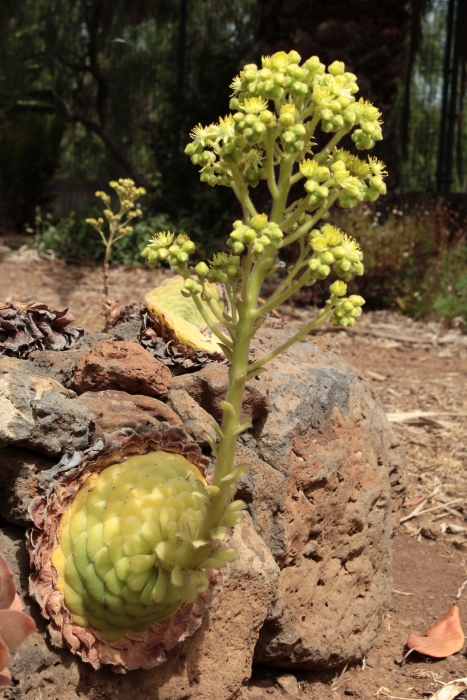
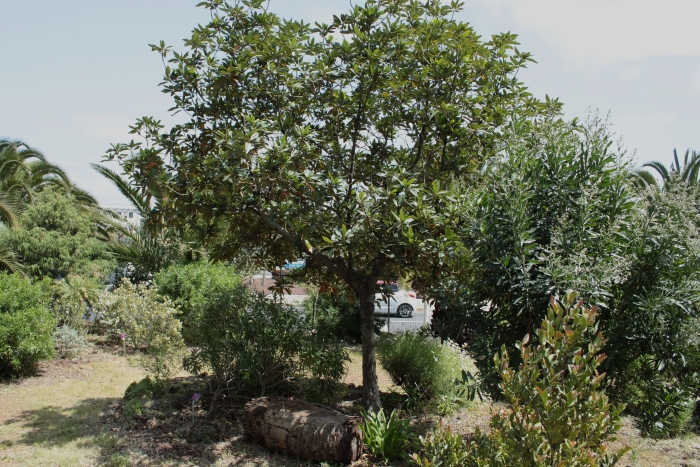
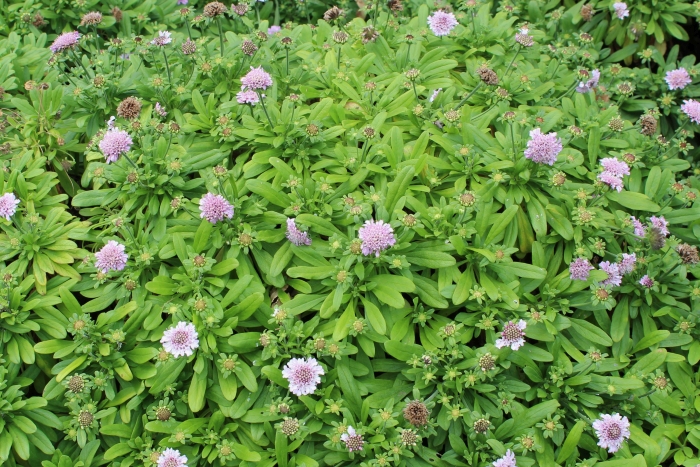
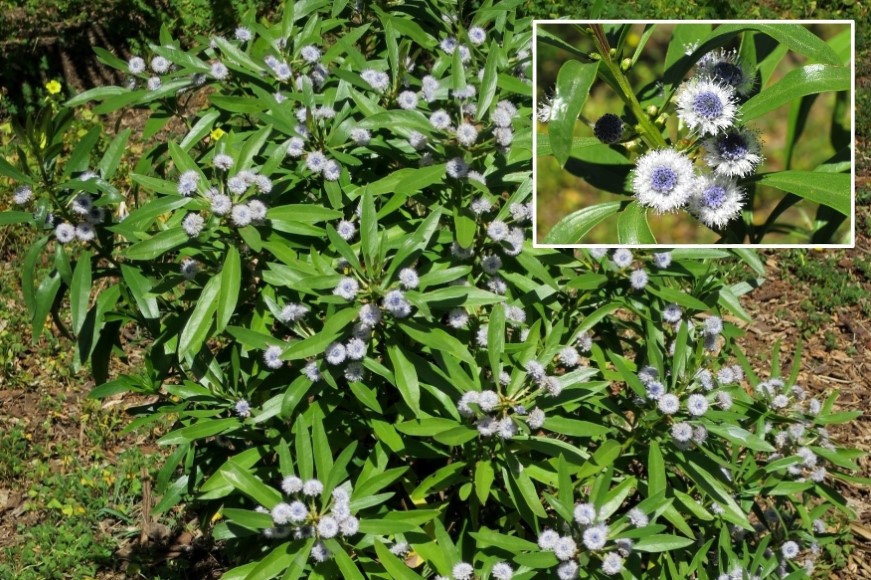
This composition of thermophilic plants was one of the first that the students planted during their gardening practice. Around the austere and evergreen wild olive tree or oleaster (Olea cerasiformis), the flowering of the different species follows one another. In December the early-flowering arboreal bejeques bloom (Aeonium arboreum subsp. holochrysum), the pink flower heads of the little roses (Pterocephalus dumetorusThose that announce the arrival of summer. It is a space where you can enjoy not only the colorful flowers, but also the different textures, shapes, contrasts and changes in the foliage.
Summer is a period of rest for many thermophilic species, some losing their leaves or changing their color. The 'autumn' of the granadilla trees (Hypericum canariense) is one of the curiosities that the dry season offers us.


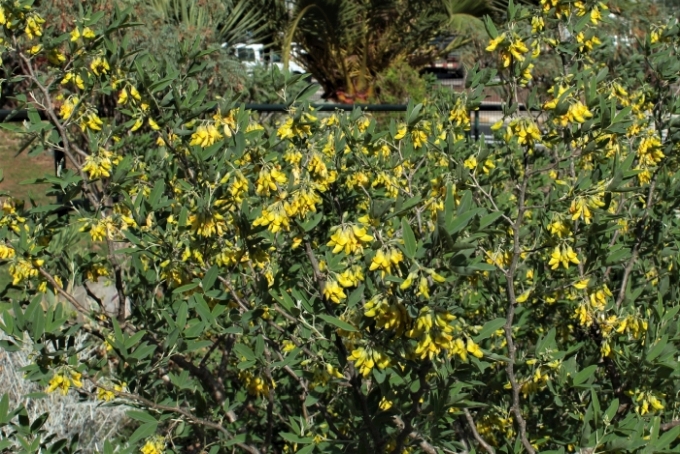

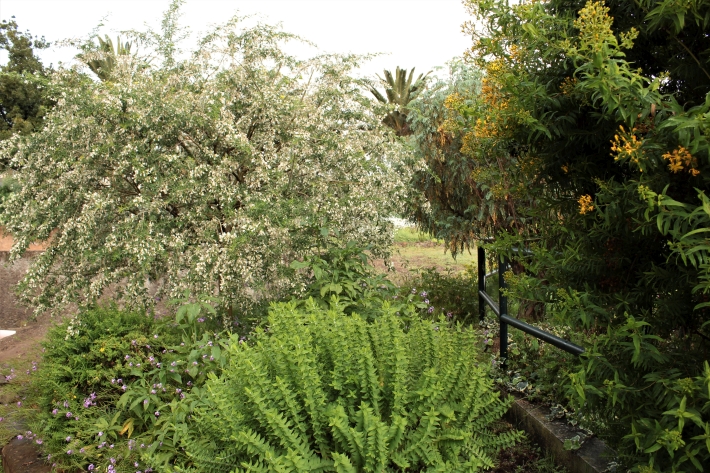
This small corner is arranged around a specimen of tagasaste (Chamaecytisus proliferus), a forage shrub trained into a cup shape through targeted pruning to enhance its aesthetic appeal. The small, butterfly-like, creamy-white flowers appear from winter to summer, filling the surroundings with a subtle fragrance.
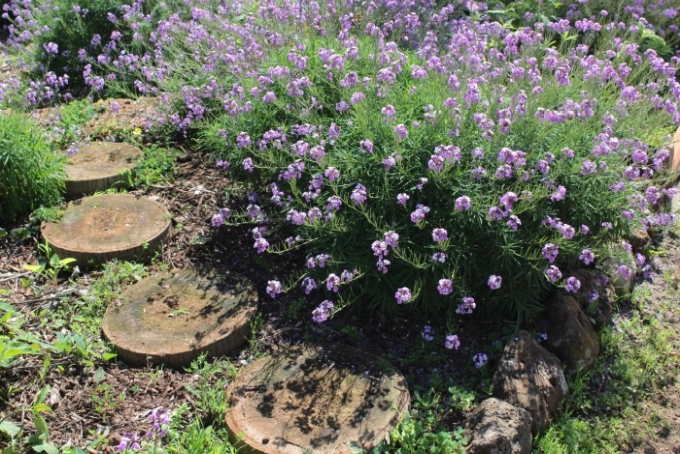
Beneath its protective shade grow wallflowers (Erysimum virescens), with their showy spikes of pink-magenta flowers, Canary Island dracaena (Dracunculus canariensis), araceae with slender, greenish-white spathes, and St. John's wort (Hypericum reflexum), with its bright yellow flowers. A Japanese-style walkway constructed from palm logs provides access to the adjacent flowerbed corridor.
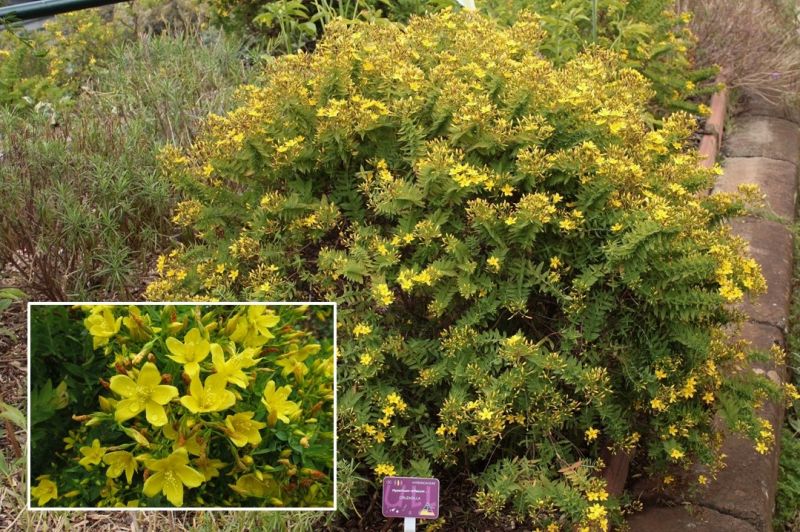
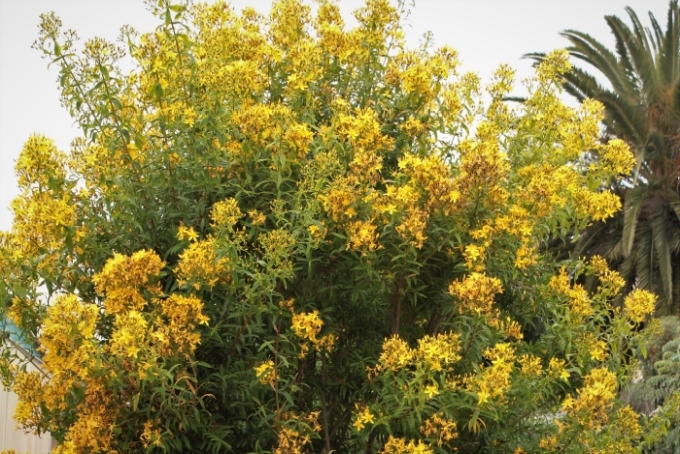


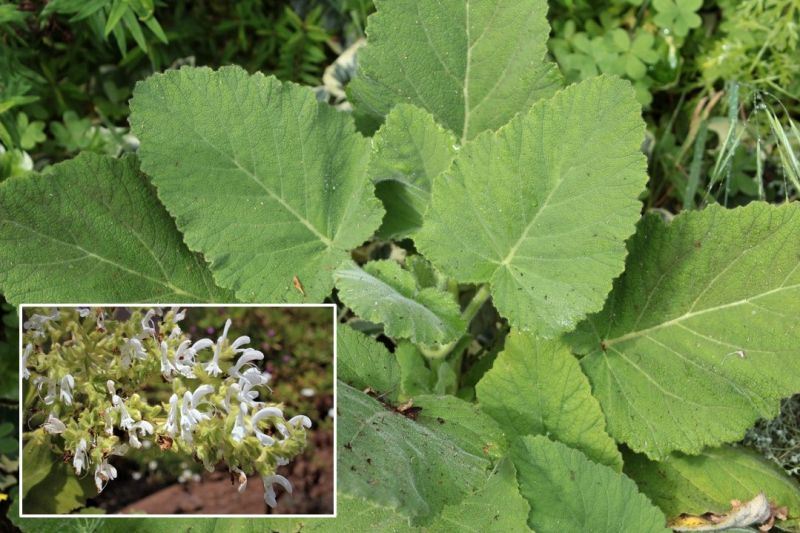


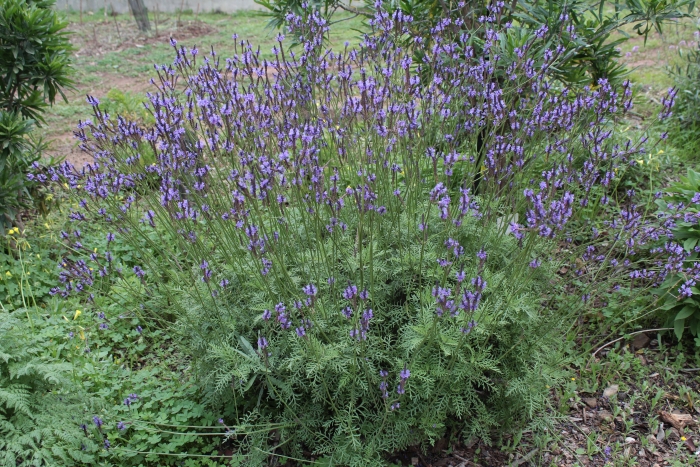
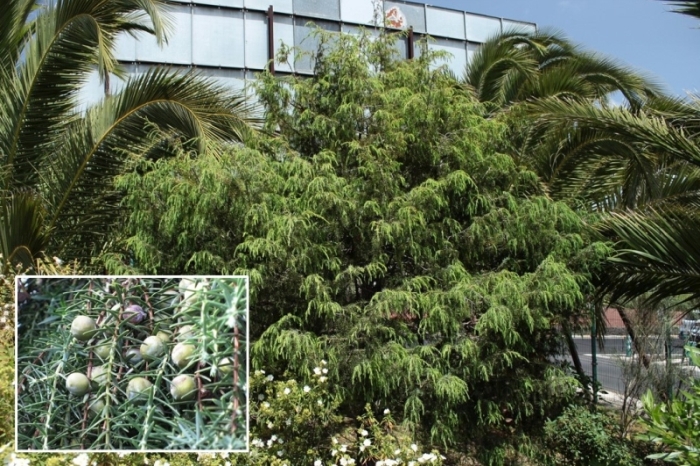
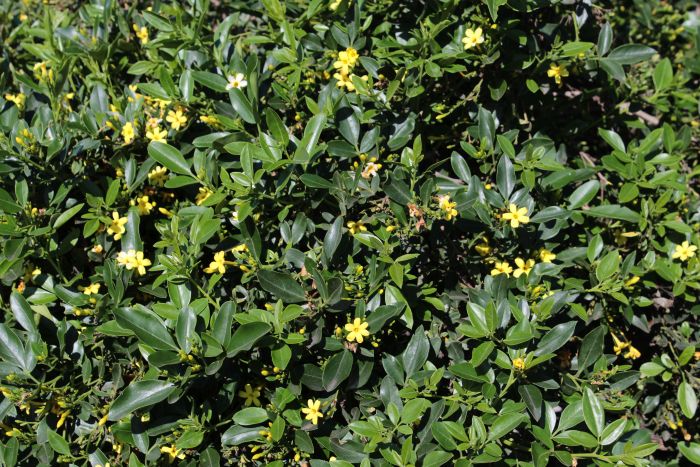
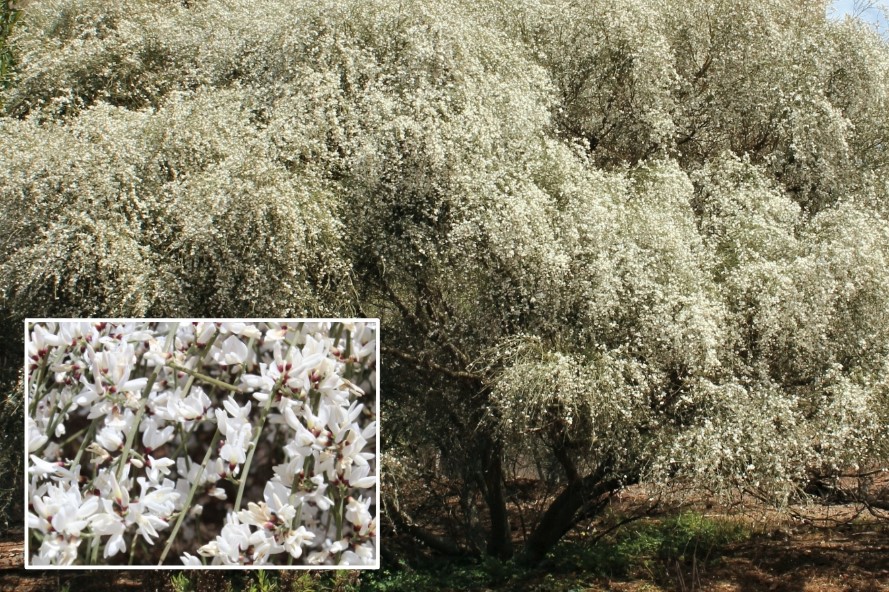
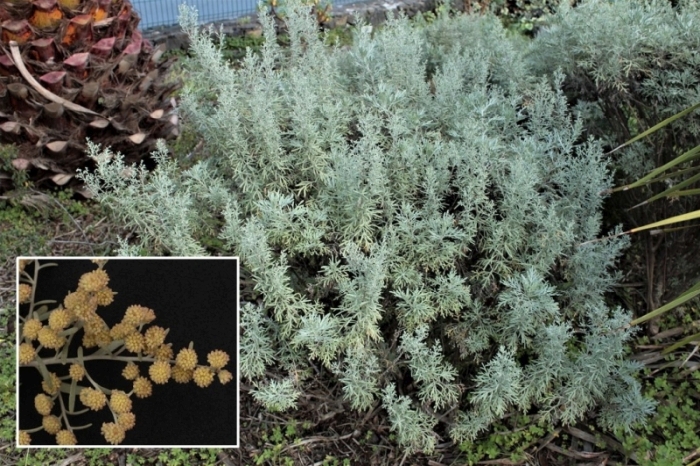
Alongside the young row of Canary Island date palms planted to the east of the garden grow species very well suited to sustainable green spaces. They are hardy plants that withstand water stress and require little care. Some are tree-like, such as the cedar (Juniperus cedrus subsp. cedar), an old specimen planted in the first stage of the garden, or the seedbed (Pistacia atlantica) which usually loses its leaves when the cold weather arrives; others have a shrubby biotype like jasmine (Jasminum odoratissimum) and the broom (Retama rhodorhizoides), both with fragrant flowers, or the rockrose (Cistus monspeliensis subsp. canariensis) and incense (Artemisia thuscula), with very aromatic foliage.
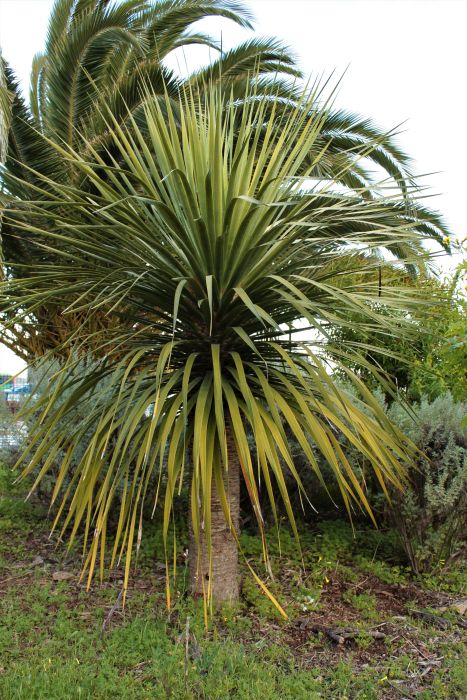
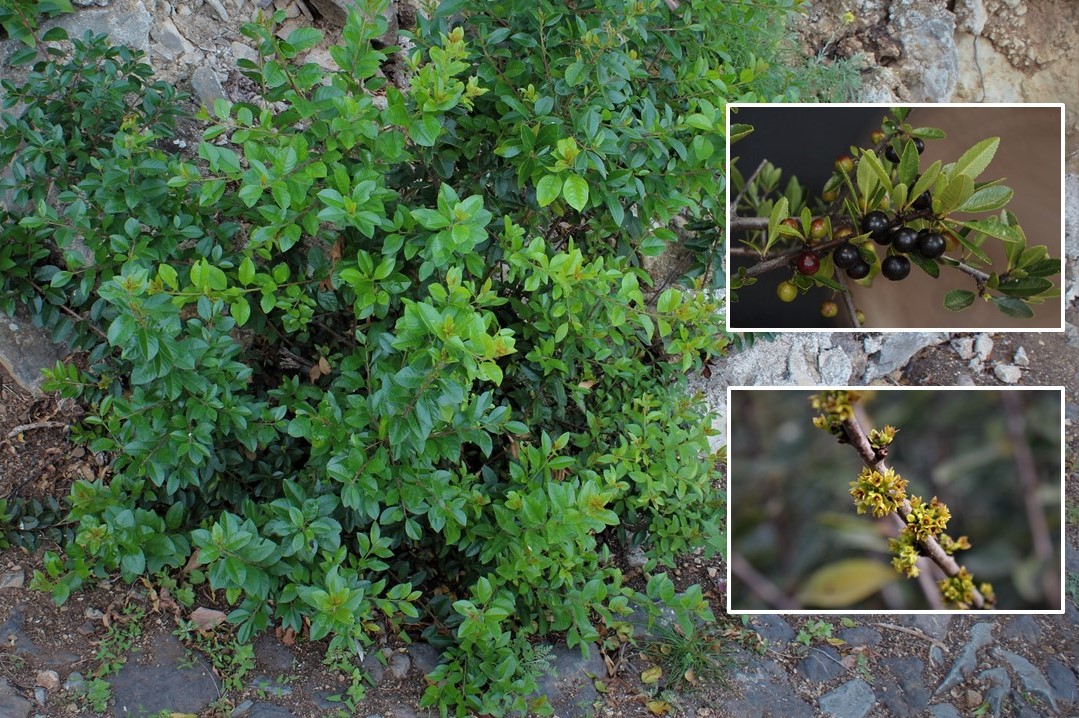
Nor can we forget the dragon tree (Dracaena draco subsp. draco) or of the long-suffering hawthorn tree (Rhamnus crenulata) with its interesting and shiny black berries when ripe.
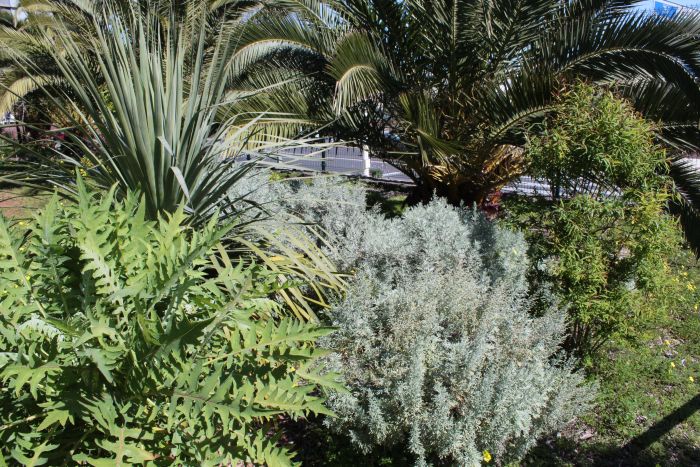

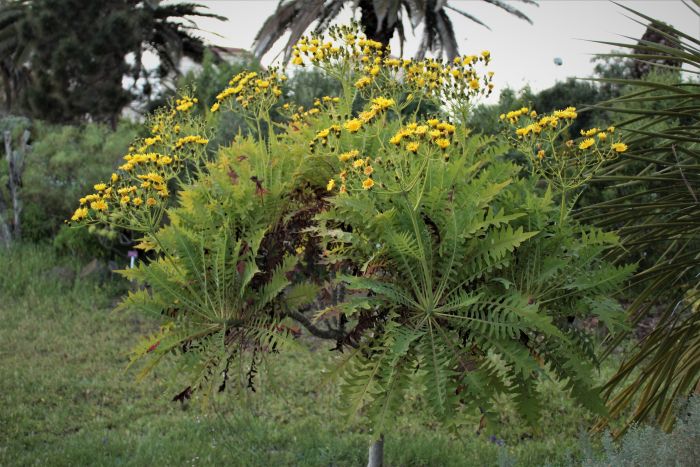
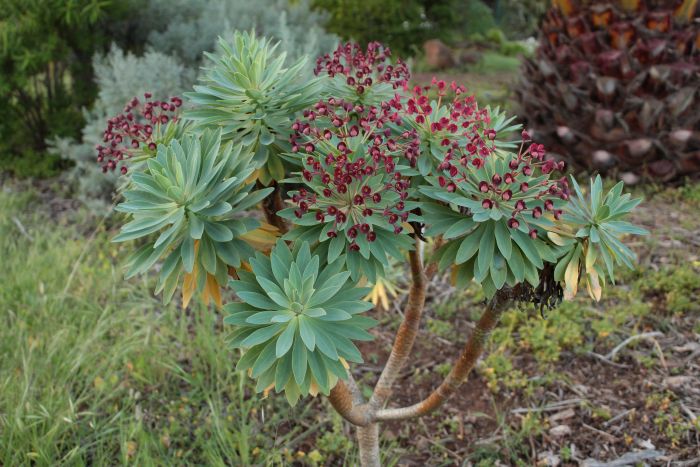
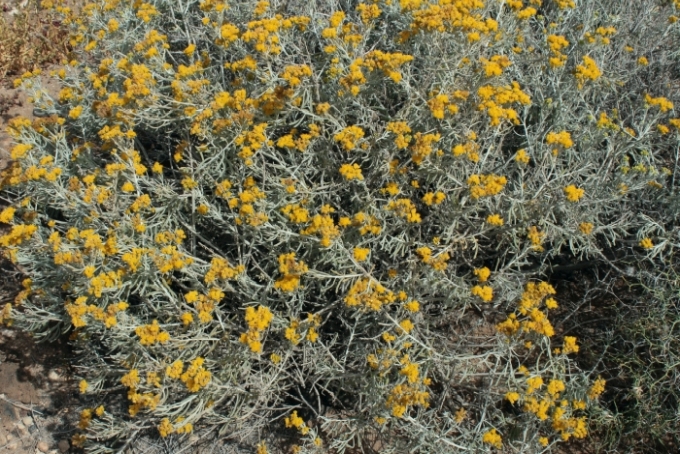
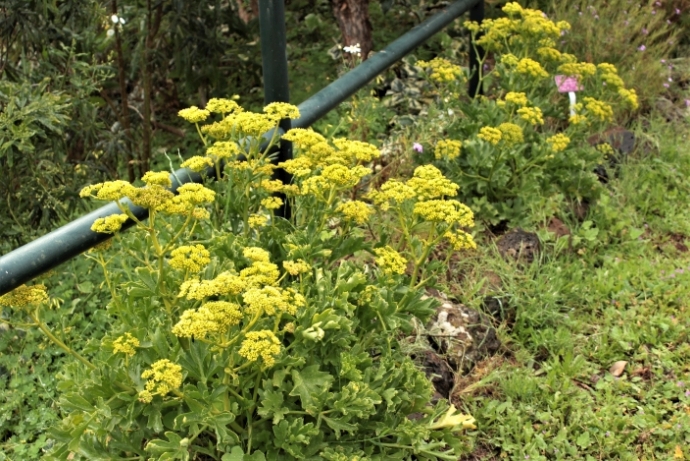
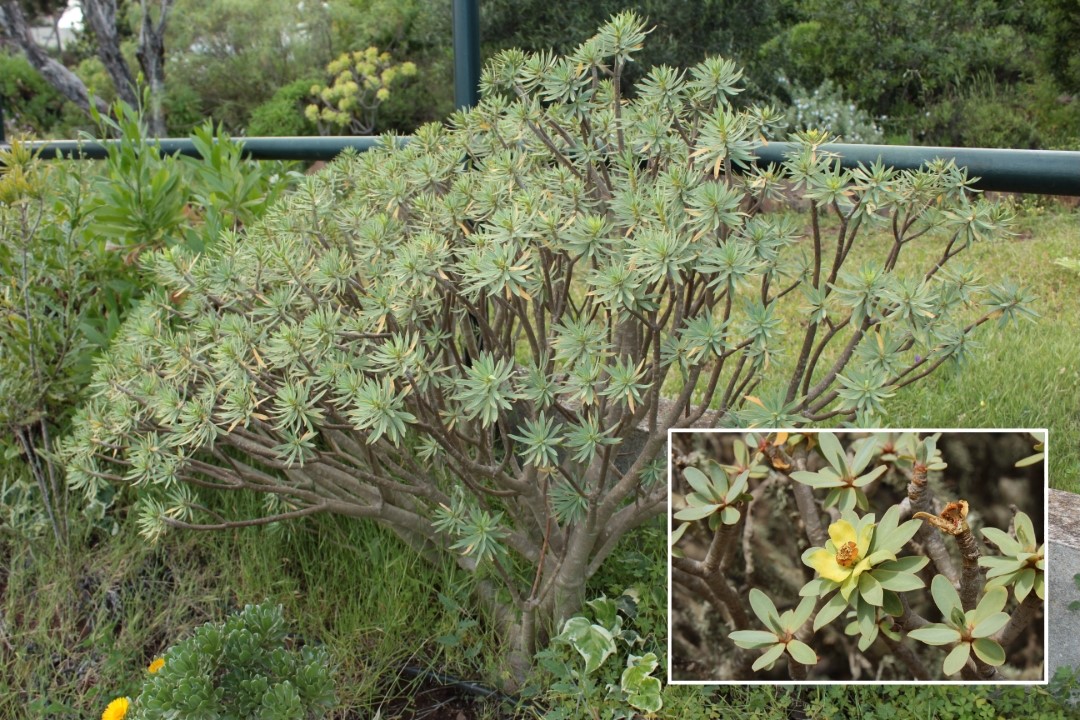
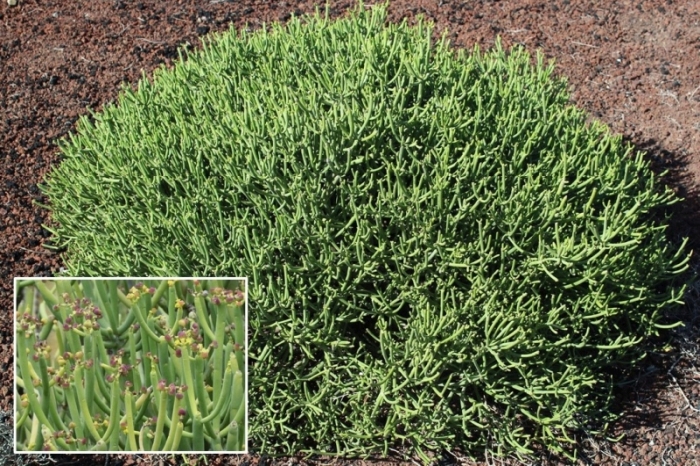
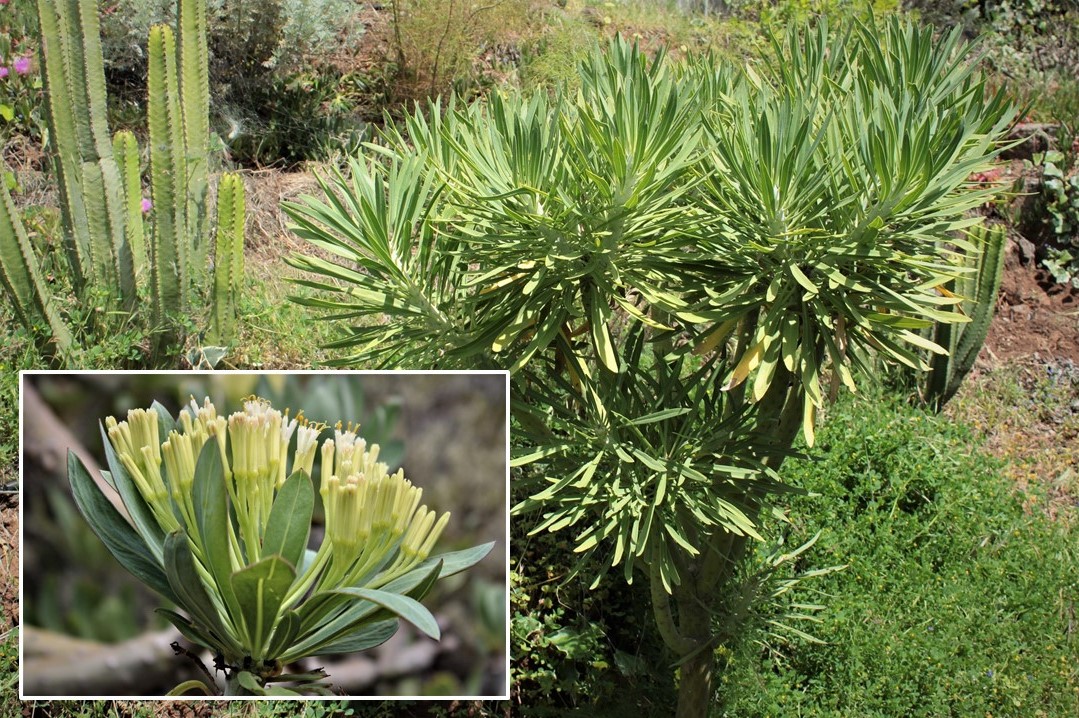
On the slope created for the installation of the irrigation reservoir, we can familiarize ourselves with plants from warm, dry areas closer to the coast. Some are succulents easily recognizable by their silhouette, such as the Canary Island spurge (Euphorbia canariensis) and the sweet spurge (Euphorbia balsamifera subsp. balsamifera). Others typically grow right on the seafront, enduring the sea spray, such as sea fennel (Crithmum maritimum), sea apricots (Astydamia latifolia), and sea purslane (Schizogyne sericea), the latter with its characteristic silvery-gray foliage.
Some balos (Plocama pendula), aulagas (Launaea arborescens) and cornicales (Periploca laevigata) have recently been added to the group in order to study their behavior in environmental conditions that are somewhat less favorable for these species.
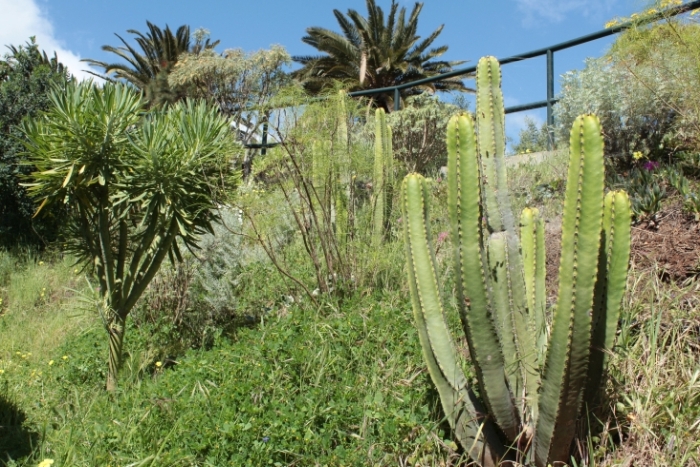
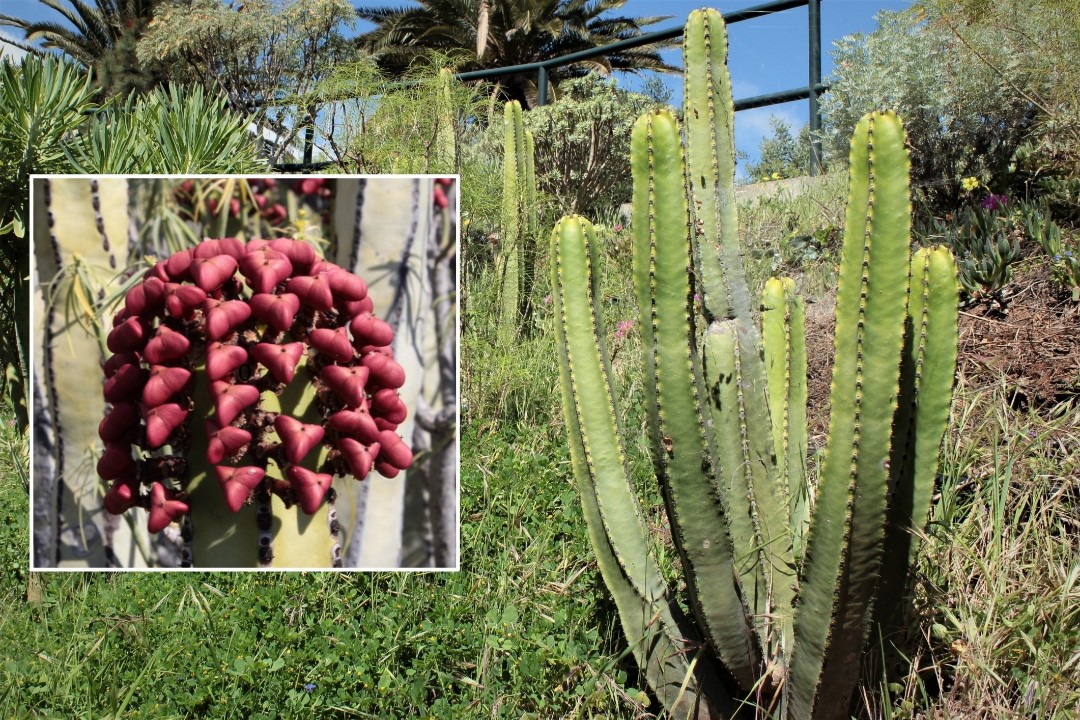
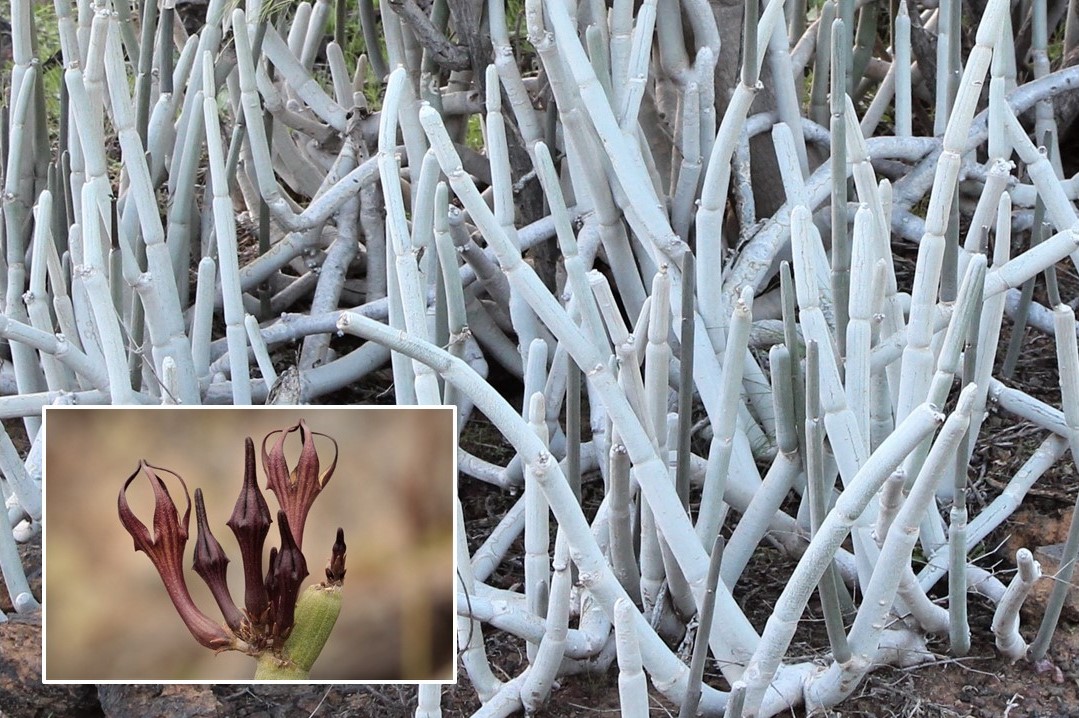
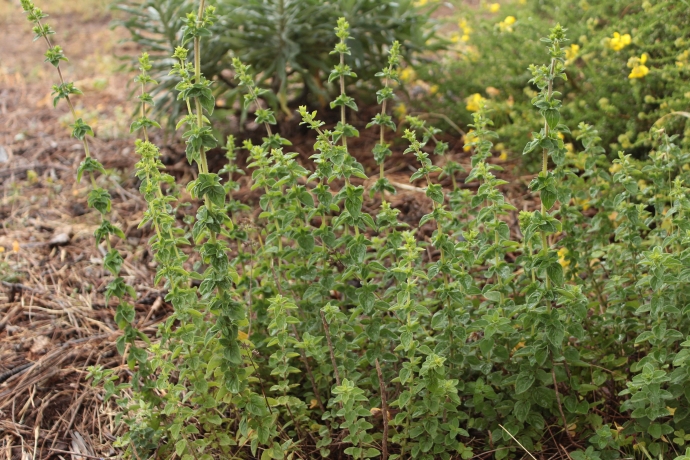
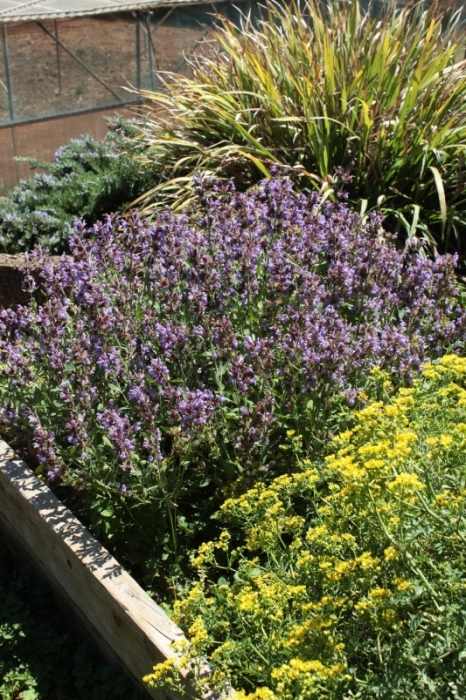
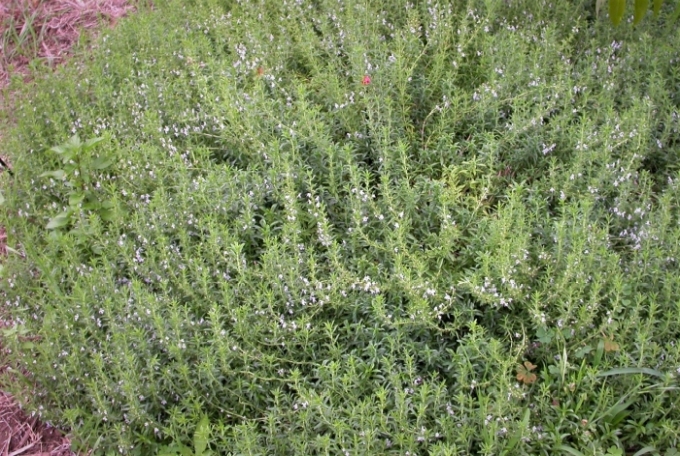
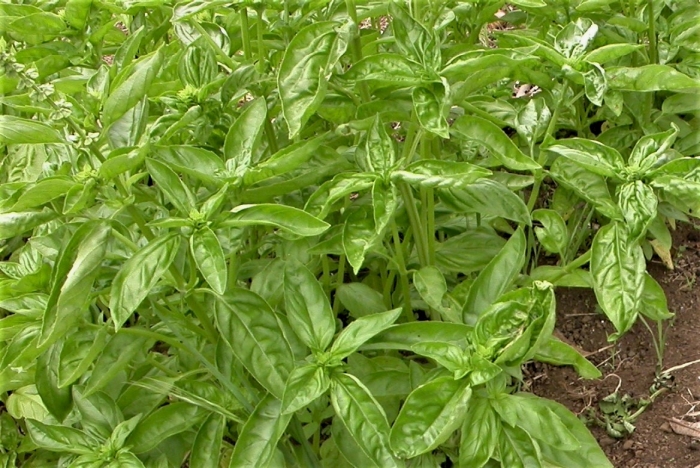
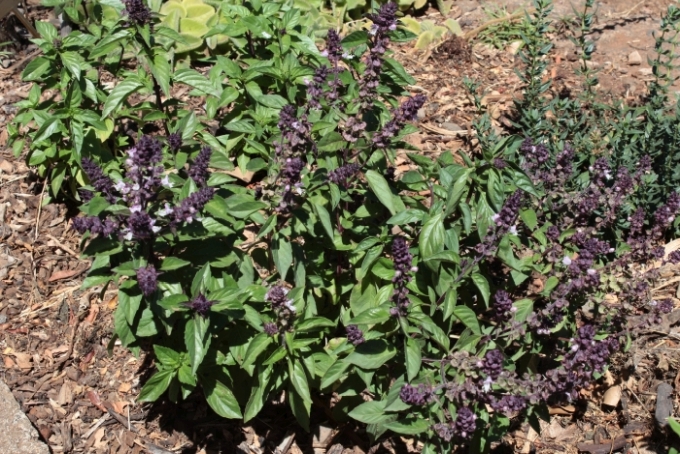
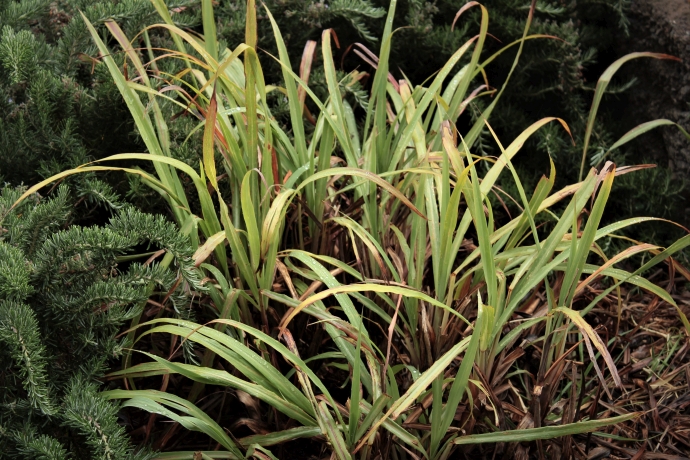
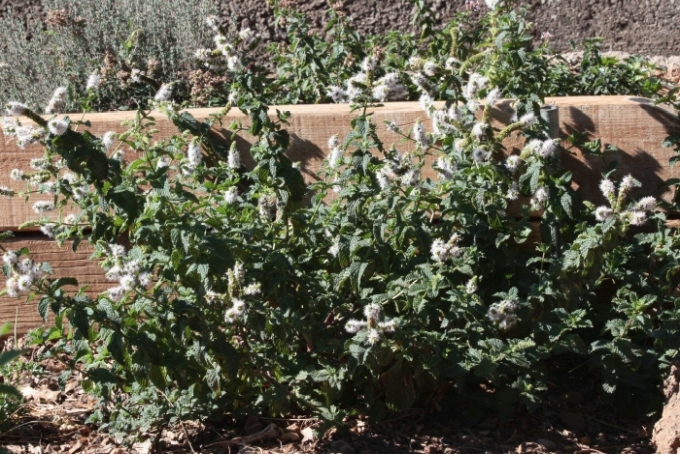
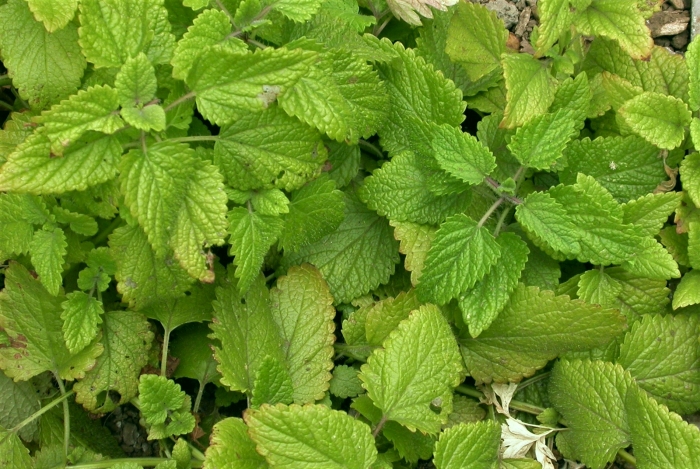
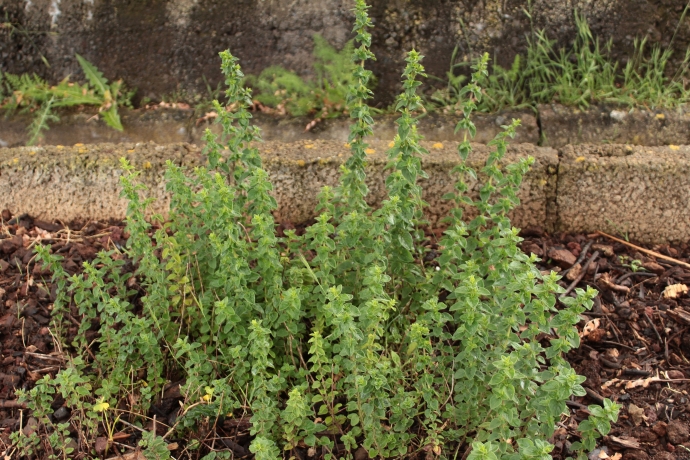
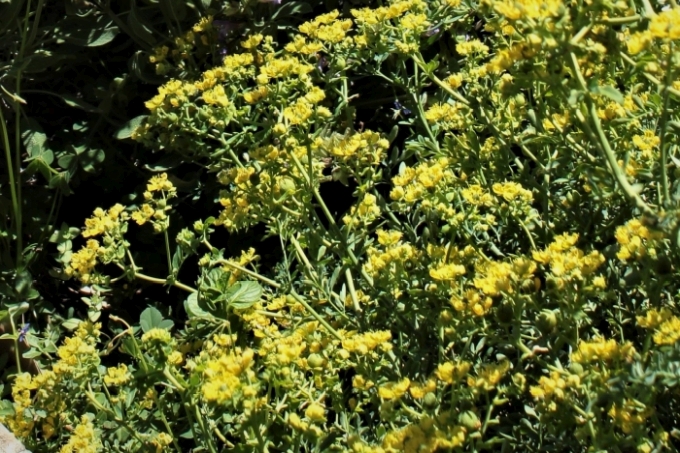
At the entrance to the 'Copago' greenhouse, you'll find small raised beds with around twenty aromatic and culinary species, most of them with medicinal properties: oregano, mint, cilantro, sage, rue, lemon balm, parsley, thyme, rosemary, coriander, and lemongrass are just some of the ones you might recognize if you enjoy cooking. The garden of Canarian plants is thus integrated into the agricultural and productive environment of the School of Engineering. Observe them, enjoy their aromas and essences, learn to identify and differentiate them, but please, don't take them!

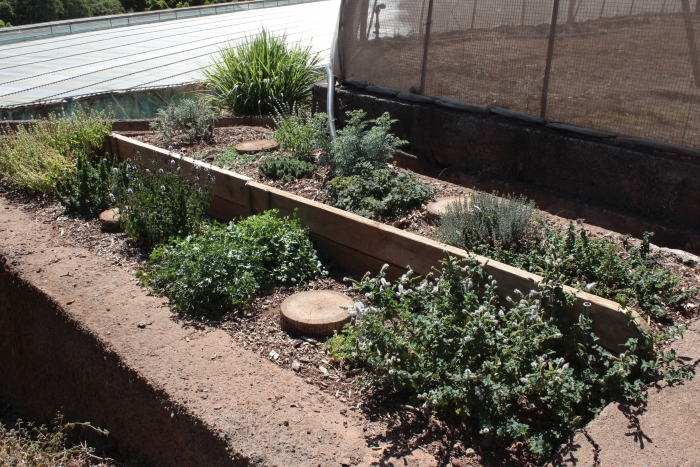


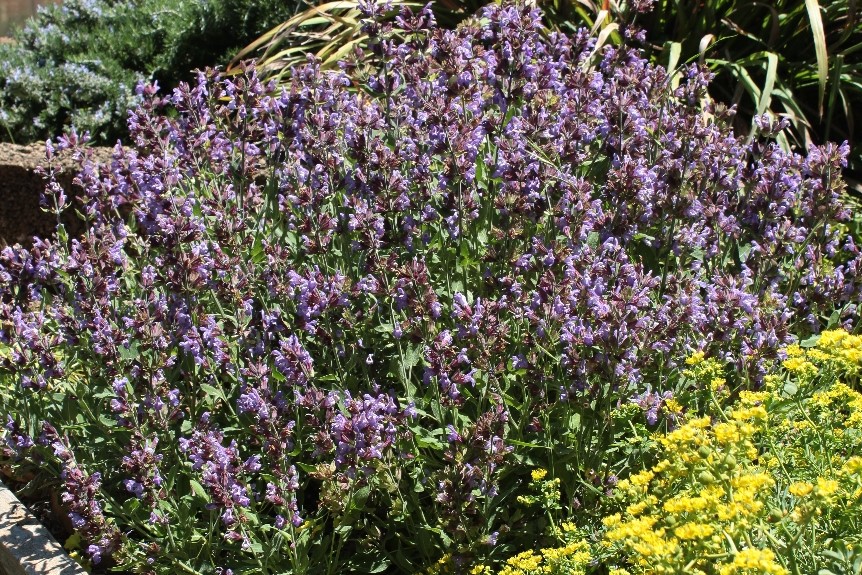


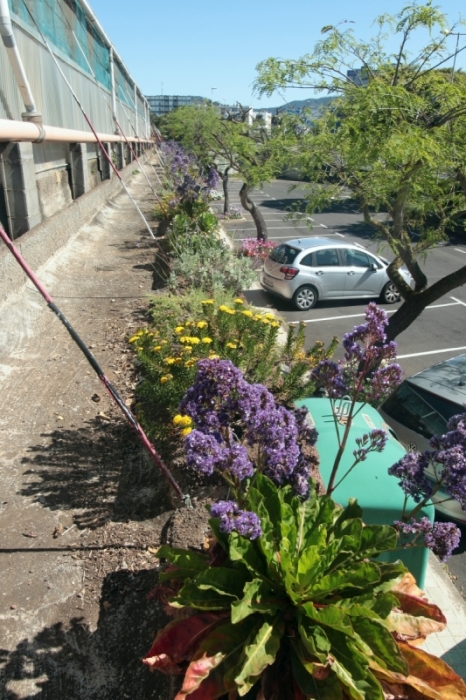
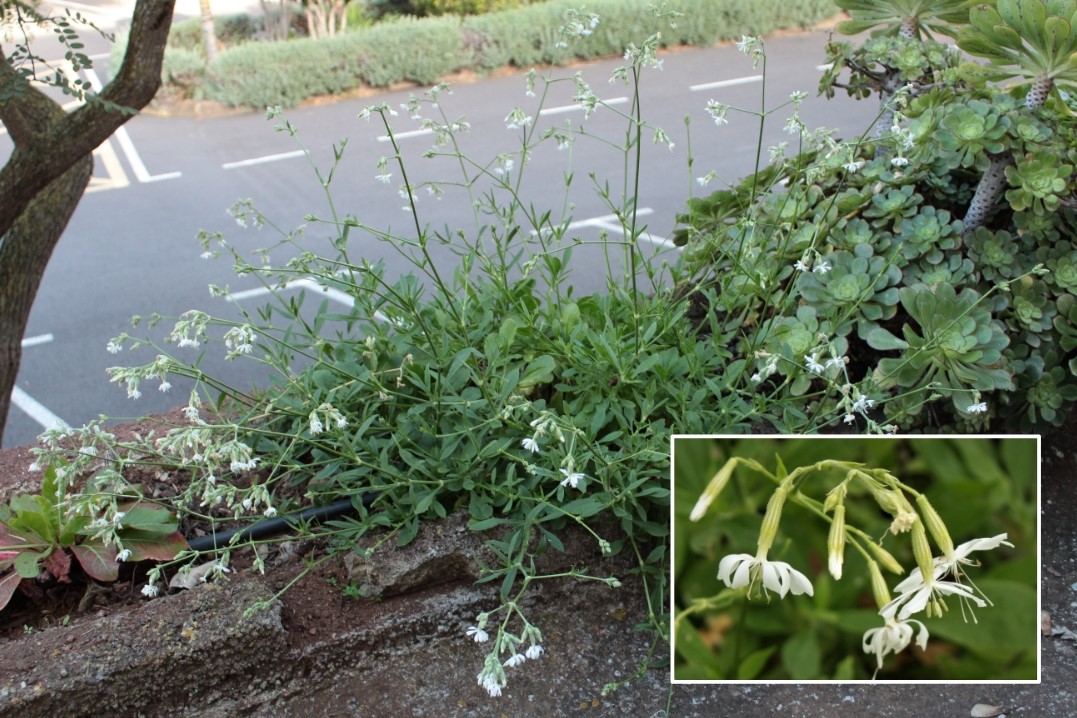
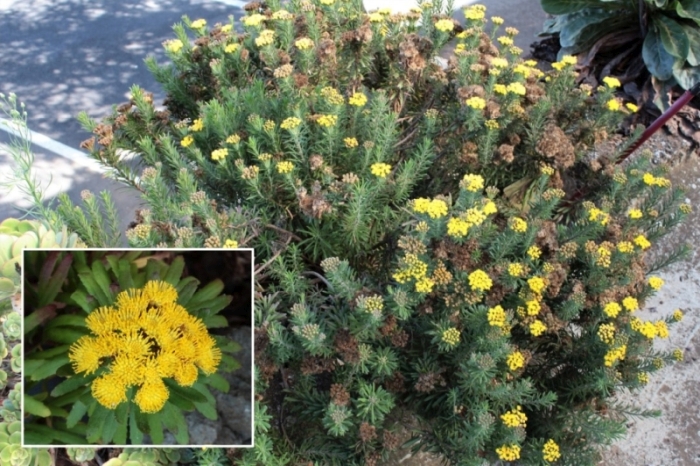
One of the aspects being studied in the Experimental Garden is the adaptability of plants to growing in limited spaces. The large built-in planters located on the wall opposite the main parking area allow several specimens to coexist in the same small space. After renewing the drainage layer and preparing the substrate, a composition was established with seven different species, including the Canary Island daisy (Allagopappus canariensis), the Canary Island spurge (Paronychia canariensis), and the Canary Island sea lavender (Limonium macrophyllum). The arrangement was designed to be appreciated both from the top of the wall and from the parking area below, combining different biotypes, textures, and blooms to enhance its aesthetic appeal.