eISSN: 2530-8343
ISSN: 1131-6810 (ya no activo)
DOI: 10.25145/j.fortunat

 Núm. 13 (2002)
El número 13 de Fortunatae recoge en sus 376 páginas diecisiete artículos que versan sobre numismática, mitología, humanismo, gramática latina, literatura grecolatina, filosofía antigua, epigrafía cretense, toponimia y tradición clásica, entre otros temas. Incluye, además, diecisiete reseñas y el recuerdo a cuatro insignes investigadores fallecidos a lo largo de este 2002, Gaspar Morocho Gayo, Goyita Núñez Esteban, Nicos Papadakis y Luis García Ballester.
 Núm. 12 (2001)
Trece artículos y veinituna reseñas conforman el número 12 de la revista Fortunatae. De carácter misceláneo se abordan diversos temas relacionados con la Filología Clásica y la tradición clásica que, en este número ,se extiende hasta el siglo XX con un trabajo dedicado a la poesía de Fernando González.
 Núm. 11 (1999)
El número 11 de Fortunatae reúne trece artículos sobre literatura griega clásica, literatura neogriega, autores humanistas, morfología latina y algunas cuestiones relacionadas con los textos bíblicos, entre otros temas. Completan el volumen veintitres reseñas y dos notas necrológicas, en memoria de Alberto Díaz Tejera (1932-1999) y de Rafael Muñoz Jiménez (1932-1999) firmadas, respectivamente, por Luis Miguel Pino Campos y el área de Estudios Árabes e Islámicos de la ULL.
 Núm. 10 (1998)
El número 10 de Fortunatae reúne quince artículos. Trece de ellos versan sobre diversos temas relacionados con la Filología Clásica. Los dos restantes se ocupan respectivamente del autor neogriego Rigas Velestinlis (1757-1798) y de la enciclopedia árabe islámica Kitāb al-Hayawān. Este volumen incluye veintinueve reseñas y concluye con la semblanza del profesor Rafael Muñoz Jiménez que, con motivo de su jubilación, le dedica el área de Estudios Árabes e Islámicos de la ULL.
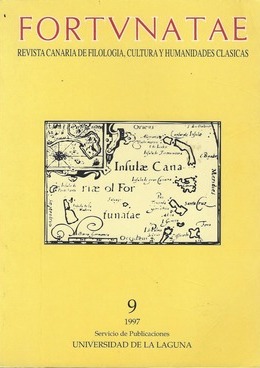 Núm. 9 (1997)
Los diecisiete artículos del número 9 de la revista Fortunatae recogen una miscelánea de temas relacionados con la Filología Clásica desde la antigüedad hasta el renacimiento, en la que tienen cabida la morfología, la sintaxis, la semántica y la mitología, entre otros. Este volumen, incluye, además, diecisiete reseñas y concluye con una nota necrológica en recuerdo del especialista en latín vulgar Veikko Väänänenn (1905-1997) firmada por Francisco González Luis.
 Núm. 8 (1996)
El número 8 de Fortunatae reúne veintiun artículos, dos varia y quince reseñas. De carácter misceláneo se abordan temas relacionados con la lengua y la literatura griega y latina y también con la cultura y la tradición clásica. In memoriam José Lasso de la Vega (1928-1996) firmado por Marcos Martínez cierra este volumen.
 Núm. 7 (1995)
El carácter misceláneo de la revista Fortunatae queda patente en este número 7 en el que, en sus veinte artículos y tres varia, tienen cabida además de la gramática y la literatura clásicas, la etimología, la métrica, la historia de la lengua, el humanismo, la epigrafía, el mito e incluso la poesía griega del siglo XX. Veinte reseñas completan el volumen.
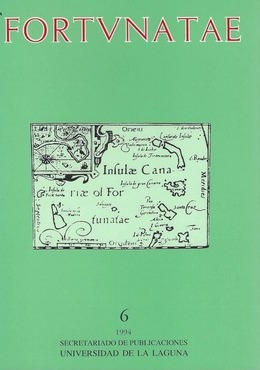 Núm. 6 (1994)
Con un total de 384 páginas el número 6 de Fortunatae reúne dieciseis artículos que versan sobre literatura clásica, gramática latina, filosofía antigua, epigrafía cretense, lengua y literatura medievales y tradición clásica, entre otros. Además, se reseñan veinituna publicaciones. Por último, Ángel Martínez Fernández dedica unas palabras in memoriam a “uno de los principales pilares de la ciencia kritológica”, Steryos Spanakys (1900-1994).
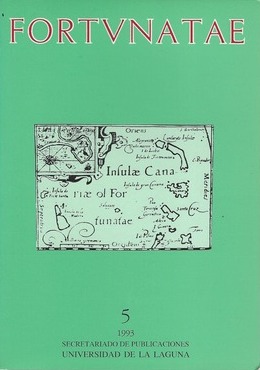 Núm. 5 (1993)
El número 5 de Fortunatae reúne catorce artículos que versan sobre epigrafía cretense, recepción y tradición clásica, interpretación bíblica, literatura medieval y humanismo, entre otros temas relacionados con la lingüística y la literatura clásica. Completan el volumen diecinueve reseñas.
 Núm. 4 (1992)
El número 4 de Fortunatae contiene diecisiete artículos y un varia que, además de los temas habituales relacionados con la lingüística y la literatura clásica, se ocupan de otros temas más específicos como el de la mujer en la antigüedad clásica, los textos bíblicos, o el humanismo, entre otros. Completan el volumen nueve reseñas.
 Núm. 3 (1992)
Once artículos, dos varia y diecisiete reseñas conforman el número 3 de Fortunatae. De carácter misceláneo, aborda temas relacionados con gramática, retórica, literatura medieval y epigrafía cretense.
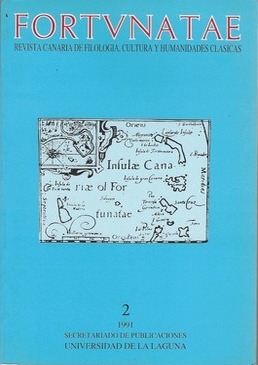 Núm. 2 (1991)
Las 364 páginas del presente numero de Fortunatae reúnen dieciseis artículos y dieciocho reseñas. De carácter misceláneo tienen cabida la más diversas materias relacionadas con los estudios clásicos, tales como literatura griega, literatura latina, sintaxis griega, sintaxis latina, epigrafía griega, y tradición clásica, entre otras.
 Núm. 1 (1991)
Primer número de la revista Fortunatae que nace en 1991 en el Departamento de Filología Clásica y Árabe de la Universidad de La Laguna con el objetivo de acoger los estudios e investigaciones de los miembros de las distintas áreas del mencionado departamento, así como de los departamentos afines de otras universidades españolas. En sus 293 páginas reúne catorce artículos que abordan diversos temas adscritos al entorno de la Filología Clásica, como humanismo, tradición clásica, fonética, epigrafía, y literatura entre otros. Contiene además tres varia y veintitrés reseñas.


Indizada en:




Este trabajo está bajo una licencia CC BY-NC-ND 4.0