
September 22, 2026, marks the 50th anniversary of the assassination of Bartolomé García Lorenzo (1955-1976), one of the victims of police repression during the...


The Lecture Hall of the Faculty of Economics, Business and Tourism will host the Research Seminar: "Capital, Capability, or Confidence: Experimental Evidence on Youth Entrepreneurship in Kenya" on May 14th at 12:00 pm. The seminar will be given by María Hernández de Benito, Assistant Professor in the Department of Economics at CUNEF University, and organized by the CajaCanarias Cabildo Insular de Tenerife Chair of Economics and Mobility at the University of La Laguna.
María Hernández de Benito is a visiting researcher at the Abdul Latif Jameel Poverty Action Lab (J-PAL), a member of the Inclusion Policy Lab of the Spanish Ministry of Inclusion, Social Security and Migration, and of the Measures for Advancing Gender Equality (MAGNET) initiative. She earned her PhD in Economics from Georgetown University in the United States, under the supervision of Garance Genicot and Martin Ravallion.
Her research interests include applied microeconomics, economic development, gender economics, and socio-labor inclusion. She will present her work, "Capital, Capability, or Confidence: Experimental Evidence on Youth Entrepreneurship in Kenya," co-authored with Yanina Domenella, Julian Jamison, Abla Safir, and Bilal Zia, at a research seminar. This work investigates which interventions are most effective in fostering youth entrepreneurship in Sub-Saharan Africa, an environment particularly affected by the lack of quality employment opportunities for young people.
To this end, they conducted a randomized controlled trial within the framework of a government project in Kenya aimed at supporting youth entrepreneurship and employment. Specifically, the project randomly offered 9,380 young people from vulnerable backgrounds $360 to start a business and business development advice. The results showed that the financial aid increased entrepreneurship by 16 percentage points, with increases in sales, profits, and well-being three years after the intervention. Adding business development advice to the financial aid did not improve the results, highlighting the importance of financial capital as the main barrier to entry for youth entrepreneurship.
However, offering only advisory services increases sales and profits for women who have recently started their own businesses. Furthermore, prior to the intervention, all participants completed entrepreneurial attitude tests, the results of which the authors use to analyze heterogeneity in outcomes based on entrepreneurial skills and to assess whether interventions can be targeted to the most vulnerable groups.
|
Monday
|
Tuesday
|
Wednesday
|
Thursday
|
Friday
|
Saturday
|
Sunday
|
|---|---|---|---|---|---|---|
10 events,
September 22, 2026, marks the 50th anniversary of the assassination of Bartolomé García Lorenzo (1955-1976), one of the victims of police repression during the... 
From October 7th to 30th, you can visit the photographic exhibition "Gaza, the unsilenced gaze. A call to not look away..." at the General and Humanities Library. 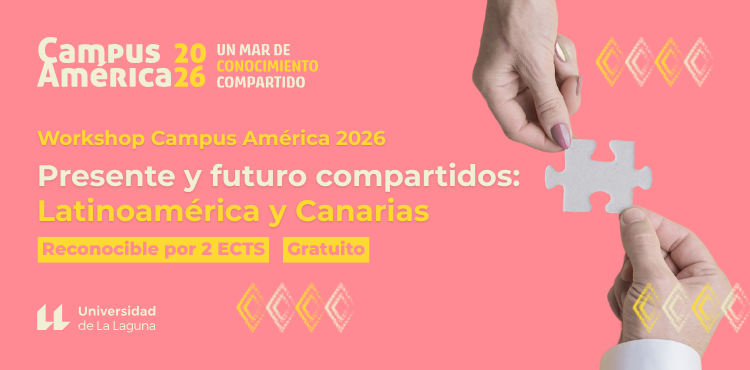
The fifth edition of Campus América is coming, from October 19th to 30th, a space for evaluating and promoting the internationalization efforts of the University of La Laguna... 
The Canary Islands Institute of Hemodonation and Hemotherapy is carrying out its annual blood donation campaign among the university community. This year, the campaign will be... 
The Exhibition Hall of the Faculty of Education at the University of La Laguna will host, from October 13th to 30th, the exhibition 'Images - Words', a project by... 
The fifth edition of Campus América is coming, from October 19th to 30th, a space for evaluating and promoting the internationalization efforts of the University of La Laguna... 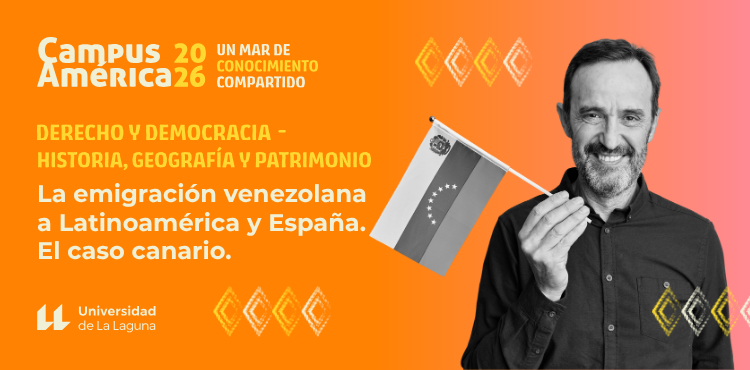
The fifth edition of Campus América is coming, from October 19th to 30th, a space for evaluating and promoting the internationalization efforts of the University of La Laguna...
-
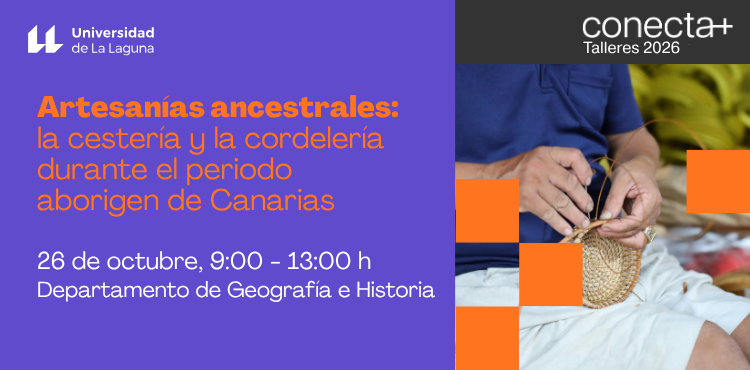
The workshop "Ancestral Crafts: Basketry and Rope Making during the Aboriginal Period of the Canary Islands" is part of the 2026 University Extension Workshops program "Connect+ Workshops". It will be held...
-
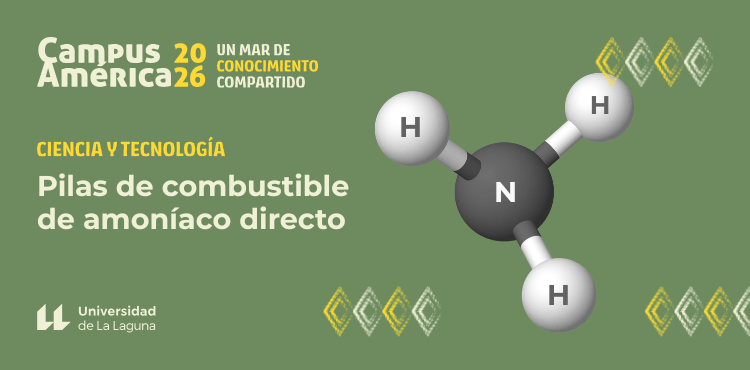
The fifth edition of Campus América is coming, from October 19th to 30th, a space for evaluating and promoting the internationalization efforts of the University of La Laguna...
-

The workshop "Let's Graft Fruit Trees" is part of the 2026 University Extension Workshops program, "Connect+ Workshops." It will be held in the Agricultural Engineering Department on Monday the 26th... |
15 events,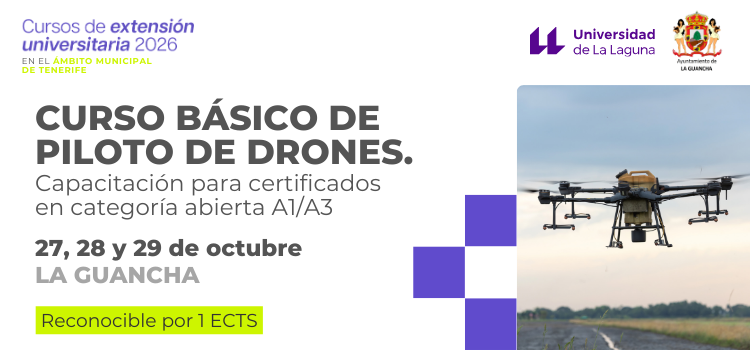
La Guancha hosts the course "Basic Drone Pilot Course. Training for open category A1/A3 certifications", jointly organized by the Vice-Rectorate for Culture and University Extension and the City Council... 
The Faculty of Law at the University of La Laguna will host the exhibition “Only Six. The Story of Salimata Sangare” throughout the month of November in its facilities... 
The fifth edition of Campus América is coming, from October 19th to 30th, a space for evaluating and promoting the internationalization efforts of the University of La Laguna...
-

The fifth edition of Campus América is coming, from October 19th to 30th, a space for evaluating and promoting the internationalization efforts of the University of La Laguna...
-
The fifth edition of Campus América is coming, from October 19th to 30th, a space for evaluating and promoting the internationalization efforts of the University of La Laguna...
-
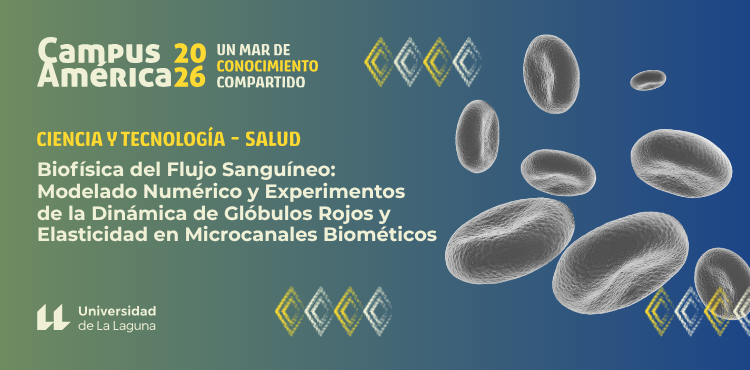
The fifth edition of Campus América is coming, from October 19th to 30th, a space for evaluating and promoting the internationalization efforts of the University of La Laguna... |
17 events,
The Spanish Association of Climatology (AEC) was founded in 1998 to bring together those interested in climate science. Every two years... 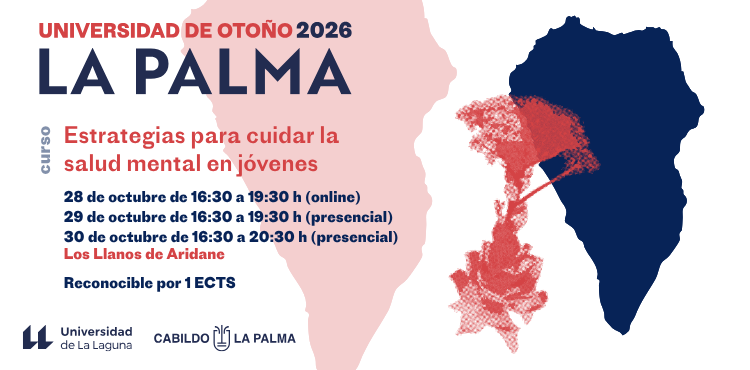
Los Llanos de Aridane hosts the University Extension course "Strategies for caring for the mental health of young people", which will be held on October 28, 29 and 30... 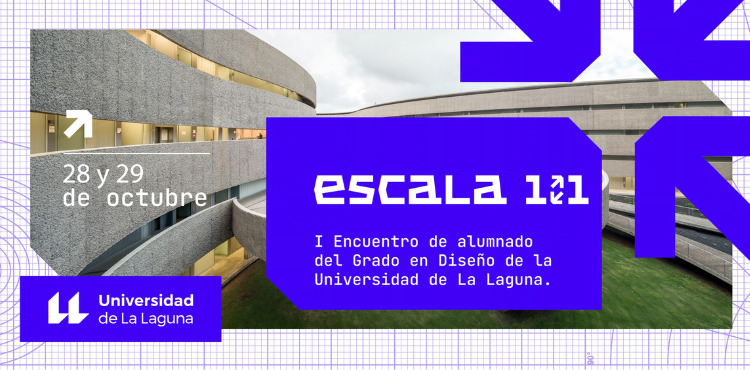
The Cultural Design Classroom is organizing this meeting which will be held at the Guajara Campus on October 28 and 29, 2026 from 4:30 pm to 7:00 pm... 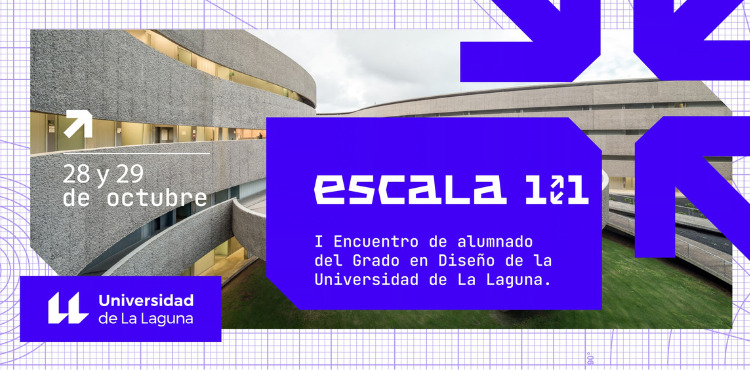
The Cultural Design Classroom is organizing this meeting which will be held at the Guajara Campus on October 28 and 29, 2026 from 4:30 pm to 7:00 pm...
-
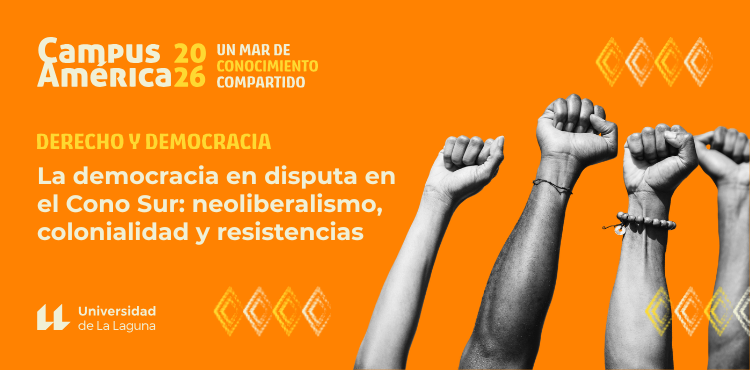
The fifth edition of Campus América is coming, from October 19th to 30th, a space for evaluating and promoting the internationalization efforts of the University of La Laguna...
-
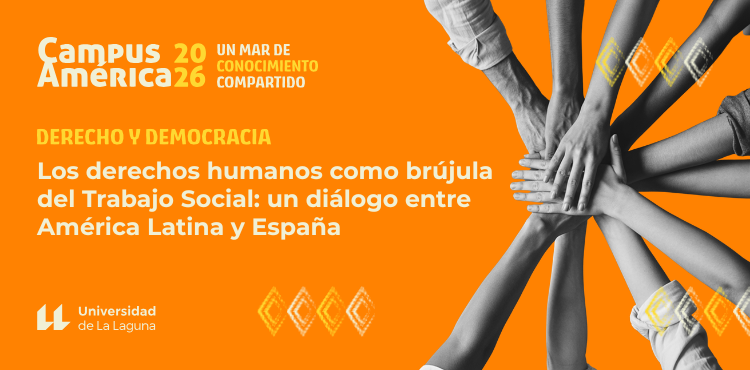
The fifth edition of Campus América is coming, from October 19th to 30th, a space for evaluating and promoting the internationalization efforts of the University of La Laguna...
-
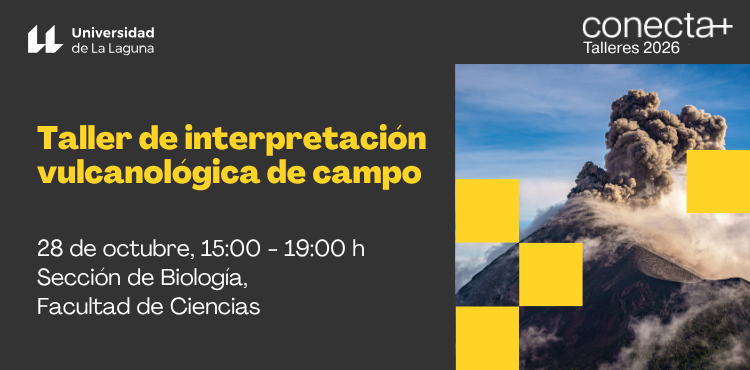
The "Field Volcanological Interpretation Workshop" is part of the 2026 University Extension Workshops program, "Connect+ Workshops." It will be held on Wednesday, October 28th... |
18 events,
The Scientific Conference is conceived as an “Open Laboratory” focused on advances in international research on Human Rights and Social Work. It aims to broaden and bring the content closer... 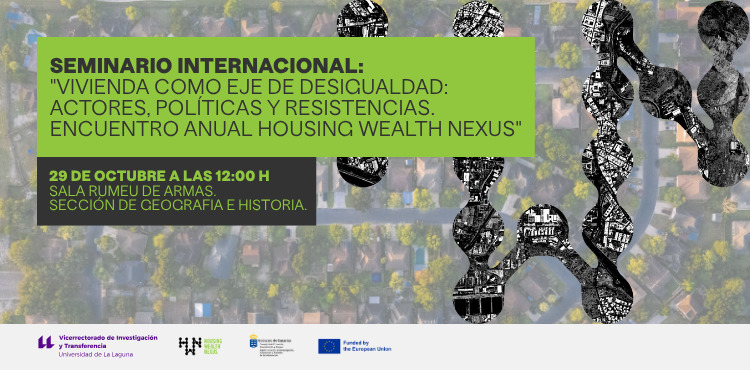
The international seminar "Housing as an axis of inequality: actors, policies and resistance. Housing Wealth Nexus Annual Meeting" will take place on October 29 and 30 at the University of... 
The orientation meeting in Tenerife will take place on October 29th in the Blas Cabrera Felipe Auditorium, in the Physics and Mathematics Building of the Faculty of... 
As a parallel activity to the upcoming ULL Debates: Our Mental Health, scheduled for October 29th at the Faculty of Social Sciences and Information, we will have...
-

The workshop "Voice Care: Experiential Training and Prevention for Everyday Life" is part of the 2026 University Extension Workshops program "Connect+ Workshops". It...
-

Mental health is a broad phenomenon that affects multiple aspects of our society; therefore, the public university stands as a space for the everyday expression of...
-

The fifth edition of Campus América is coming, from October 19th to 30th, a space for evaluating and promoting the internationalization efforts of the University of La Laguna... |
16 events,
-
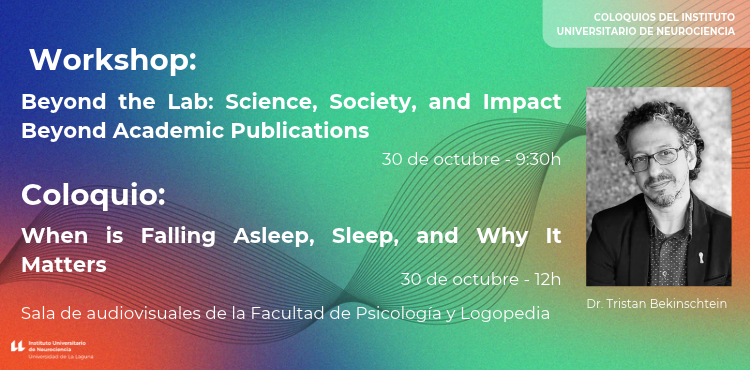
The University Institute of Neuroscience (IUNE) is organizing a conference next Friday, October 30th, with Dr. Tristan Bekinschtein, a researcher in the Department of Psychology at the University of Cambridge,...
-

The European Documentation Centres of the ULL and the ULPGC, together with the Canary Islands Council of the European Movement, Eurodesk Spain, Europe Direct Canarias and the Parliament of the Canary Islands, are organizing a...
-
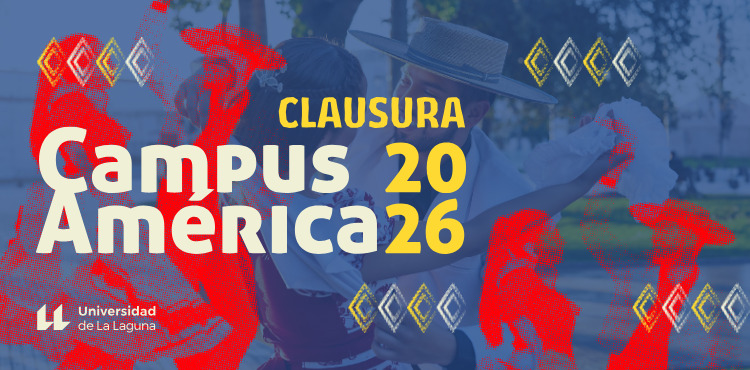
The closing ceremony for the fifth edition of Campus América will take place on Friday, October 30th. This year's event runs from October 19th to 30th. Campus América is... |
6 events,
Following the excellent reception of the first two editions, the Directorate of Cooperation and Mobility with Africa and Latin America of the University of La Laguna, in collaboration with the laboratory...
-
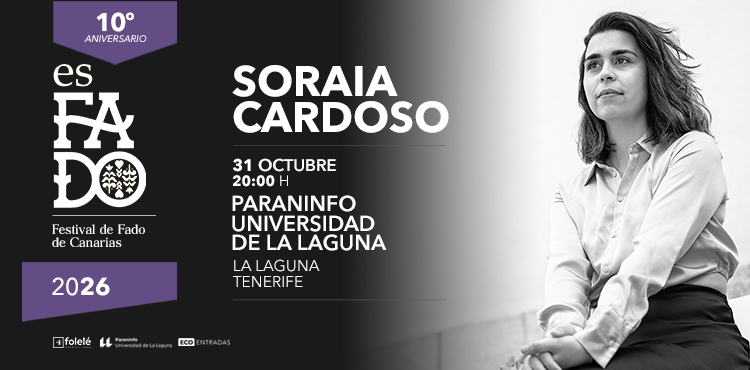
Soraia Cardoso is one of Portugal's rising fado singers. In 2018, she was a contestant on the television program The Voice Portugal, where she finished in third place. She was the first fado singer... |
5 events, |
6 events,
The course "Lifestyle Medicine: Prescribing Habits to Improve Health" is part of the 2026 University Extension Courses program "Connect+ Expand Your Knowledge". It... |
11 events,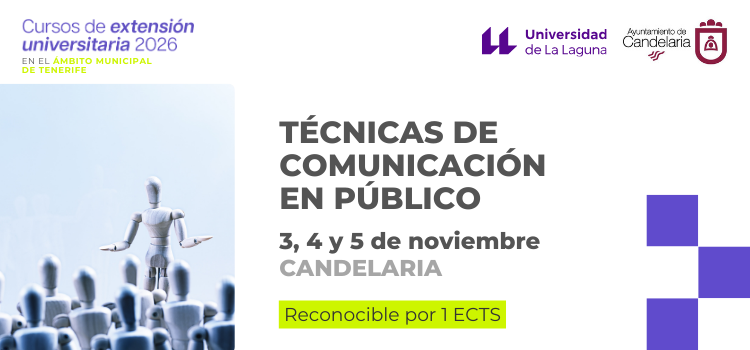
Candelaria hosts the course "Public Speaking Techniques", organized jointly by the Vice-Rectorate for Culture and University Extension and the Candelaria City Council, as part of the Courses program... 
The Directorate of Cooperation and Mobility with Africa and Latin America of the Vice-Rectorate for Internationalization and Cooperation launches the second edition of the interdisciplinary workshop "Stories from the Global South: other voices, other... 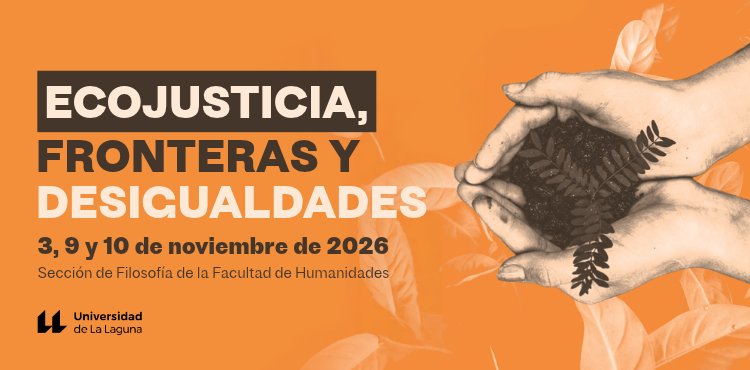
The Javier Muguerza Carpintier Cultural Chair is organizing an Ibero-American seminar with Mexican and Spanish thinkers on Ecojustice, Borders, and Inequalities. Mexican professors and researchers from the Benemérita Universidad Autónoma de San Juan will participate. 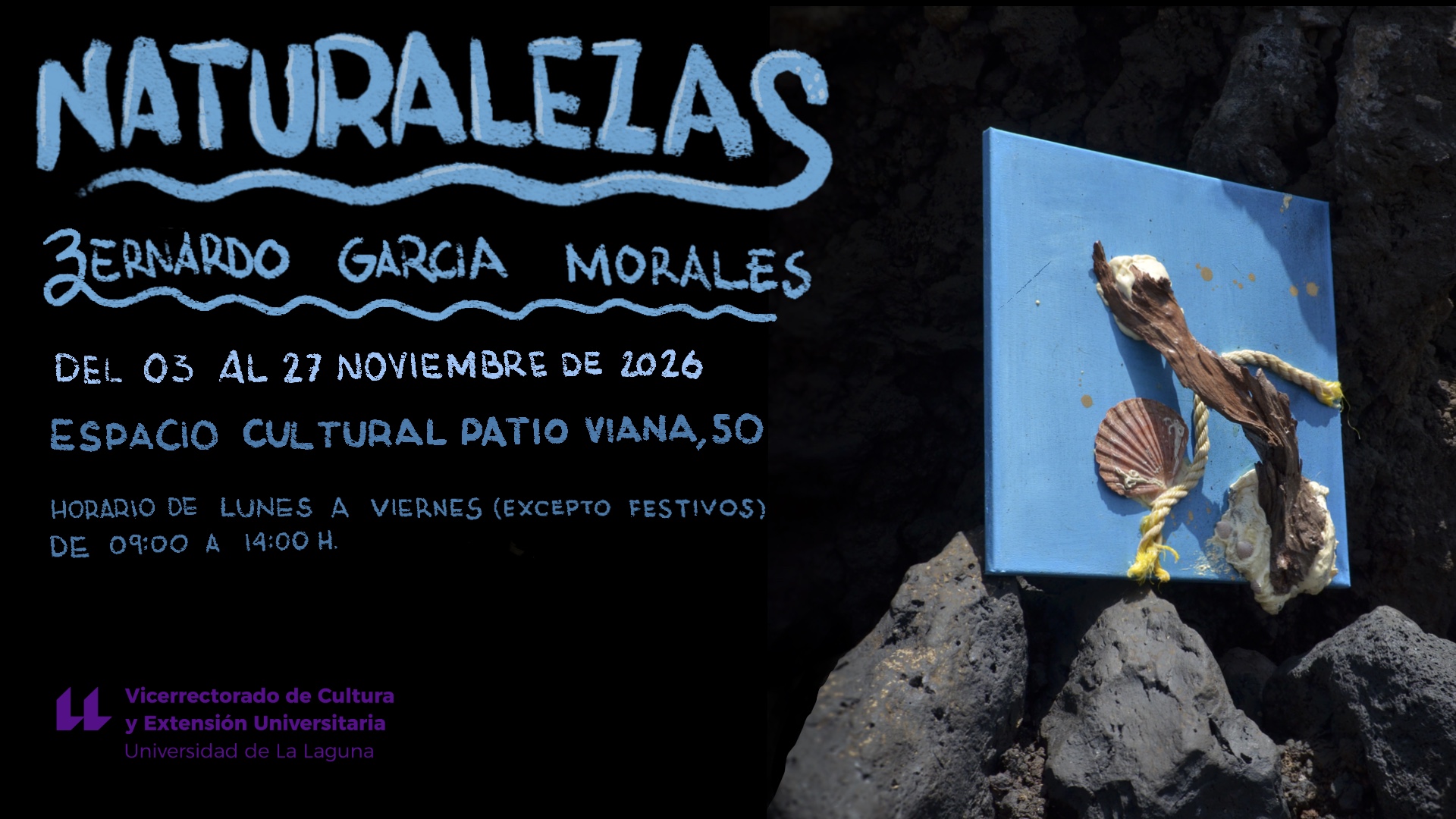
Bernardo García Morales's paintings explore the intrinsic beauty of natural materials and their capacity to become landscapes. His work is close to informalism and linked to tradition...
-
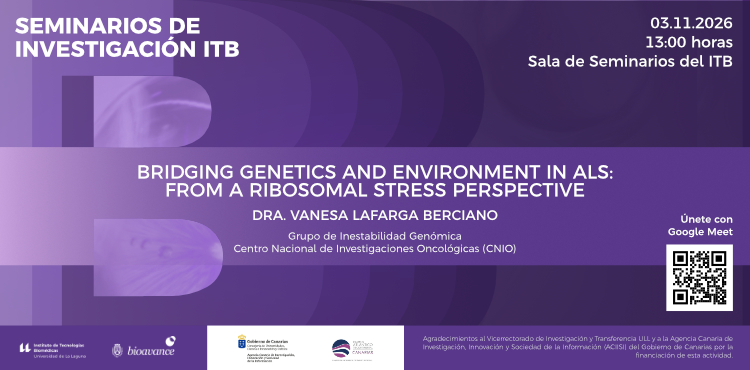
The ITB 2026 Research Seminars program continues on Tuesday, November 3rd at 1:00 pm with a seminar by Dr. Vanesa Lafarga, who will give a talk entitled "Bridging...
-
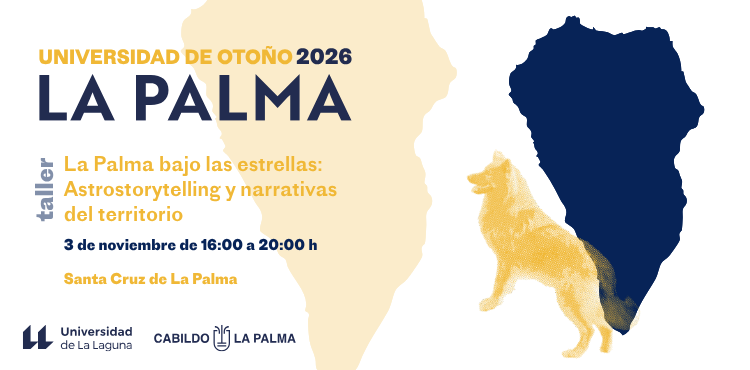
Santa Cruz de La Palma hosts the University Extension workshop "La Palma under the stars: Astrostorytelling and narratives of the territory", which will be held on November 3, 2026...
-

The International Ballet Company, one of Europe's finest classical ballet companies, comprised of soloists and dancers from England, France, Ukraine, Spain, and Italy, among other countries, presents us... |
14 events,
In August 2025, the University of Costa Rica held the First International and Interdisciplinary Congress 'Unlivable Lives: Masculinities in Ibero-America'. This meeting addressed... 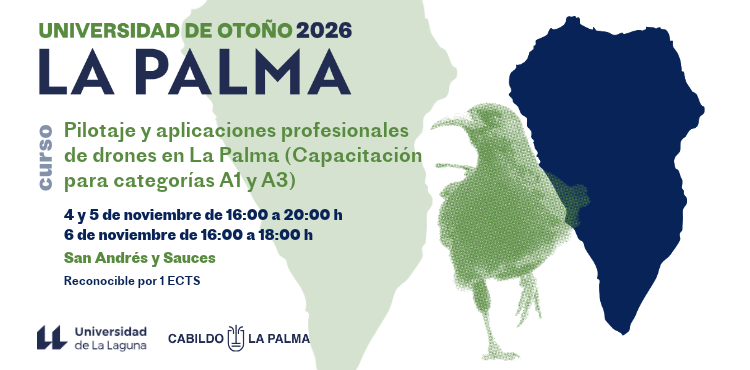
San Andrés y Sauces hosts the University Extension course "Drone Piloting and Professional Applications in La Palma (Training for categories A1 and A3)," which will be held on... 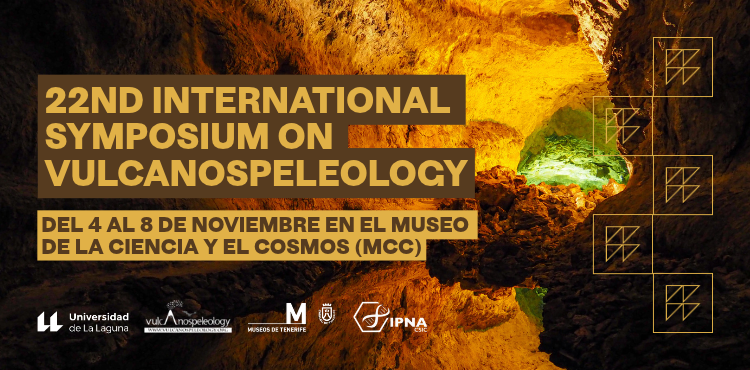
The 22nd International Symposium on Volcanospeleology (ISV22) is the world's leading meeting dedicated to the study of lava tubes and cavities, structuring its program... 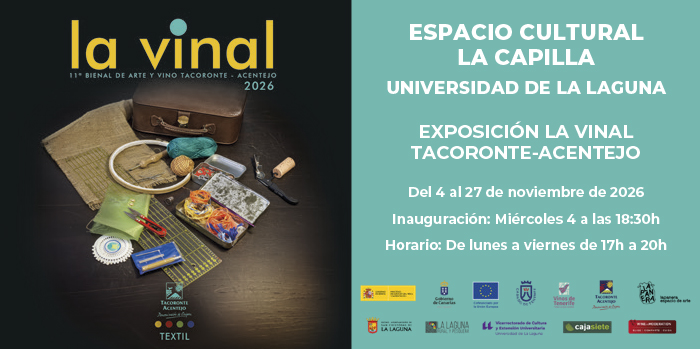
La Vinal. The Tacoronte-Acentejo Art and Wine Biennial is a project that, since 2006, has fostered a dialogue between contemporary artistic practices and the wine culture of the region. Each edition...
-
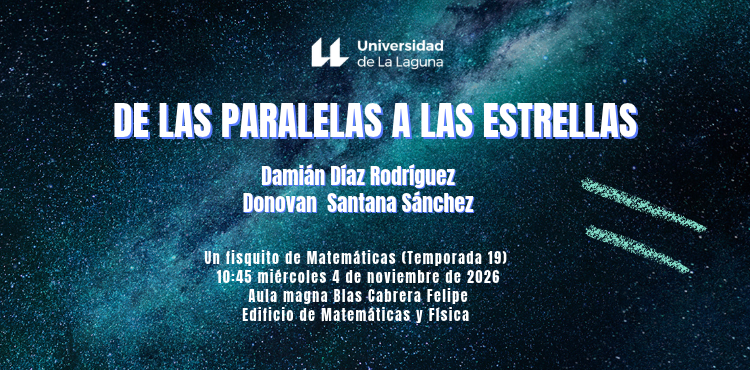
On Wednesday, October 14th, the 19th season of a new mathematical physics show continues in the Blas Cabrera Auditorium of the Physics and Mathematics Building at the University of...
-

The Institute of Canarian Studies is hosting this art workshop, "Ecology and Collage: Recreating the Canary Islands," which will be held on November 4, 2026, from 5:00 p.m. to 7:30 p.m.
-
The International Ballet Company, one of Europe's finest classical ballet companies, comprised of soloists and dancers from England, France, Ukraine, Spain, and Italy, among other countries, presents us... |
13 events,
-
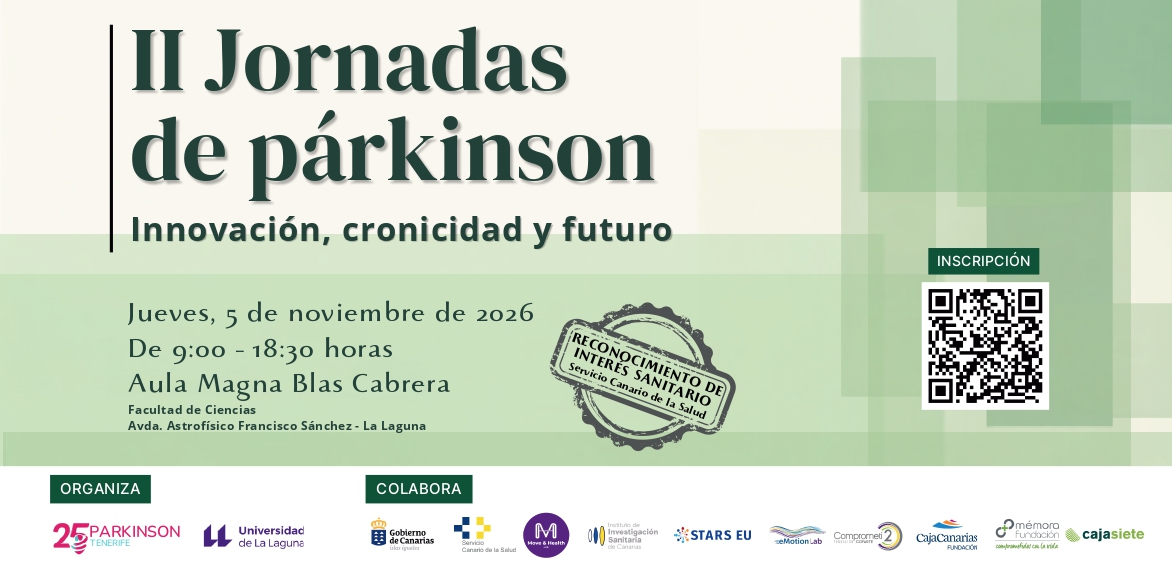
The 'II Parkinson's Conference: Innovation, Chronicity and Future' is presented as a space for meeting, training and knowledge exchange to delve deeper into the comprehensive approach to the disease...
-
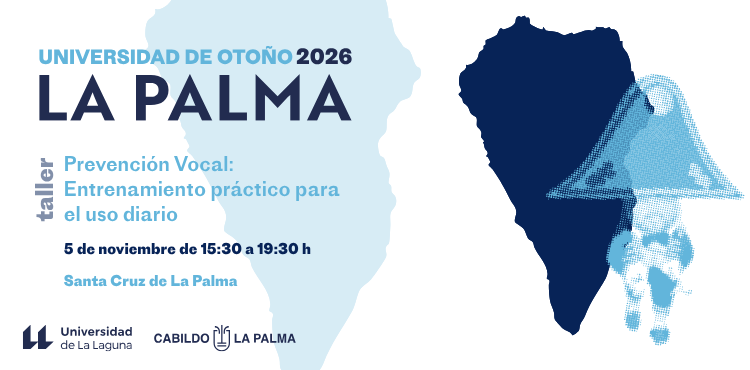
Santa Cruz de La Palma will host the University Extension workshop "Vocal Prevention: Practical Training for Daily Use," which will be held on November 5, 2026, at...
-

The International Ballet Company, an acclaimed company comprised of soloists from Ukraine, France, Moldova, Spain, and Italy, among other countries, invites us to enjoy its 2026 Winter Tour... |
14 events,
Nothing is what it seems, the new show by Dakris, The Invisible Magician, winner of the First National Magic Prize, a television creative and winner of the award for best magician...
-
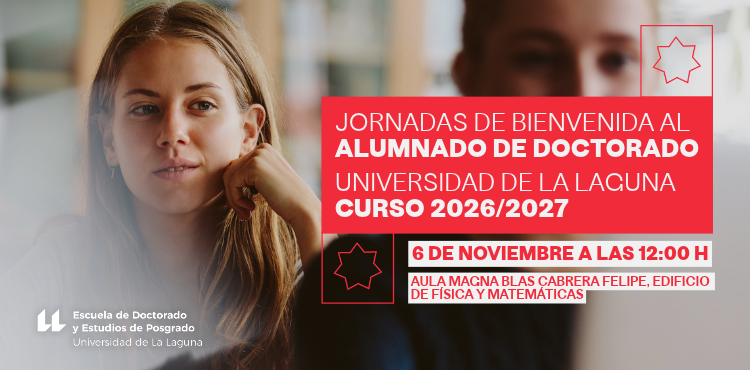
The Blas Cabrera Felipe Auditorium, located in the Physics and Mathematics Building of the University of La Laguna, will host an event on Friday, November 6th, starting at...
-
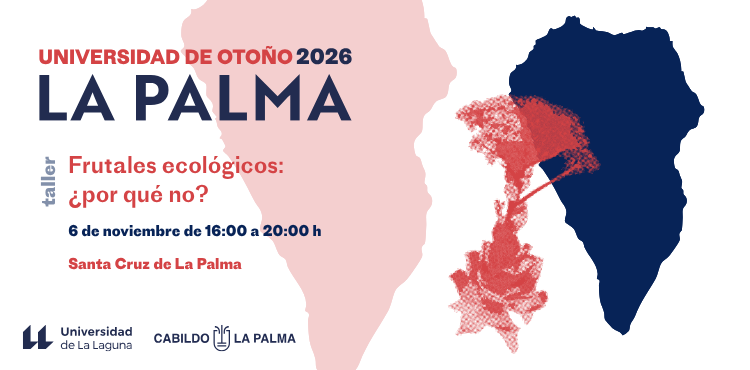
Santa Cruz de La Palma hosts the University Extension workshop "Organic fruit trees, why not?", which will be held on November 6, 2026 from 4:00 pm to 8:00 pm...
-

In the depths of the ocean, where light barely penetrates and conditions are extreme, marine mammals like the sperm whale have developed amazing survival skills, using sound as... |
10 events, |
10 events, |
10 events,
-

The University of La Laguna and the STARS EU community are organizing the presentation of the Circular Economy Living Lab, which will take place next Monday, November 9th...
-

The Cultural Classroom of Contemporary Artistic Thought is organizing this event, which will be held at the La Limonera Cultural Association on Monday, November 9th, from 5:00 PM to 10:00 PM... |
15 events,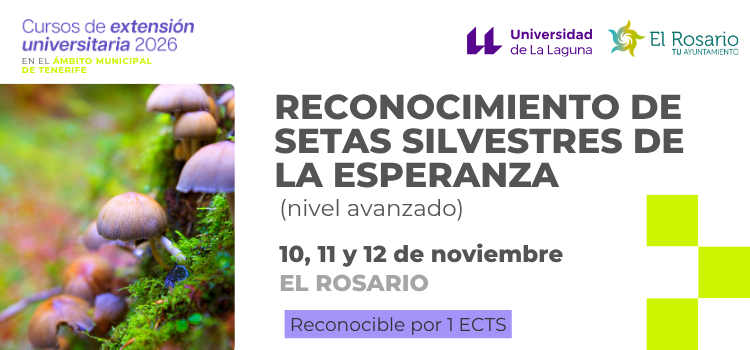
El Rosario hosts the course "Identification of wild mushrooms of La Esperanza (advanced level)", jointly organized by the Vice-Rectorate for Culture and University Extension and the Illustrious City Council of El Rosario,... 
The 1st International Conference on Renewable Energy will take place on the island of El Hierro from November 10th to 13th, 2026. El Hierro is not just the setting... 
The Research Group: Law, Person and Family, is organizing these conferences which will be held at the Faculty of Law on Tuesdays, November 10 and 17, 2026, at the following times...
-

The 2nd Conference "Take Care of Your Sexuality: Young Women, Disabilities and Prevention of Sexual Violence" is an initiative promoted within the framework of collaboration between the General Directorate of...
-
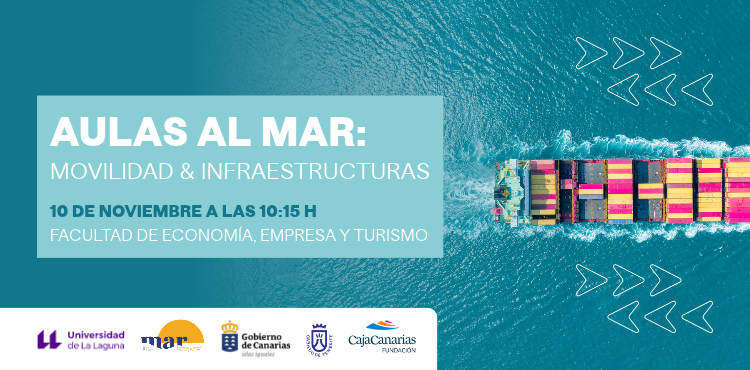
On Tuesday, November 10th at 10:15 am, the "Classrooms to the Sea" event will take place at the Faculty of Economics, Business and Tourism of the University of La Laguna.
-

The Faculty of Social Sciences and Communication's Board Room will host the presentation of the book: "Western Sahara 1975. The End of Francoist Colonialism," which will take place... |
10 events,
-
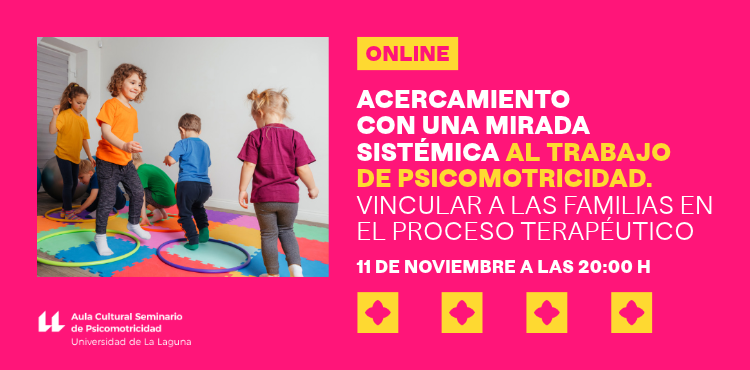
The work of a psychomotor therapist with children cannot be separated from the child's family reality. Involving the family in the therapeutic process entails...
-

Every time Petite Lorena moves across the stage, she effortlessly traverses the precipice that separates political correctness from incorrectness, a precipice that is, incidentally, more slippery than ever now.... |
16 events,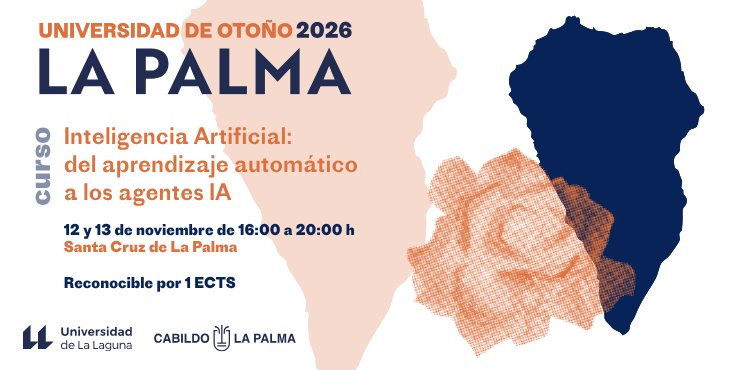
Santa Cruz de La Palma hosts the University Extension course "Artificial Intelligence: from machine learning to AI agents", which will be held on November 12 and 13... 
The "1st International Wine Marketing Workshop. La Palma 2026" will be held at the San Antonio Volcano Visitor Centre in the municipality of Fuencaliente on the 12th and 13th... 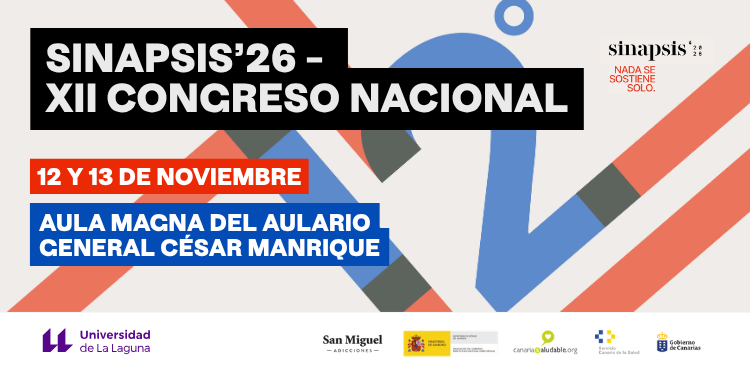
The twelfth edition of Sinapsis will be held on November 12th and 13th in the Aula Magna of the César Manrique General Lecture Hall at the University of La Laguna. This... 
The 3rd International Technical Conference on Sustainable Viticulture will be held on the island of La Gomera on November 12, 13 and 14, 2026. This event,...
-
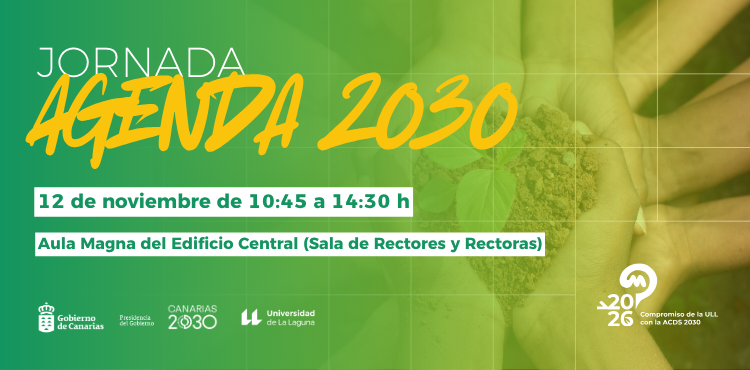
The University of La Laguna will present the projects developed in the... next Thursday, November 12, at 10:45 a.m., in the Aula Magna of the Central Building (Rector's Hall).
-
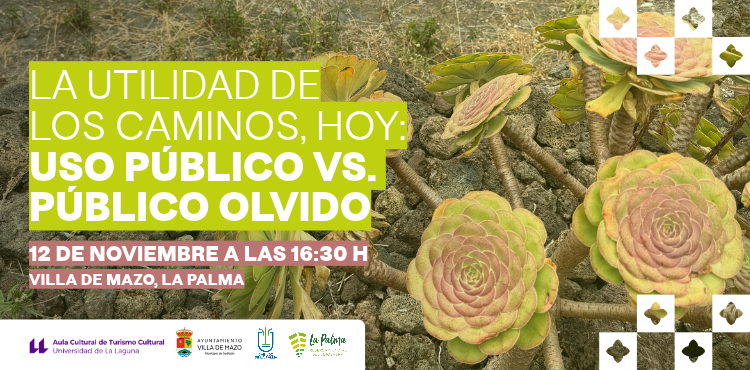
Historical routes are currently being debated between their status as a strategic resource and their potential for sustainable use by communities that have recognized their potential...
-
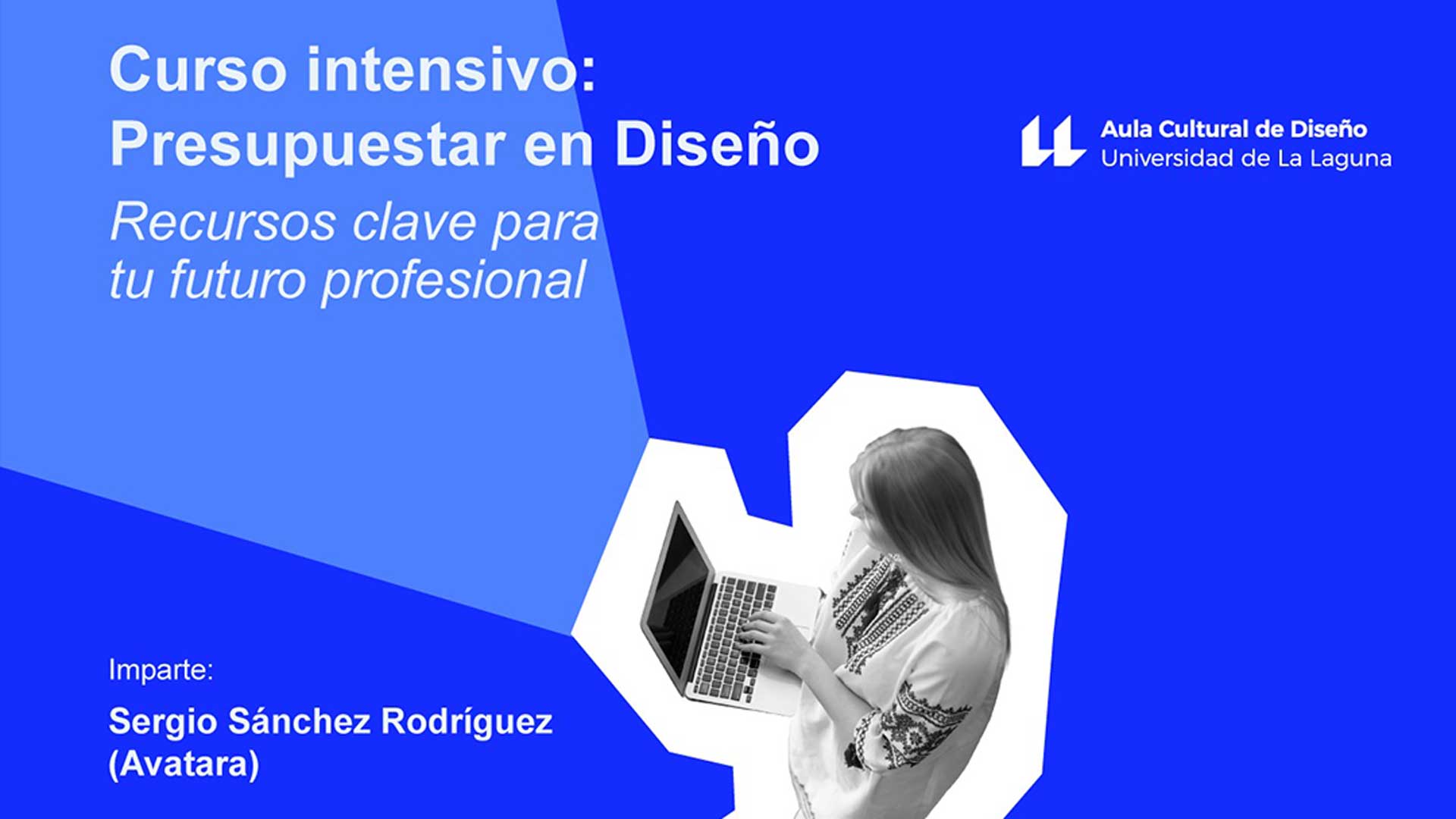
Do you know the true value of your work as a creative designer? Budgeting a creative project goes far beyond simply assigning a price. It involves knowing how to value your work, manage projects, and defend your position... |
13 events,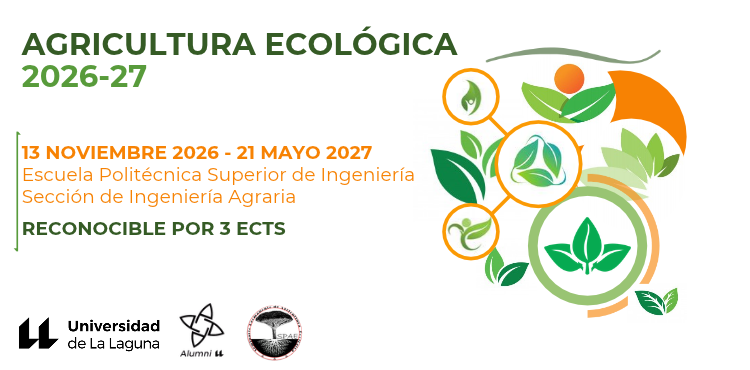
The Permanent Seminar on Organic Agriculture (SPAE) and the Association of Former Students and Friends of the University of La Laguna (Alumni ULL), with the collaboration of the Section of...
-
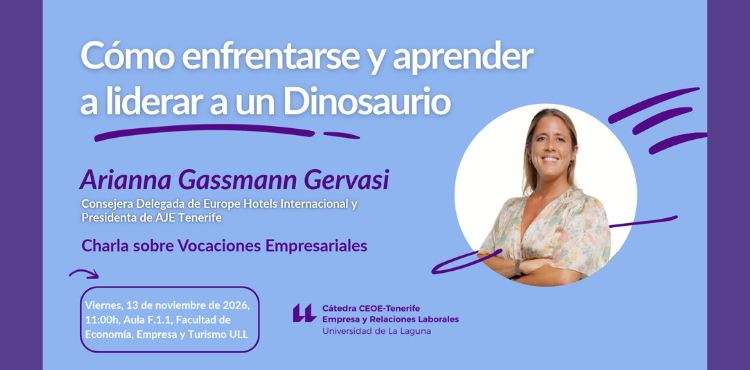
The CEOE-Tenerife Chair of Business and Labor Relations is organizing this talk, which will be held on Friday, November 13, 2026, from 11:00 a.m. to 1:00 p.m. in the Faculty of Economics,...
-

The Cultural Center for Scientific Outreach is organizing this seminar, which will be held online on November 13, 2026, from 4:30 p.m. to 6:30 p.m. Literary routes...
-

The Binter Institutional Chair of Cybersecurity at the University of La Laguna (ULL) will hold its official annual awards ceremony next Friday, November 13th... |
9 events,
-
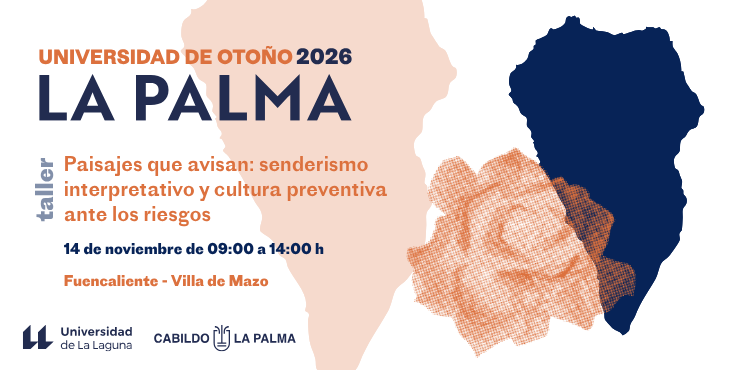
The University Extension workshop "Landscapes that warn: interpretive hiking and preventive culture in the face of risks" will be held on November 14, 2026 from 9:00 a.m. to 2:00 p.m.
-

The Sports Service is organizing the "Train with Strategy" workshop, taught by instructors Guillermo Maldonado de Diego, a Senior Technician in Teaching and Socio-sports Activities and a student of the Degree in...
-
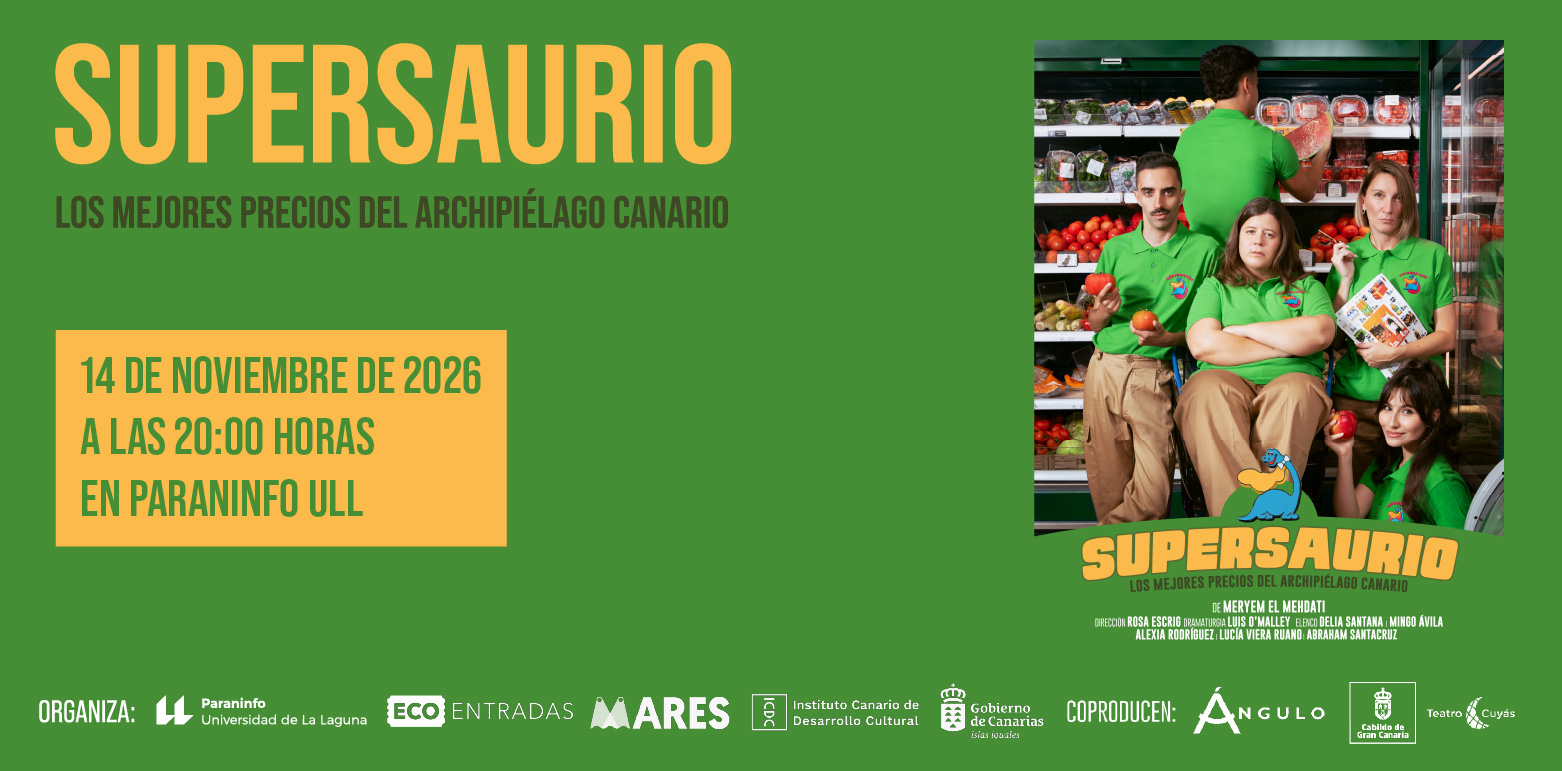
In an archipelago where opportunities seem to pass as slowly as Route 91, Meryem, a 25-year-old, tries to find her place amidst work at Supersaurio, the... |
5 events, |
10 events,
The Mapfre Canarias Foundation Chair of Technology and Education, in collaboration with the EDULLAB Research and Innovation Group (Laboratory of Education and New Technologies of the ULL), is organizing this...
-

The Institutional Chair of Childhood and Adolescence at the University of La Laguna will hold its third annual awards ceremony on Monday, November 16, 2026...
-

Within the framework of the structural project "Book Days: A Year to Inhabit the Word," the Vice-Rectorate for Culture and University Extension, in collaboration with the Cultural Center...
-

Its aim is to provide a partial but sufficient understanding of the universe and life to facilitate changes in our ideas and behaviors. It uses scientific data updated to 2026,... |
11 events,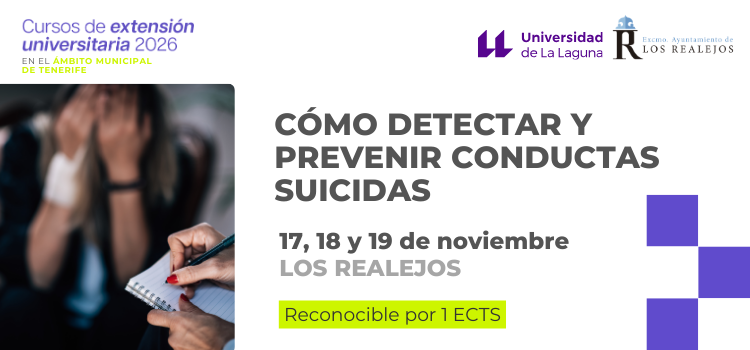
Los Realejos hosts the course "How to detect and prevent suicidal behavior," jointly organized by the Vice-Rectorate for Culture and University Extension and the Los Realejos City Council, within the framework of... 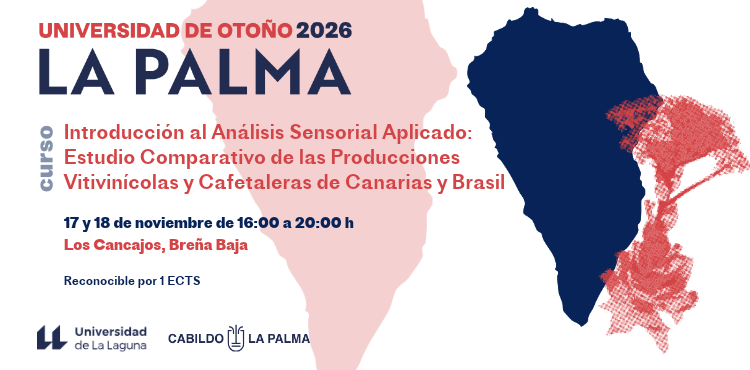
Breña Baja hosts the University Extension course "Introduction to Applied Sensory Analysis: Comparative Study of Wine and Coffee Production in the Canary Islands and Brazil," which will be held on...
-
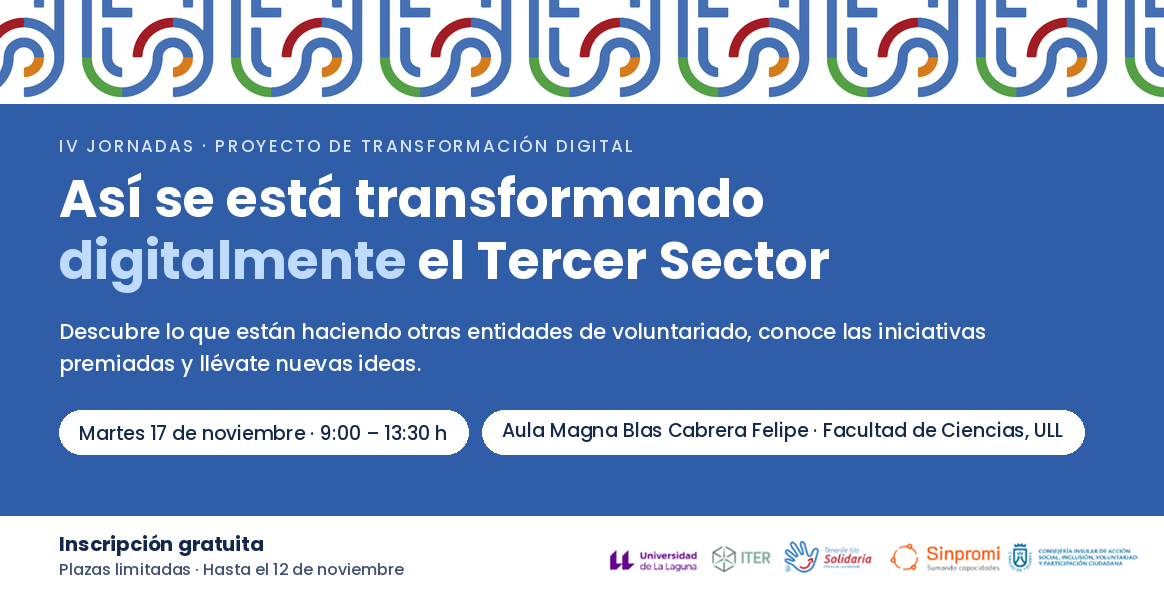
The Tenerife Isla Solidaria Program is organizing the 4th Digital Transformation Project Conference, which will be held on November 17th at the University of La Laguna. We encourage you to...
-
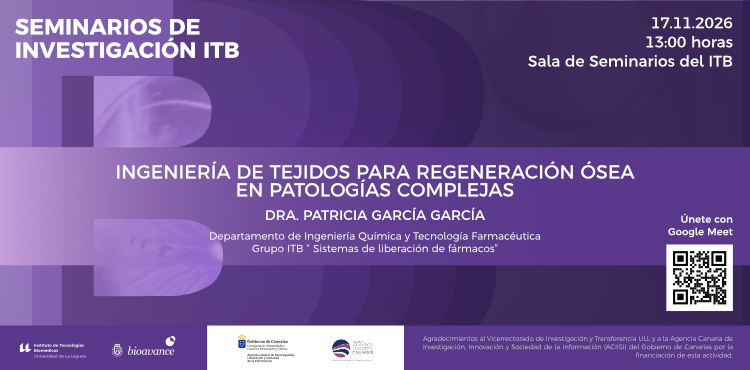
The ITB 2026 Research Seminars program continues on Tuesday, November 17th at 1:00 PM with a seminar by Dr. Patricia García García, who will give a talk...
-

The "Historical Press Workshop" is part of the 2026 University Extension Workshops program, "Connect+ Workshops." It will be held in the Geography and History Building on Tuesday... |
12 events,
Between November 18 and 20, 2026, the Spanish University Network for Environmental History (RUEDHA) will hold its 5th Congress at the University of La Laguna. This Fourth... 
The DARC Market is a space for meeting and showcasing university creative talent, where students and artists can present and sell their products and creations. Through... 
Porto will host the 11th World Congress on Childhood and Youth, a unique forum for reflection and dialogue on the challenges and opportunities facing children and young people in...
-

The La Laguna City Council and the University of La Laguna are organizing the "Police and Emergency Communication" conference, which will take place on Wednesday, November 18th in the building... 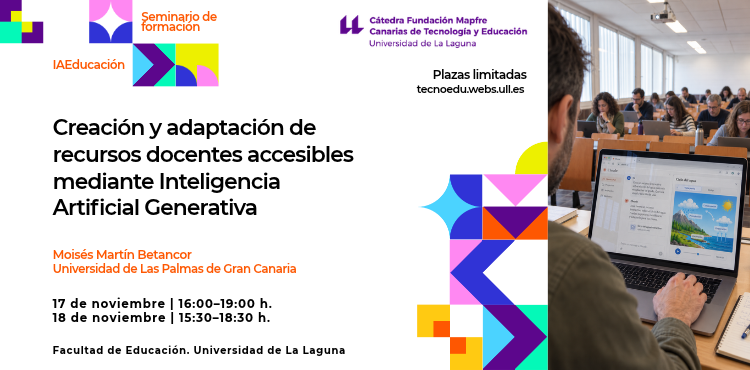
The MAPFRE Canarias Foundation Chair of Technology and Education (TECNOEDU) at the University of La Laguna is organizing the seminar-workshop “Creation and adaptation of accessible teaching resources through generative artificial intelligence”....
-

The "Law, Person and Family" Research Group of the University of La Laguna and the Institutional Chair of Childhood and Adolescence of the University of La Laguna are organizing the... |
15 events,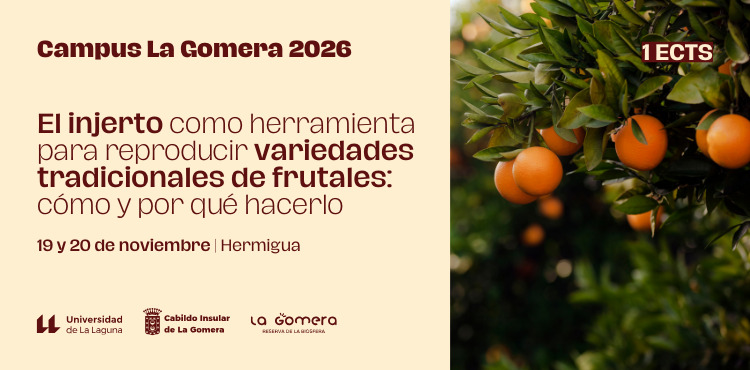
Hermigua hosts the University Extension course "Grafting as a tool to reproduce traditional fruit varieties: how and why to do it", which will be held on the 19th and 20th... 
The Education and Youth Department of the Granadilla de Abona City Council and the University of La Laguna, through its Scientific Culture and Innovation Unit...
-

To mark World Philosophy Day 2026, a commemoration promoted by UNESCO, the Philosophy Department of the Faculty of Humanities at the University of La Laguna is organizing...
-

""A Meeting with Arantxa Rufo," part of the activities of the 9th Crime Fiction Book Club. This meeting is made possible by the Writers at the University program of the Association...
-
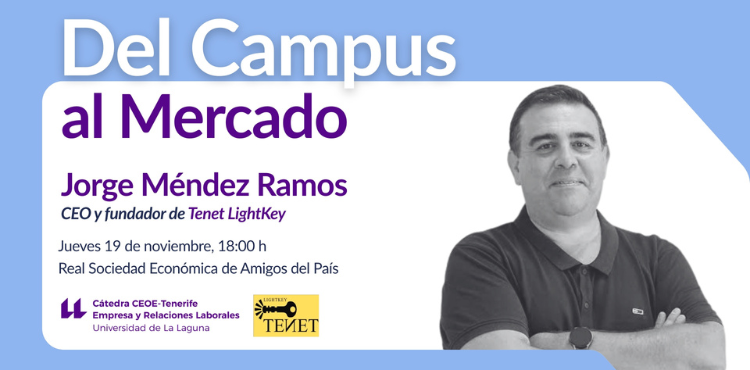
The CEOE-Tenerife Chair of Business and Labor Relations is organizing this event, which will be held on Thursday, November 19, 2026, from 6:00 p.m. to 8:00 p.m. at the headquarters of... |
17 events,
The 8th World Congress on Children and Adolescents, to be held online from November 20-27, 2026, constitutes an international space for meeting, reflection and...
-
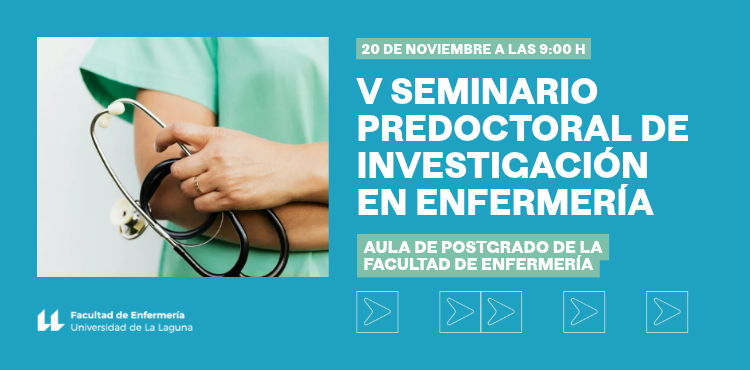
The Faculty of Nursing at the University of La Laguna will host the 5th Predoctoral Seminar on Nursing Research on Friday, November 20, 2026, organized by...
-
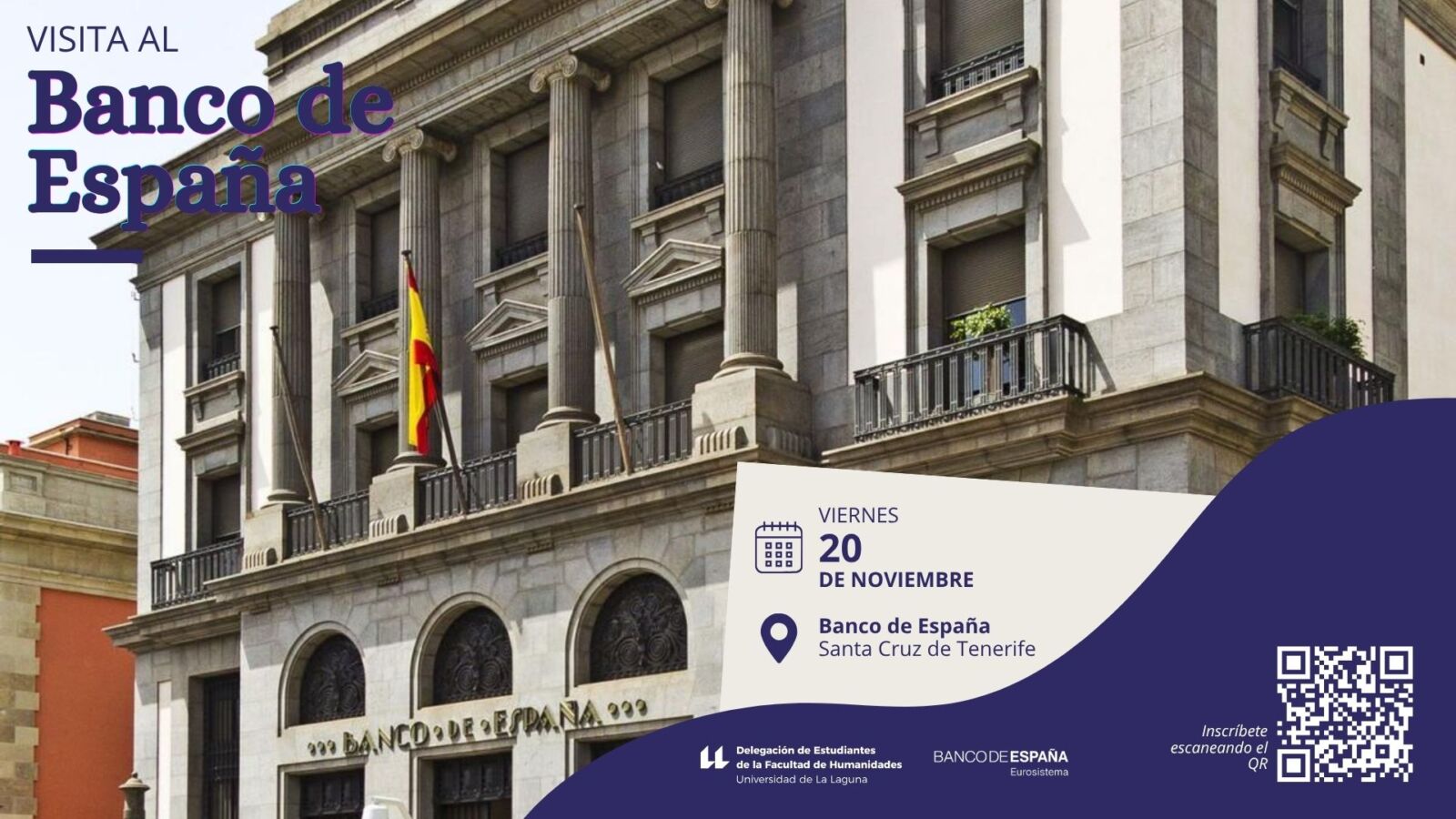
The Student Delegation of the Faculty of Humanities at the University of La Laguna is organizing a cultural visit to the Bank of... on October 20th at 10:00 am.
-
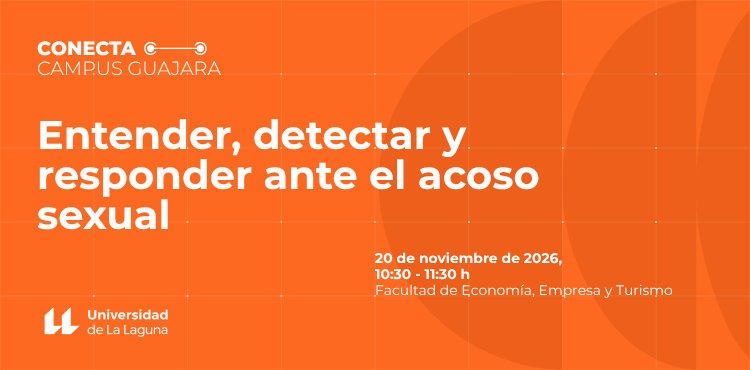
The Faculty of Economics, Business and Tourism, within the framework of CONECTA CAMPUS GUAJARA, is organizing this event which will be held at the Faculty of Economics, Business and Tourism on Friday... |
11 events,
-
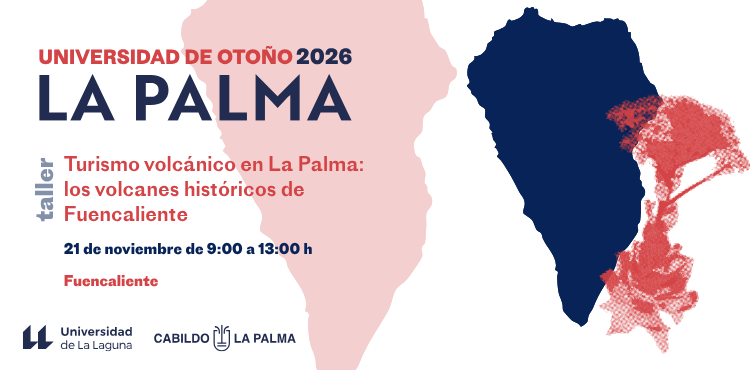
The University Extension workshop "Volcanic Tourism in La Palma: The Historical Volcanoes of Fuencaliente" will be held on November 21, 2026, from 9:00 a.m. to 1:00 p.m. at...
-

Is your mind racing? Are you constantly stressed? Discover how mindfulness meditation can help! Take advantage of the workshop that the Sports Department has scheduled for Saturday, the 21st...
-
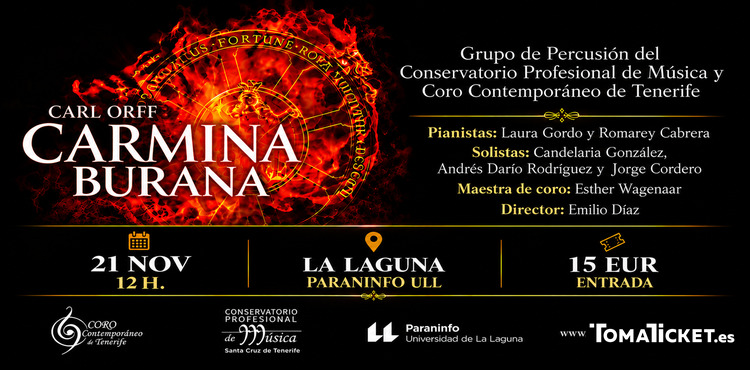
The Paraninfo of the University of La Laguna hosts Carmina Burana, the masterpiece by composer Carl Orff that has marked the history of music, one of the... |
8 events,
-
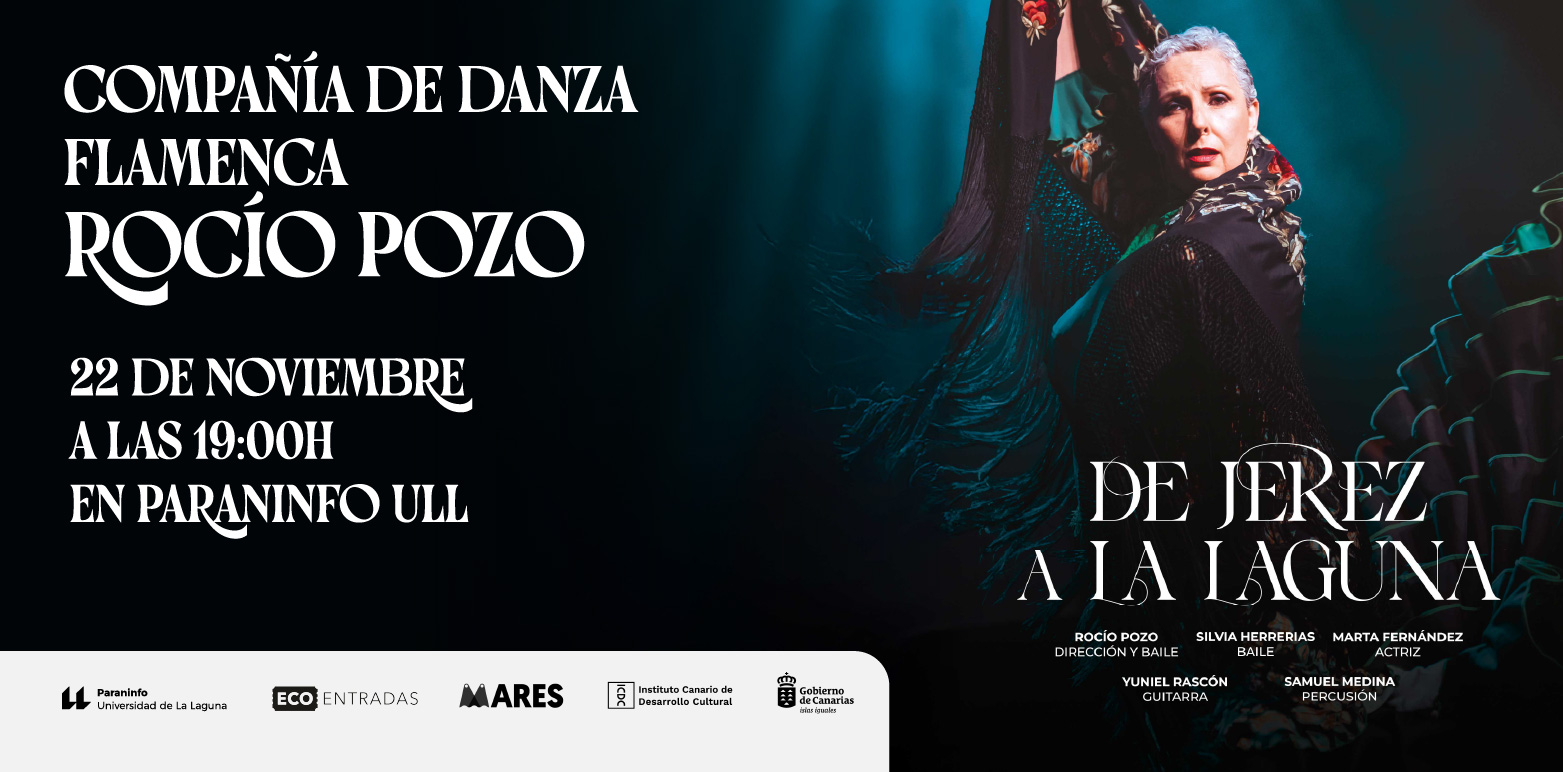
In this proposal, we explore the life and impact of an iconic figure in flamenco and a clear example of female empowerment, alongside other great women of her time.... |
11 events,
The BREFEM International Congress: Poetics of Brevity and Feminine Spirituality will take place virtually on November 23, 24 and 25, 2026, with the final day coinciding... 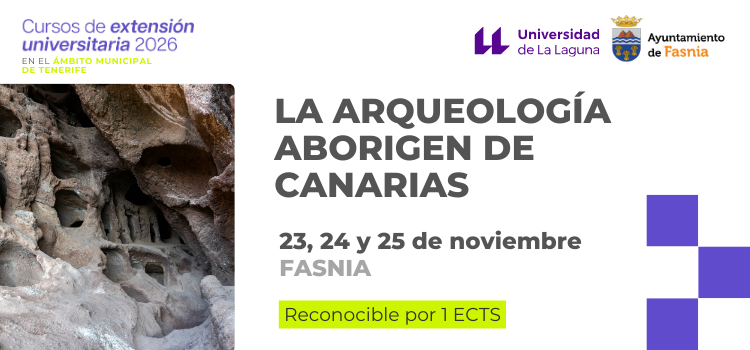
Fasnia hosts the course "The Aboriginal Archaeology of the Canary Islands", organized jointly by the Vice-Rectorate for Culture and University Extension and the Fasnia City Council, within the framework of the Courses program... 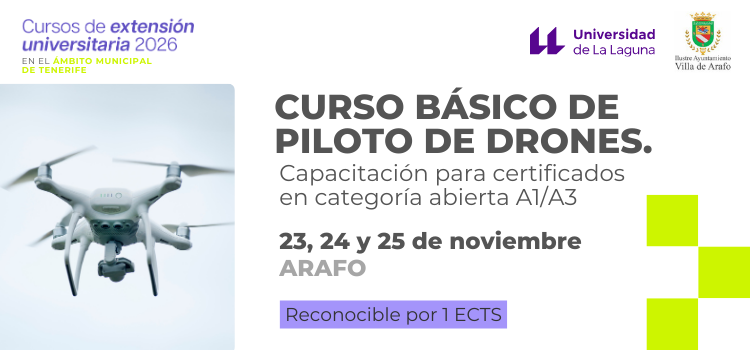
Arafo hosts the course "Basic Drone Pilot Course. Training for open category A1/A3 certificates", jointly organized by the Vice-Rectorate for Culture and University Extension and the Illustrious City Council... 
The 2nd TECNOEDU Conference will bring together specialists on November 23rd and 24th to address children's rights, the use of mobile phones in schools, and... |
14 events,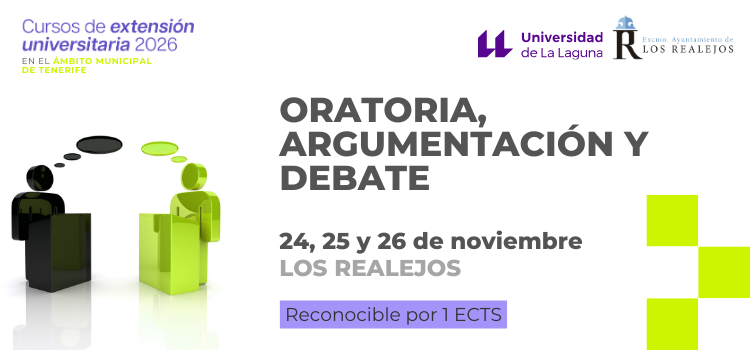
Los Realejos hosts the course "Public Speaking, Argumentation and Debate", jointly organized by the Vice-Rectorate for Culture and University Extension and the Los Realejos City Council, as part of the program of... 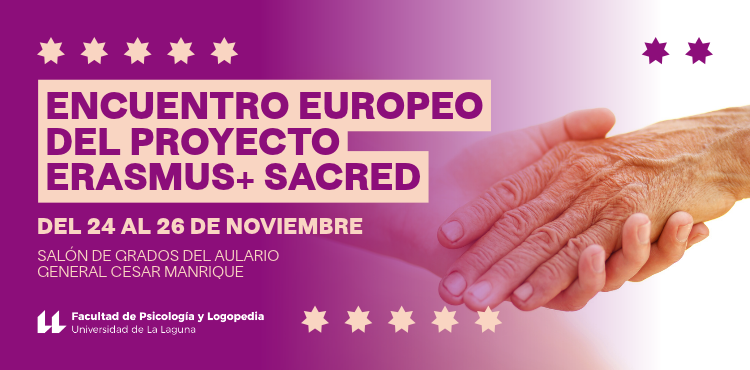
The lecture hall of the César Manrique General Building will host a European meeting of the Erasmus+ Sacred project, organized by the Faculty of..., from November 24th to 26th. 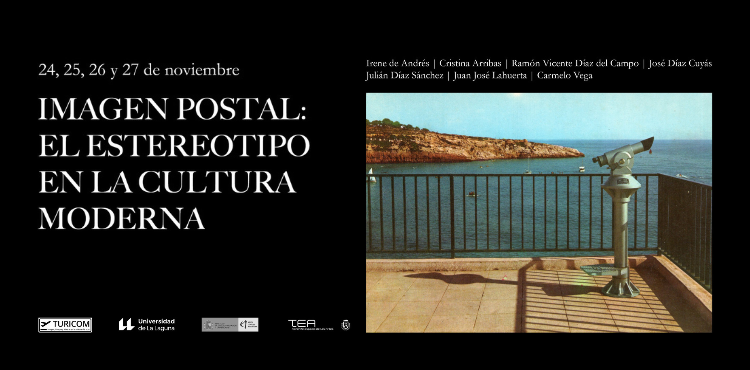
The TEA Tenerife Espacio de las Artes museum is hosting the seminar "Postcard Image: The Stereotype in Modern Culture" from Tuesday, November 24th to Friday, November 27th, a series of...
-

Film Club Talks and Multicines Tenerife, in collaboration with the Film Department of the University of La Laguna, are organizing a screening of "Fried Green Tomatoes," the modern classic set in...
-
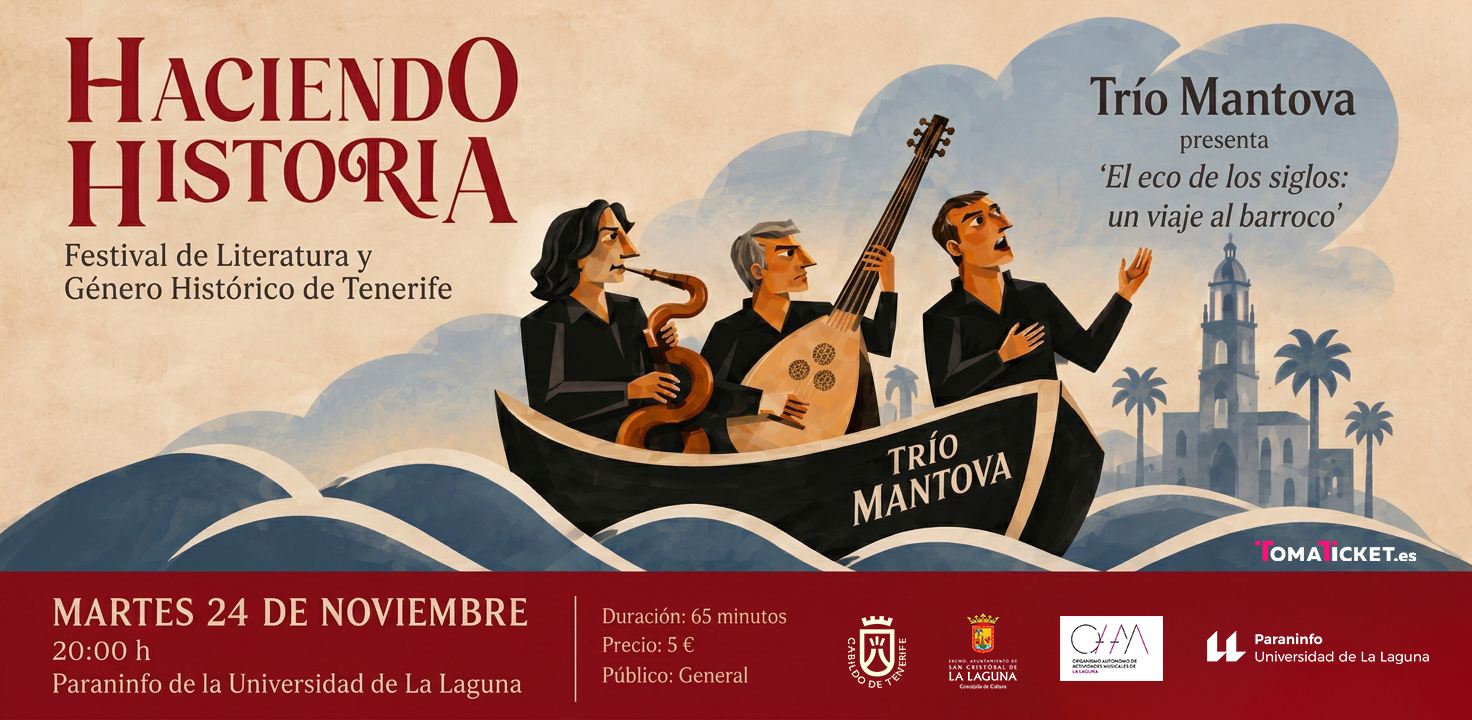
Music preserves the memory of its time. Its melodies resonate with the passions, longings, and contradictions of those who lived in other eras; its silences hold the stories that... |
19 events,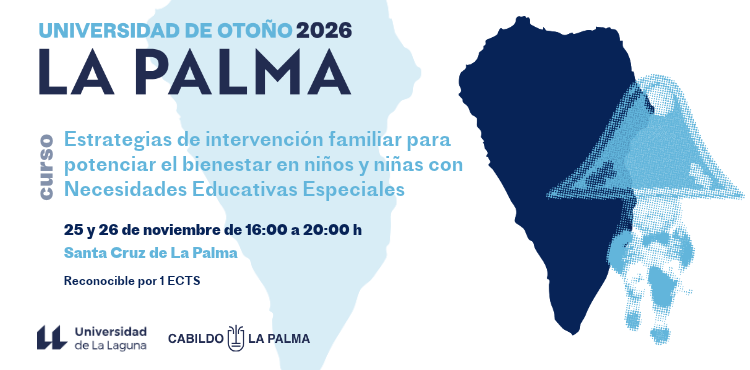
Santa Cruz de La Palma will host the University Extension course "Family Intervention Strategies to Enhance Well-being in Children with Special Educational Needs"... 
The 5th Congress and 16th R Users' Conference 2026 will bring together the Spanish-speaking community interested in the use of R, a free and open-source software programming language...
-
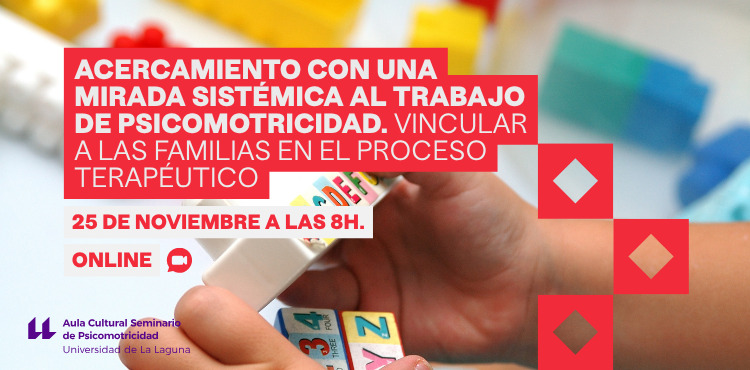
The work of a psychomotor therapist with children cannot be separated from the child's family reality. Involving the family in the therapeutic process entails...
-
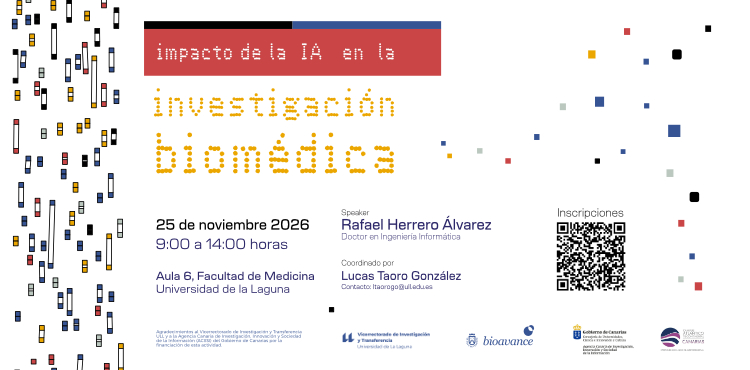
The Institute of Biomedical Technologies at the University of La Laguna will host a scientific workshop entitled "Impact of AI..." on Wednesday, November 25, 2026.
-

To mark November 25th, the International Day for the Elimination of Violence against Women, the University Institute for Women's Studies (IUEM) of the University of... |
21 events,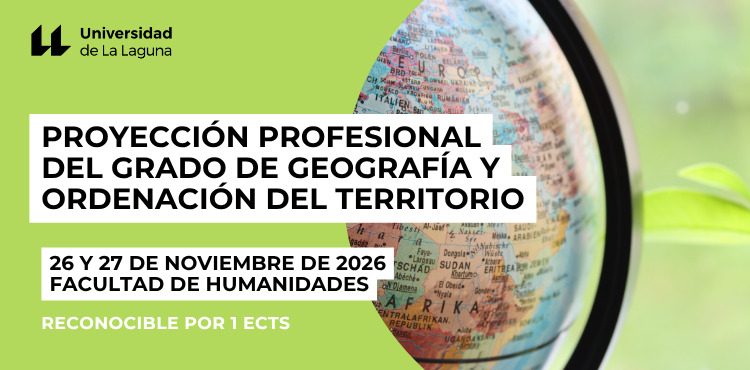
The knowledge acquired in a Geography degree, aimed at understanding the spatial component of the social and natural sciences, has gradually acquired a more focused approach... 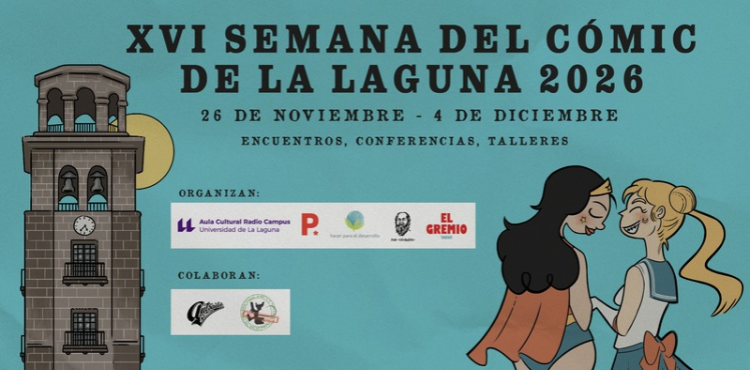
The sixteenth edition of the university event in the Laguna region dedicated to the ninth art will feature a wide variety of conferences, workshops, and seminars aimed at the general public... 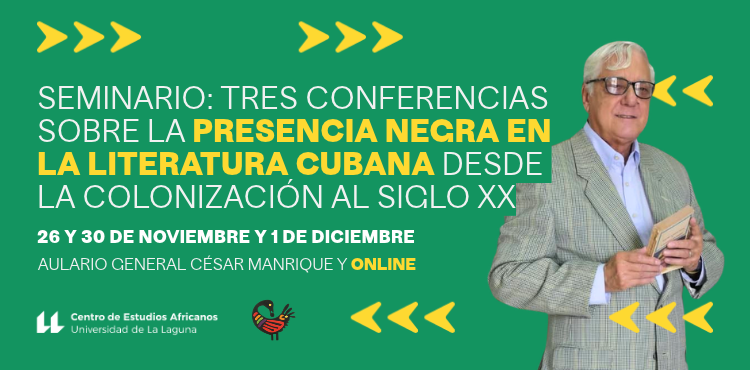
The César Manrique General Lecture Hall will host the series "Three lectures on the Black presence in Cuban literature from the..." on November 26, 30 and December 1. 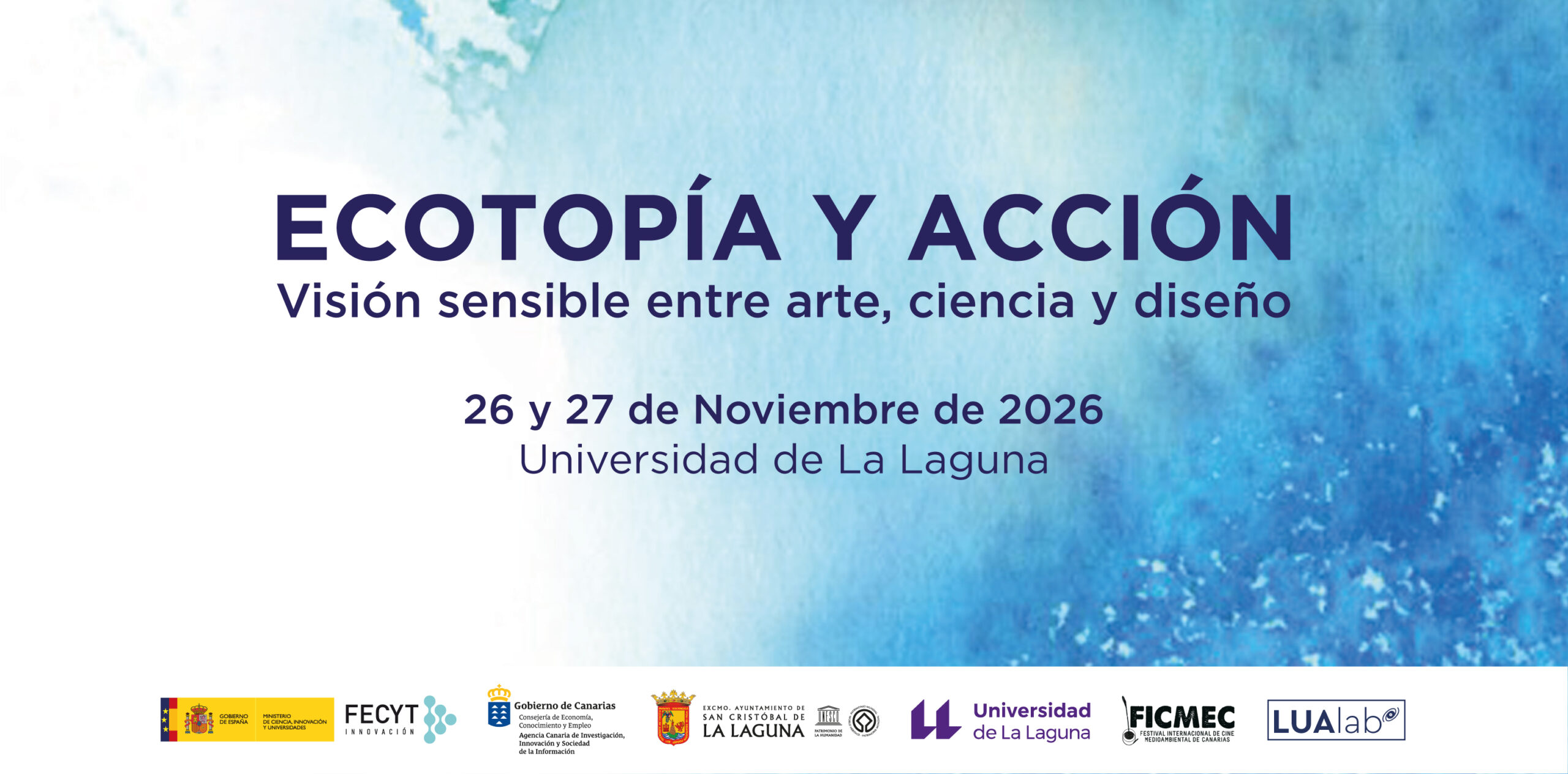
On the afternoon of Thursday, November 26th, and the morning of Friday, November 27th, 2026, the Ecotopia and Action Conference will be held. A sensitive vision between art, science, and...
-

The meeting aims to be a close-knit, participatory, and collaborative space that will strengthen relationships between the ULL's academic chairs, share experiences, identify synergies, and promote initiatives and...
-
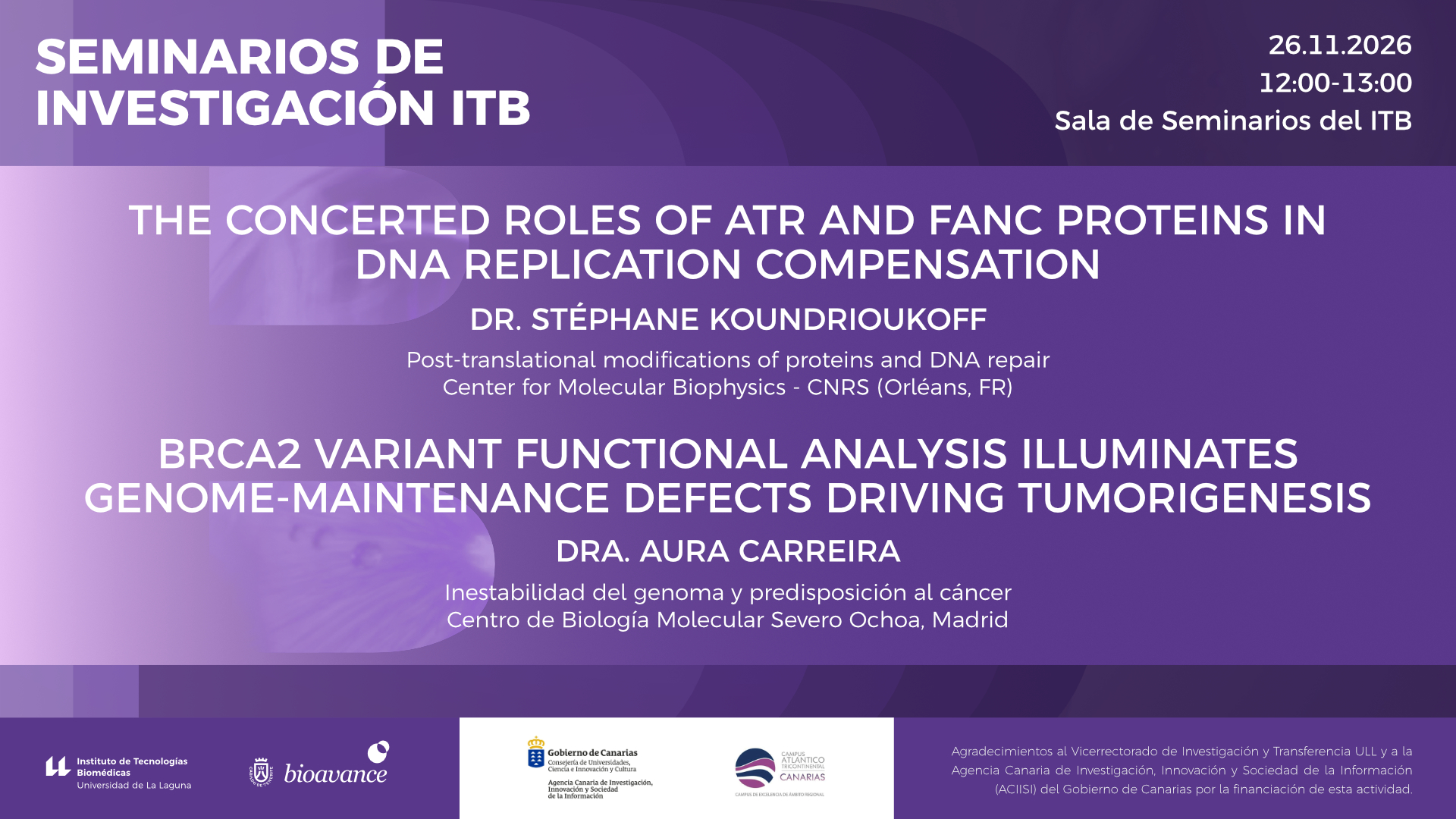
The ITB 2026 Research Seminars program continues on Thursday, November 26, from 12:00 to 13:00 with a double seminar by Dr. Stéphane Koundrioukoff, who...
-
The Department of Mathematical Analysis and the Institute of Mathematics and Applications at the University of La Laguna organize weekly seminars on Mathematical Analysis and Applied Mathematics. 26... |
15 events,
-
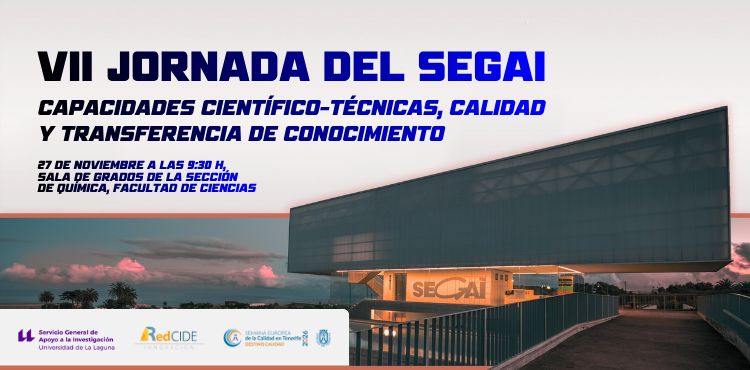
The General Research Support Service (SEGAI) of the University of La Laguna will hold its 7th SEGAI Conference on November 27, 2026, a meeting...
-
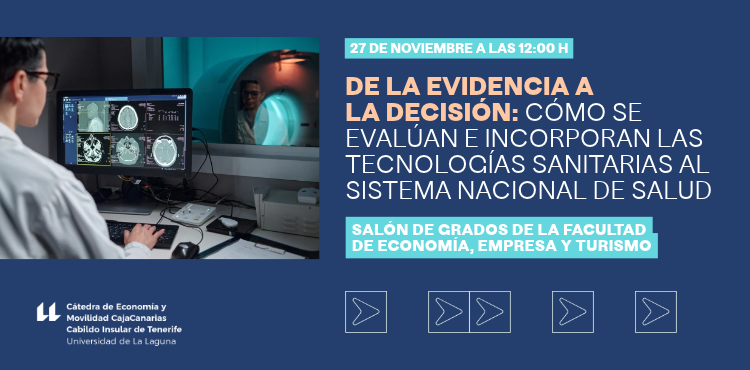
Healthcare systems must make decisions about the adoption and funding of new technologies in a context of limited resources, uncertainty, and growing health needs. How do they determine which interventions...
-

Film Club Talks and Multicines Tenerife, in collaboration with the Film Department of the University of La Laguna, are organizing the screening of the short film "Nasija" and the feature film... |
6 events,
-

The Sports Service is organizing the "Your Routine, Your Choice" workshop for the university community. This workshop is a practical and educational program to be held in the fitness room... |
6 events,
From November 29th to December 1st, the University of La Laguna will host the 25th Rectors' Meeting, entitled this year "Living between skies, oceans and volcanoes. Education...". |
10 events,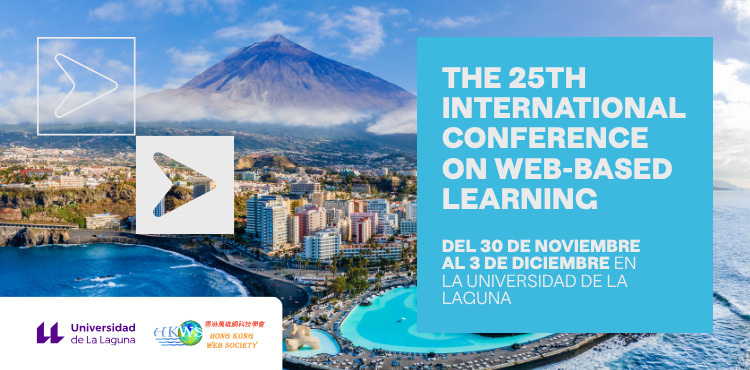
The 25th International Conference on Web-Based Learning (ICWL 2026) and the 11th International Symposium on Emerging Technologies for Education (SETE 2026) are two scientific conferences... 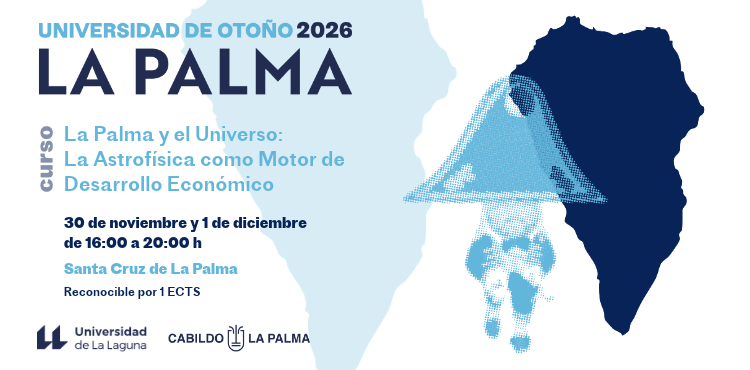
Santa Cruz de La Palma hosts the University Extension course "La Palma and the Universe: Astrophysics as an Engine of Economic Development", which will be held on November 30th... 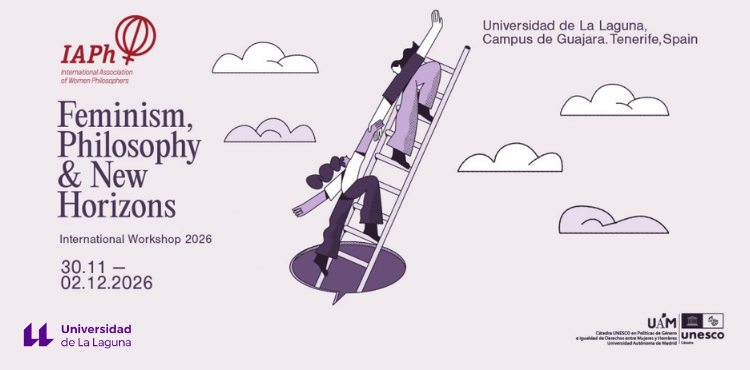
In an era of profound social, political, technological, and epistemic transformations, feminist philosophy offers critical resources for questioning established frameworks of knowledge, power, and justice. «Feminism, Philosophy, and…”.
-

Film Club talks and Multicines Tenerife, in collaboration with the Film Department of the University of La Laguna, are organizing a screening of Suspicion, the romance film... |
13 events,
The University of La Laguna, through its Scientific Culture and Innovation Unit (Cienci@ULL), and Cajasiete present the seventh edition of the Scientific Suitcases School Competition... 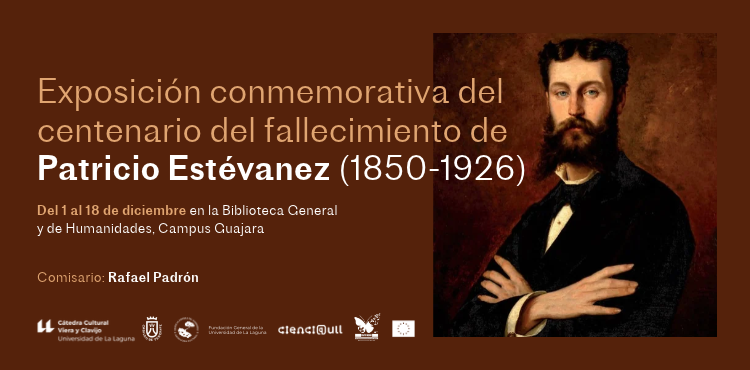
2026 marks the centenary of the death of Patricio Estévanez Murphy (1850-1926), an illustrious writer and politician, considered the patriarch and mentor of journalists on the island of Tenerife. Born... 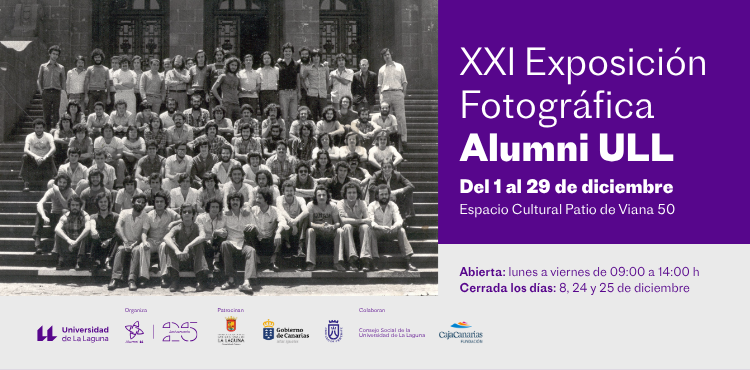
Alumni ULL (Association of Former Students and Friends of the University of La Laguna) presents in this exhibition a selection of 52 photographs and press articles about life... 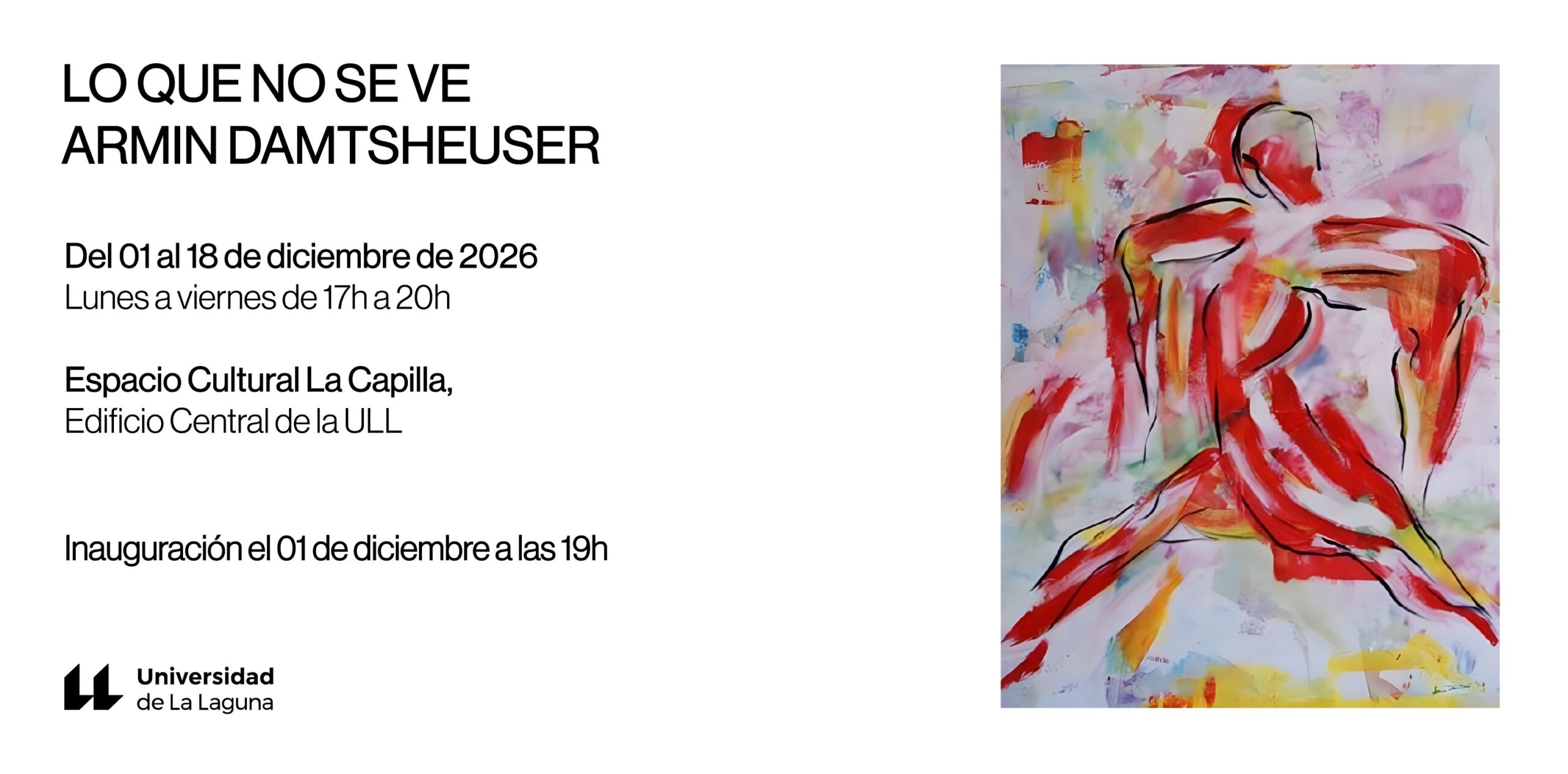
Armin Damtsheuser, a prolific visual artist born in Germany and residing in the Canary Islands, has taught in Tenerife for over 30 years. He is recognized for his extensive body of work... 
The Francisco de Miranda Chair at the University of La Laguna and the Institute of Hispanic Studies of the Canary Islands are organizing an event between December 1st and 3rd, 2026...
-

The 11th Disability Awareness Day is a meeting, awareness-raising, and reflection event organized by students of the Social Work Degree at the University of La... |
12 events,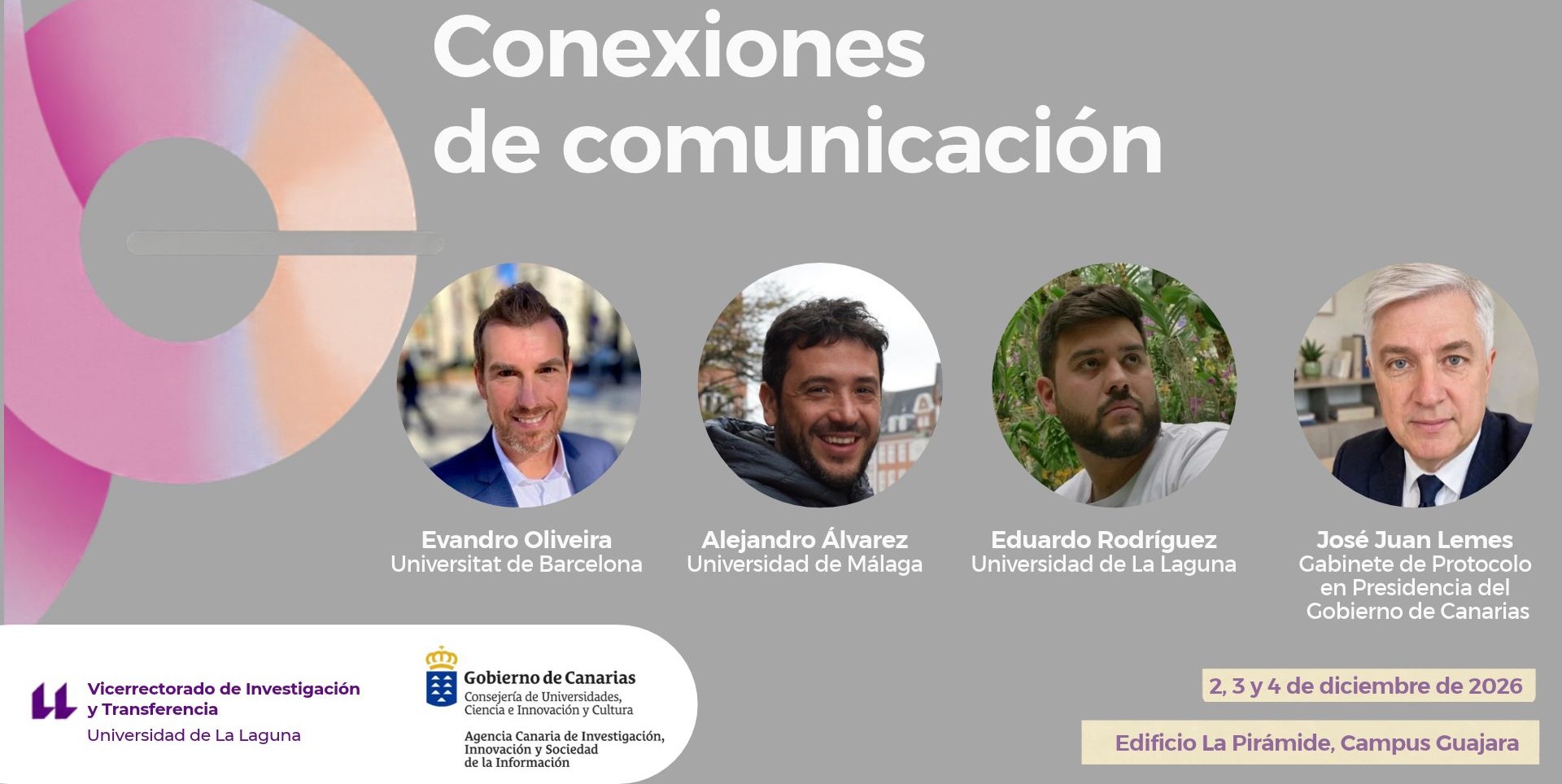
The Communication Connections 2026 seminar is presented as a space for meeting and reflecting on the current and future challenges of organizational communication. Through workshops, presentations...
-
The #PeriodismoÁfrica workshop, "Migration Narratives Workshop: Telling the Canary Route," offers a space for meeting and reflection on the challenges of media coverage of migration, especially... |
18 events,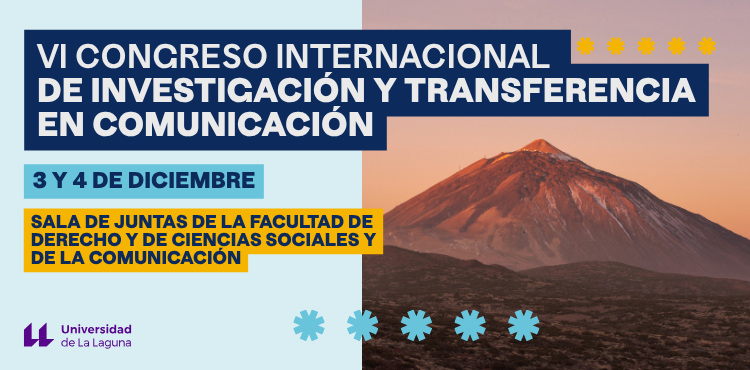
The Faculty of Social Sciences and Communication and the Faculty of Law of the University of La Laguna will host, on December 3 and 4, 2026,...
The Faculty of Social Sciences and Communication and the Faculty of Law of the University of La Laguna will host, on December 3 and 4, 2026,...
-
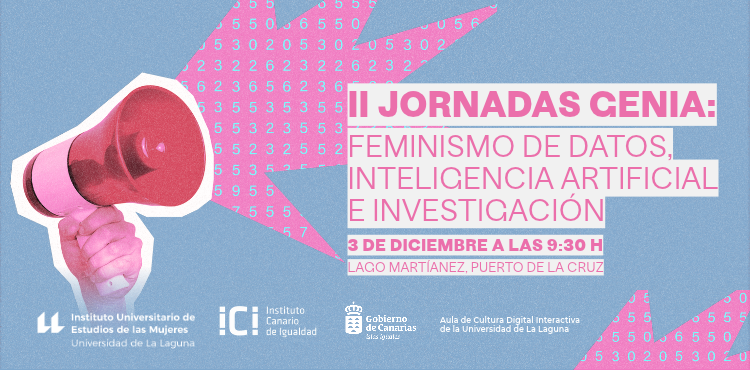
Who decides what data matters? What happens when artificial intelligence learns from information that perpetuates inequalities? How can we incorporate a gender perspective into research and...
-

The Faculty of Economics, Business and Tourism, in collaboration with the CajaCanarias-Cabildo de Tenerife Chair of Economics and Mobility at the University of La Laguna, within the framework of CONECTA CAMPUS...
-
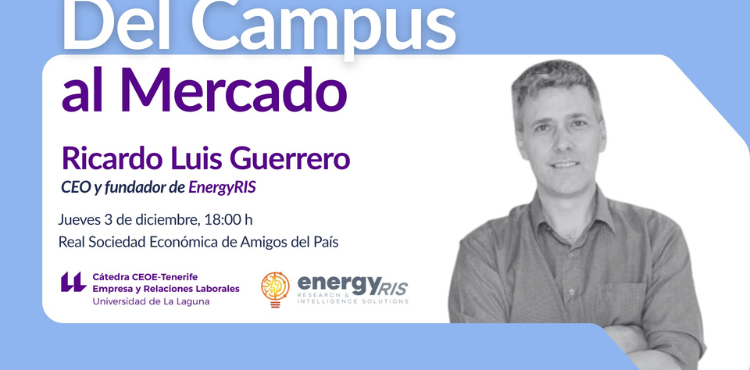
The CEOE-Tenerife Chair of Business and Labor Relations is organizing this event, which will be held on Thursday, December 3, 2026, from 6:00 p.m. to 8:00 p.m. at the headquarters of... |
14 events,
The Guild is a regular event that brings together professionals, creators, artists, and technicians from the audiovisual world in Tenerife and throughout the Canary Islands. It stems from the conviction that...
-
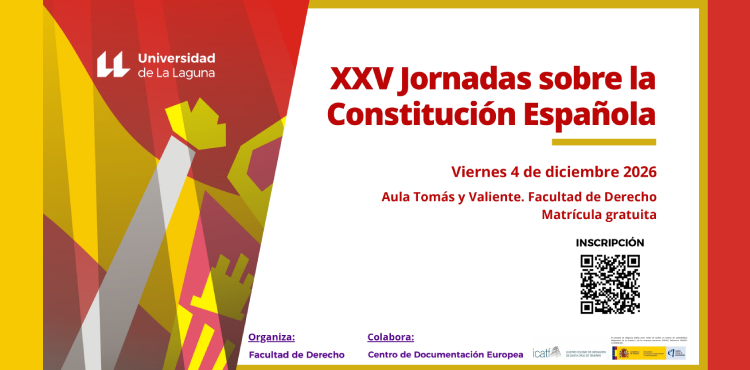
The Faculty of Law at the University of La Laguna will hold the 25th edition of its Conference on the Spanish Constitution on December 4th, a well-established academic event...
-

At 1:00 p.m. on Friday, December 4th, the information session on the SICUE mobility program will take place in room 02.2 of the Faculty of Law...
-

La Partenaire is the daughter of Farsán, a small-time magician whose career ended after a trick went wrong in a show... |
9 events,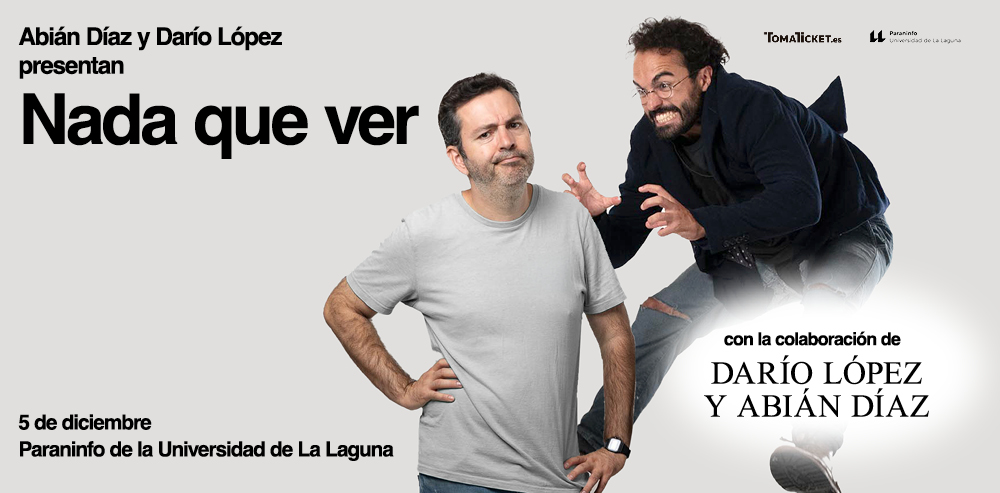
Hello, I'm Abián Díaz. Apparently, Darío López insists that I shouldn't be in charge of the synopsis. And this lack of confidence hurts. I'm convinced I have the ability...
Hello, I'm Abián Díaz. Apparently, Darío López insists that I shouldn't be in charge of the synopsis. And this lack of confidence hurts. I'm convinced I have the ability... |
8 events,
-

A book that keeps changing hands: 'Anna Karenina'. Three women rethink their lives after reading it. Mariana, a museum guard, recognizes herself... |
Government Pavilion, C/ Padre Herrera s/n
P.O. Box 456
38200, San Cristóbal de La Laguna
Santa Cruz de Tenerife - Spain
Switchboard Tel.: (+34) 922 31 90 00
Hours: Mon-Fri, 8:00 a.m. to 9:00 p.m.
