
September 22, 2026, marks the 50th anniversary of the assassination of Bartolomé García Lorenzo (1955-1976), one of the victims of police repression during the...

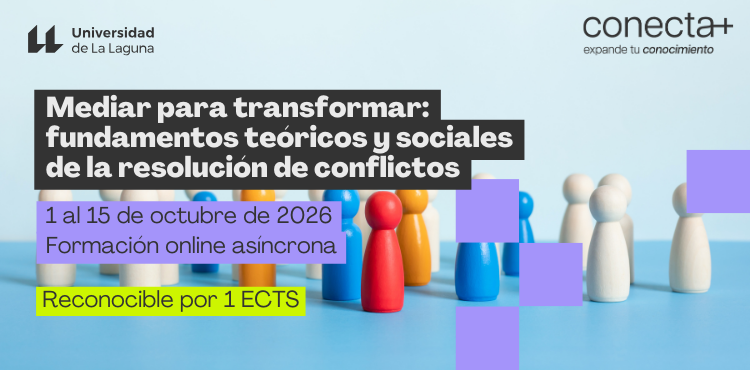
The course «"Mediating to transform: theoretical and social foundations of conflict resolution"» It is part of the 2026 University Extension Courses program «"Connect+ Expand your Knowledge.". It will be held in an asynchronous online format between October 1 and 15.
Goals:
The course is aimed at university students interested in mediation and conflict management, professionals who wish to acquire a solid conceptual basis on mediation (education, social work, psychology, law, health, human resources), and the general public interested in learning about the theoretical foundations of conflict resolution.
Academic Director: Amanda Negrín Plata. Associate Professor, Department of Communication Sciences and Social Work, University of La Laguna.
CERTIFICATE OF ATTENDANCE, COMPETENCE AND RECOGNITION BY ECTS CREDIT
The University of La Laguna, through the Vice-Rectorate for Culture and University Extension, will issue a certificate of attendance to all those who participate in at least 80% of the teaching hours. Likewise, those who successfully complete the independent student work will receive a certificate of attendance and achievement, which is also recognized for one ECTS credit.
|
Monday
|
Tuesday
|
Wednesday
|
Thursday
|
Friday
|
Saturday
|
Sunday
|
|---|---|---|---|---|---|---|
11 events,
September 22, 2026, marks the 50th anniversary of the assassination of Bartolomé García Lorenzo (1955-1976), one of the victims of police repression during the... 
From October 7th to 30th, you can visit the photographic exhibition "Gaza, the unsilenced gaze. A call to not look away..." at the General and Humanities Library. 
The fifth edition of Campus América is coming, from October 19th to 30th, a space for evaluating and promoting the internationalization efforts of the University of La Laguna... 
The Canary Islands Institute of Hemodonation and Hemotherapy is carrying out its annual blood donation campaign among the university community. This year, the campaign will be... 
The Exhibition Hall of the Faculty of Education at the University of La Laguna will host, from October 13th to 30th, the exhibition 'Images - Words', a project by... 
The Philosophy Department of the Faculty of Humanities at the University of La Laguna is organizing the extension course "Philosophy and Science Fiction: The Frontiers of the Human," which... 
The fifth edition of Campus América is coming, from October 19th to 30th, a space for evaluating and promoting the internationalization efforts of the University of La Laguna... 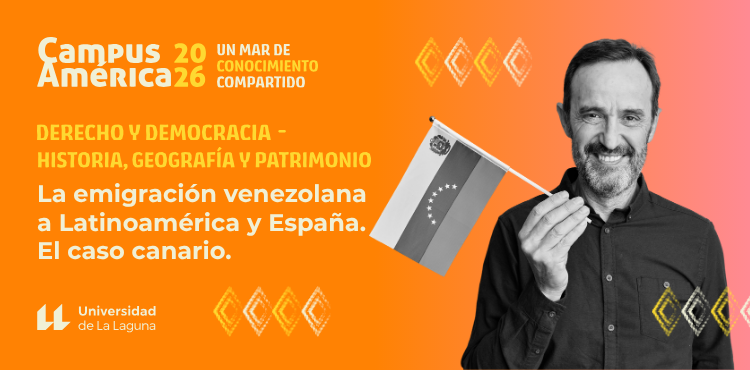
The fifth edition of Campus América is coming, from October 19th to 30th, a space for evaluating and promoting the internationalization efforts of the University of La Laguna...
-
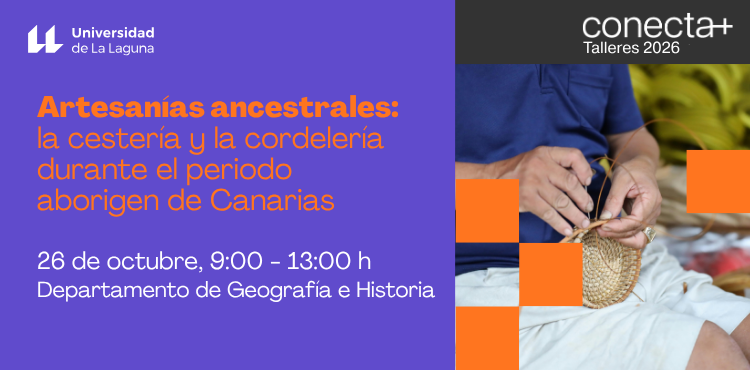
The workshop "Ancestral Crafts: Basketry and Rope Making during the Aboriginal Period of the Canary Islands" is part of the 2026 University Extension Workshops program "Connect+ Workshops". It will be held...
-
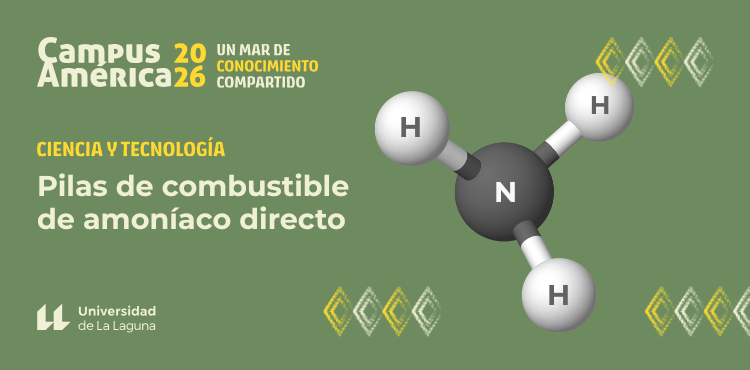
The fifth edition of Campus América is coming, from October 19th to 30th, a space for evaluating and promoting the internationalization efforts of the University of La Laguna...
-
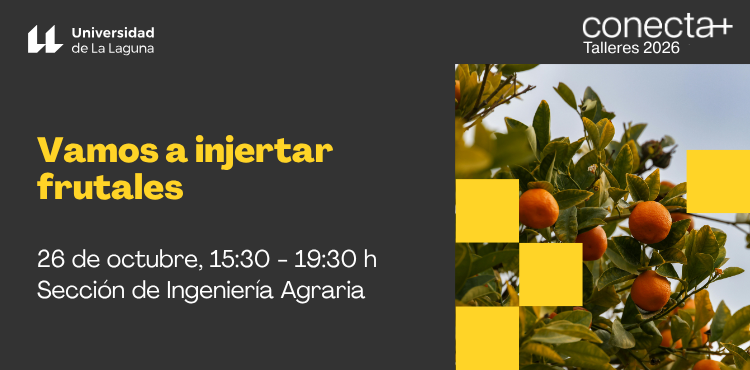
The workshop "Let's Graft Fruit Trees" is part of the 2026 University Extension Workshops program, "Connect+ Workshops." It will be held in the Agricultural Engineering Department on Monday the 26th... |
16 events,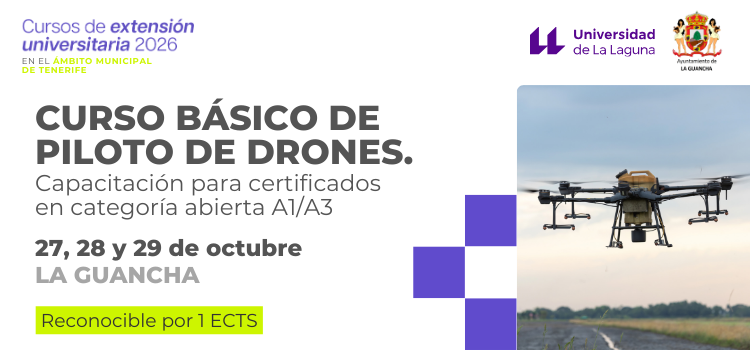
La Guancha hosts the course "Basic Drone Pilot Course. Training for open category A1/A3 certifications", jointly organized by the Vice-Rectorate for Culture and University Extension and the City Council... 
The Faculty of Law at the University of La Laguna will host the exhibition “Only Six. The Story of Salimata Sangare” throughout the month of November in its facilities... 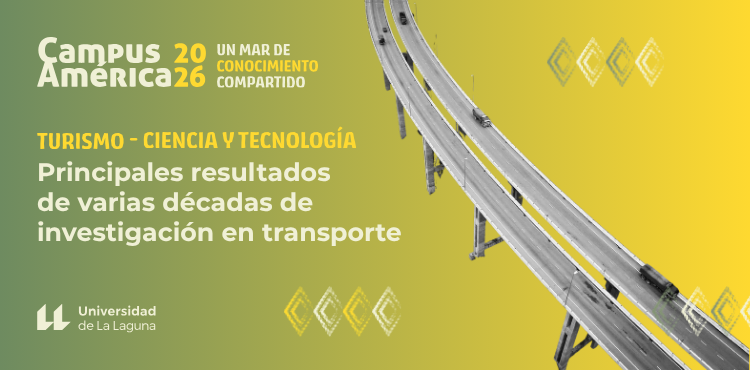
The fifth edition of Campus América is coming, from October 19th to 30th, a space for evaluating and promoting the internationalization efforts of the University of La Laguna...
-

The fifth edition of Campus América is coming, from October 19th to 30th, a space for evaluating and promoting the internationalization efforts of the University of La Laguna...
-
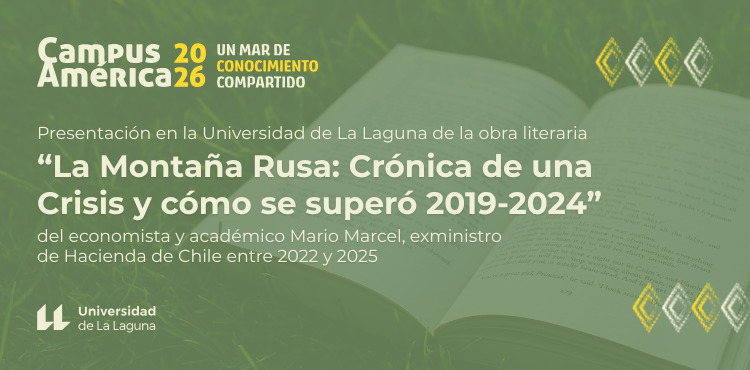
The fifth edition of Campus América is coming, from October 19th to 30th, a space for evaluating and promoting the internationalization efforts of the University of La Laguna...
-
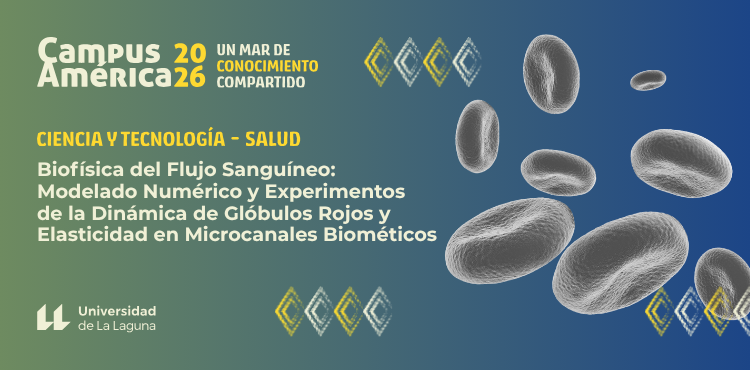
The fifth edition of Campus América is coming, from October 19th to 30th, a space for evaluating and promoting the internationalization efforts of the University of La Laguna... |
18 events,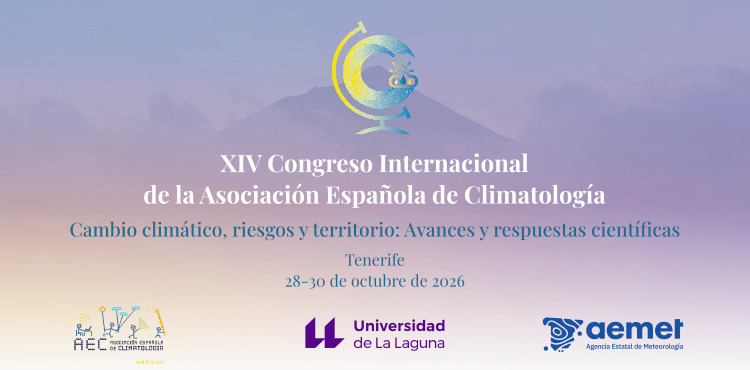
The Spanish Association of Climatology (AEC) was founded in 1998 to bring together those interested in climate science. Every two years... 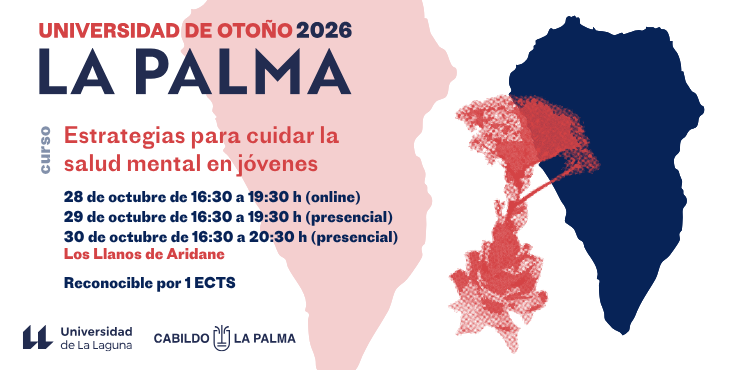
Los Llanos de Aridane hosts the University Extension course "Strategies for caring for the mental health of young people", which will be held on October 28, 29 and 30... 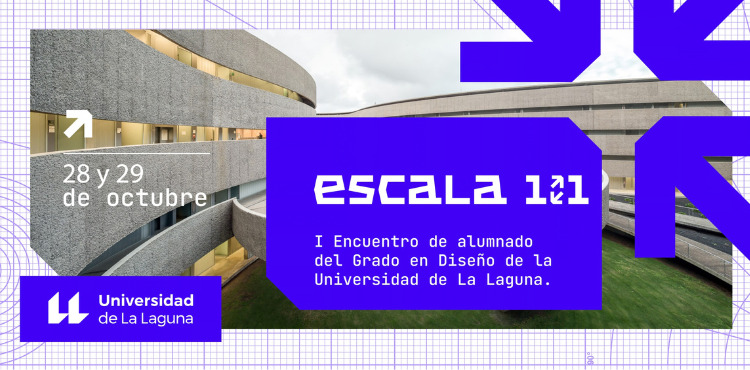
The Cultural Design Classroom is organizing this meeting which will be held at the Guajara Campus on October 28 and 29, 2026 from 4:30 pm to 7:00 pm... 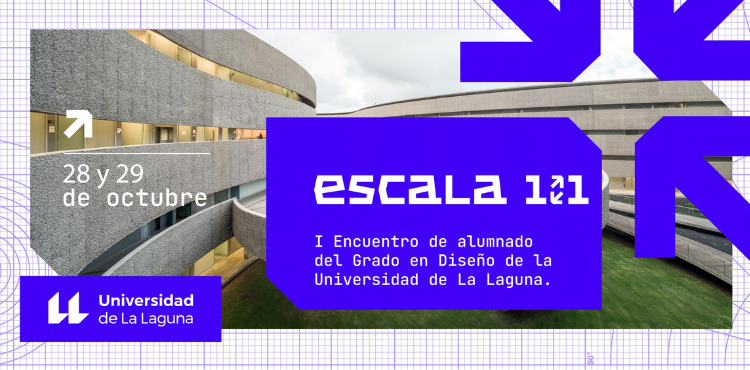
The Cultural Design Classroom is organizing this meeting which will be held at the Guajara Campus on October 28 and 29, 2026 from 4:30 pm to 7:00 pm...
-
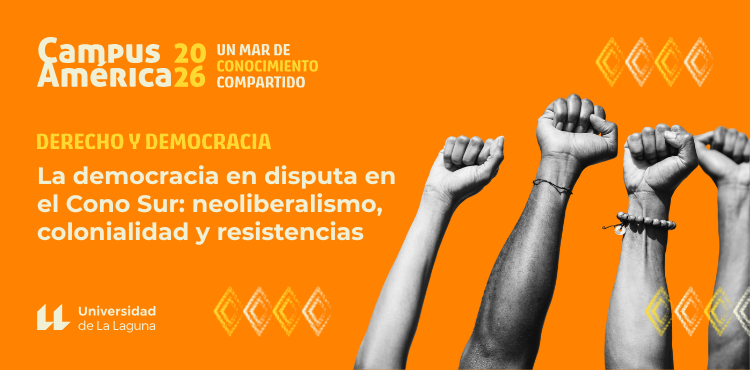
The fifth edition of Campus América is coming, from October 19th to 30th, a space for evaluating and promoting the internationalization efforts of the University of La Laguna...
-
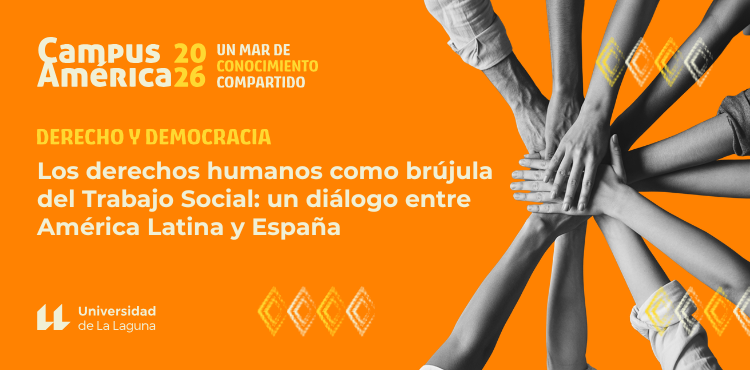
The fifth edition of Campus América is coming, from October 19th to 30th, a space for evaluating and promoting the internationalization efforts of the University of La Laguna...
-
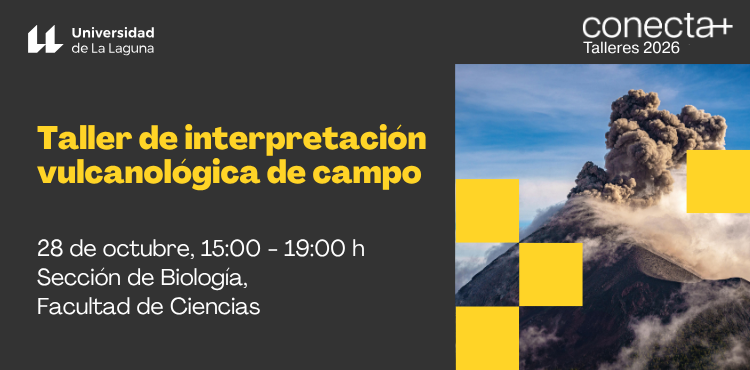
The "Field Volcanological Interpretation Workshop" is part of the 2026 University Extension Workshops program, "Connect+ Workshops." It will be held on Wednesday, October 28th... |
19 events,
The Scientific Conference is conceived as an “Open Laboratory” focused on advances in international research on Human Rights and Social Work. It aims to broaden and bring the content closer... 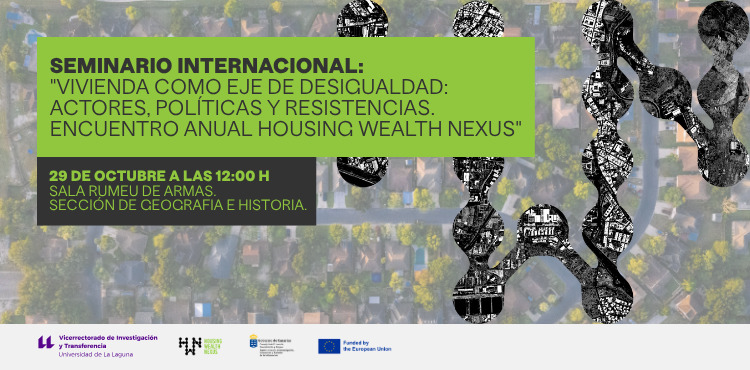
The international seminar "Housing as an axis of inequality: actors, policies and resistance. Housing Wealth Nexus Annual Meeting" will take place on October 29 and 30 at the University of... 
The orientation meeting in Tenerife will take place on October 29th in the Blas Cabrera Felipe Auditorium, in the Physics and Mathematics Building of the Faculty of... 
As a parallel activity to the upcoming ULL Debates: Our Mental Health, scheduled for October 29th at the Faculty of Social Sciences and Information, we will have...
-
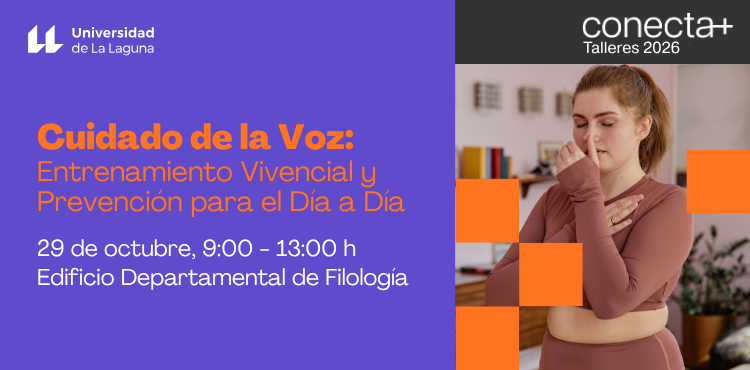
The workshop "Voice Care: Experiential Training and Prevention for Everyday Life" is part of the 2026 University Extension Workshops program "Connect+ Workshops". It...
-

Mental health is a broad phenomenon that affects multiple aspects of our society; therefore, the public university stands as a space for the everyday expression of...
-
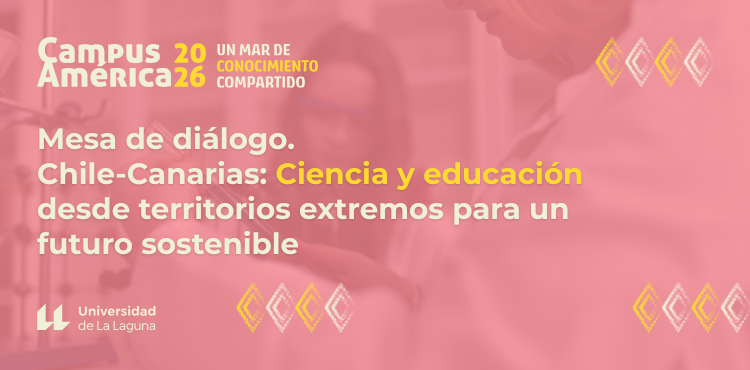
The fifth edition of Campus América is coming, from October 19th to 30th, a space for evaluating and promoting the internationalization efforts of the University of La Laguna... |
17 events,
-
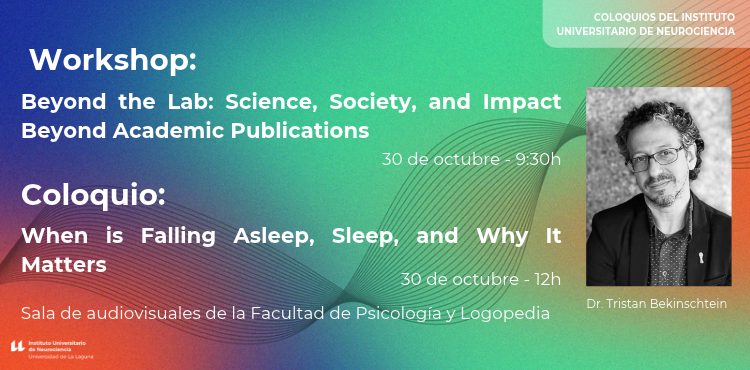
The University Institute of Neuroscience (IUNE) is organizing a conference next Friday, October 30th, with Dr. Tristan Bekinschtein, a researcher in the Department of Psychology at the University of Cambridge,...
-

The European Documentation Centres of the ULL and the ULPGC, together with the Canary Islands Council of the European Movement, Eurodesk Spain, Europe Direct Canarias and the Parliament of the Canary Islands, are organizing a...
-
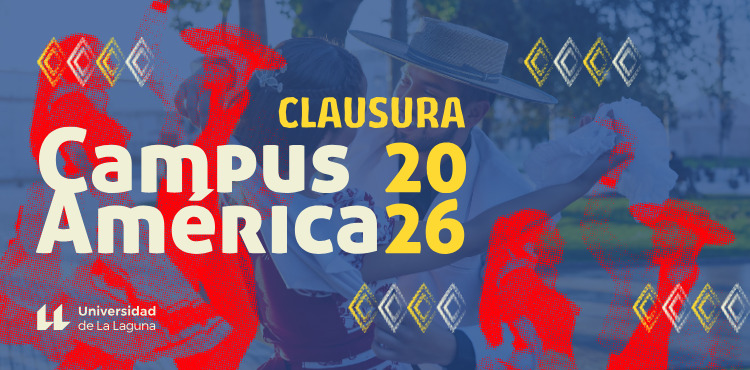
The closing ceremony for the fifth edition of Campus América will take place on Friday, October 30th. This year's event runs from October 19th to 30th. Campus América is... |
7 events,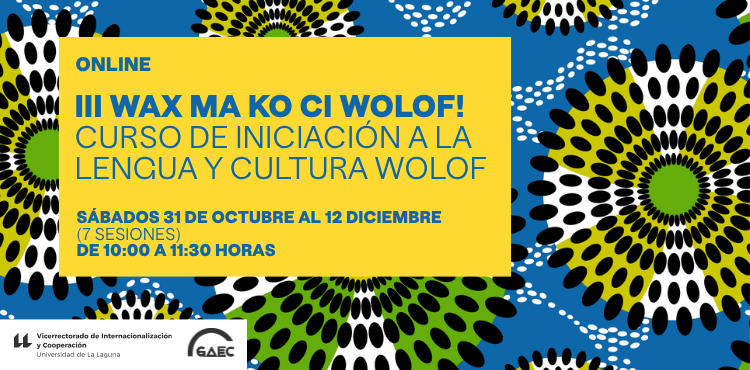
Following the excellent reception of the first two editions, the Directorate of Cooperation and Mobility with Africa and Latin America of the University of La Laguna, in collaboration with the laboratory...
-
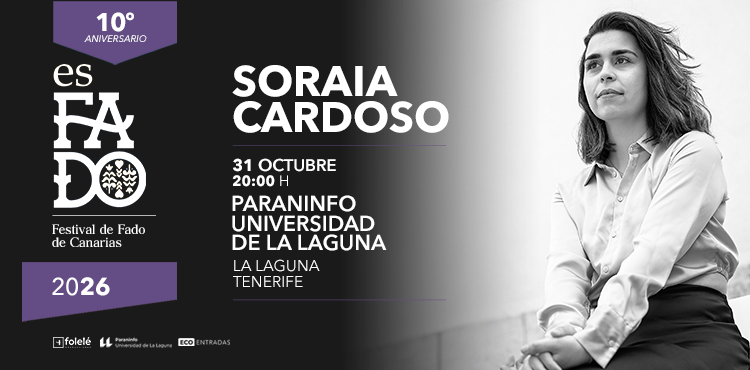
Soraia Cardoso is one of Portugal's rising fado singers. In 2018, she was a contestant on the television program The Voice Portugal, where she finished in third place. She was the first fado singer... |
6 events, |
7 events,
The course "Lifestyle Medicine: Prescribing Habits to Improve Health" is part of the 2026 University Extension Courses program "Connect+ Expand Your Knowledge". It... |
11 events,
Candelaria hosts the course "Public Speaking Techniques", organized jointly by the Vice-Rectorate for Culture and University Extension and the Candelaria City Council, as part of the Courses program... 
The Javier Muguerza Carpintier Cultural Chair is organizing an Ibero-American seminar with Mexican and Spanish thinkers on Ecojustice, Borders, and Inequalities. Mexican professors and researchers from the Benemérita Universidad Autónoma de San Juan will participate. 
The Directorate of Cooperation and Mobility with Africa and Latin America of the Vice-Rectorate for Internationalization and Cooperation launches the second edition of the interdisciplinary workshop "Stories from the Global South: other voices, other...
-
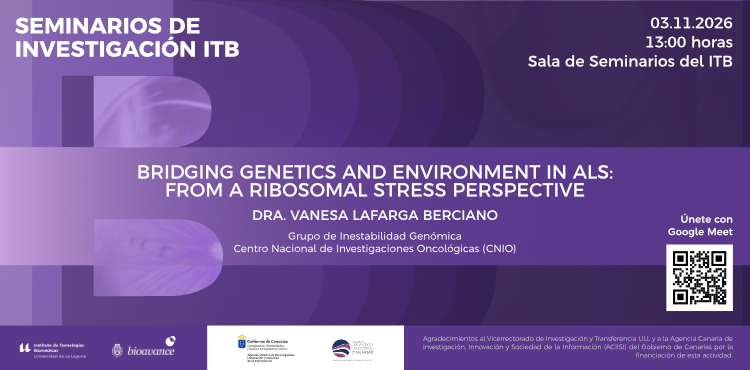
The ITB 2026 Research Seminars program continues on Tuesday, November 3rd at 1:00 pm with a seminar by Dr. Vanesa Lafarga, who will give a talk entitled "Bridging...
-
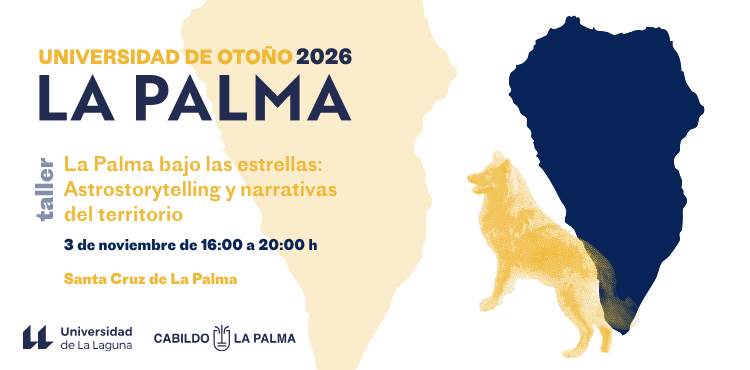
Santa Cruz de La Palma hosts the University Extension workshop "La Palma under the stars: Astrostorytelling and narratives of the territory", which will be held on November 3, 2026...
-

The International Ballet Company, one of Europe's finest classical ballet companies, comprised of soloists and dancers from England, France, Ukraine, Spain, and Italy, among other countries, presents us... |
12 events,
In August 2025, the University of Costa Rica held the First International and Interdisciplinary Congress 'Unlivable Lives: Masculinities in Ibero-America'. This meeting addressed... 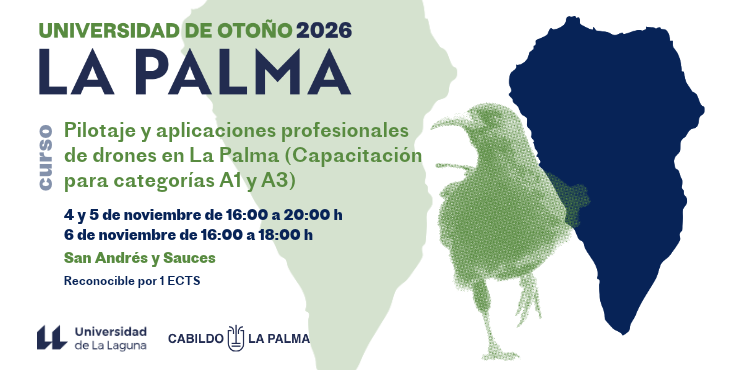
San Andrés y Sauces hosts the University Extension course "Drone Piloting and Professional Applications in La Palma (Training for categories A1 and A3)," which will be held on...
-
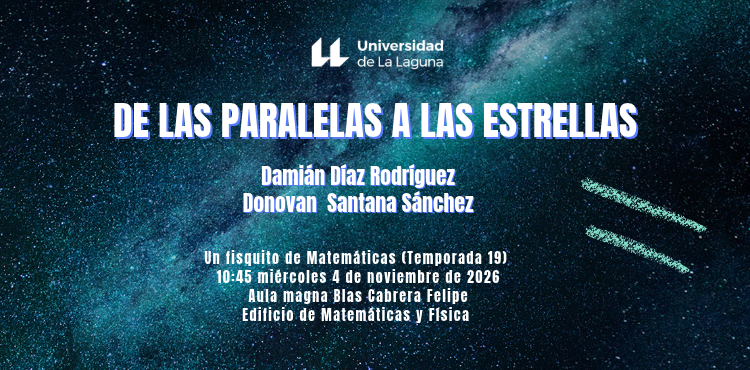
On Wednesday, October 14th, the 19th season of a new mathematical physics show continues in the Blas Cabrera Auditorium of the Physics and Mathematics Building at the University of...
-
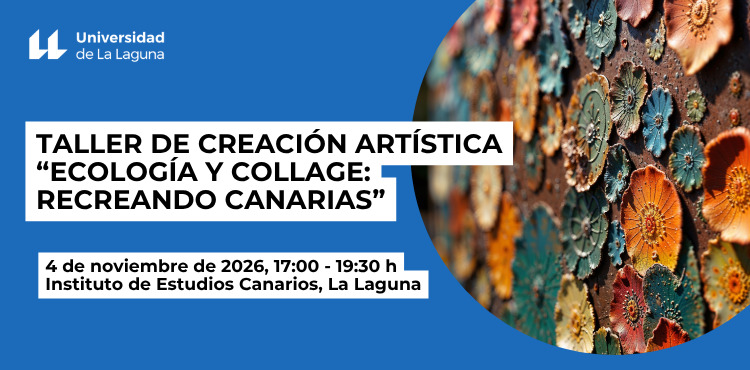
The Institute of Canarian Studies is hosting this art workshop, "Ecology and Collage: Recreating the Canary Islands," which will be held on November 4, 2026, from 5:00 p.m. to 7:30 p.m.
-
The International Ballet Company, one of Europe's finest classical ballet companies, comprised of soloists and dancers from England, France, Ukraine, Spain, and Italy, among other countries, presents us... |
12 events,
-
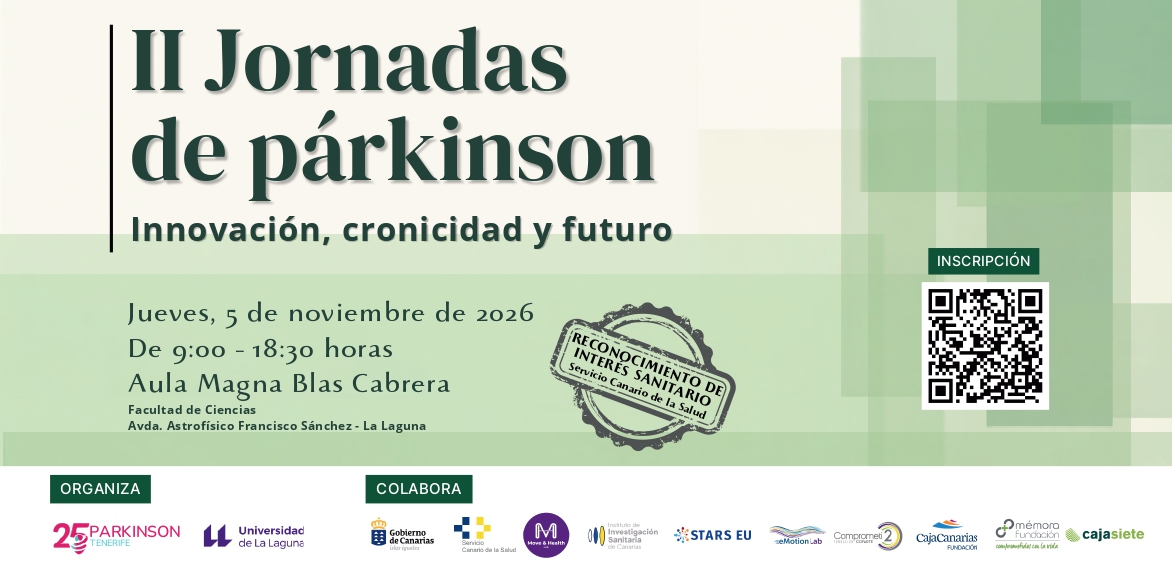
The 'II Parkinson's Conference: Innovation, Chronicity and Future' is presented as a space for meeting, training and knowledge exchange to delve deeper into the comprehensive approach to the disease...
-
The Department of Mathematical Analysis and the Institute of Mathematics and Applications at the University of La Laguna organize weekly seminars on Mathematical Analysis and Applied Mathematics.
-
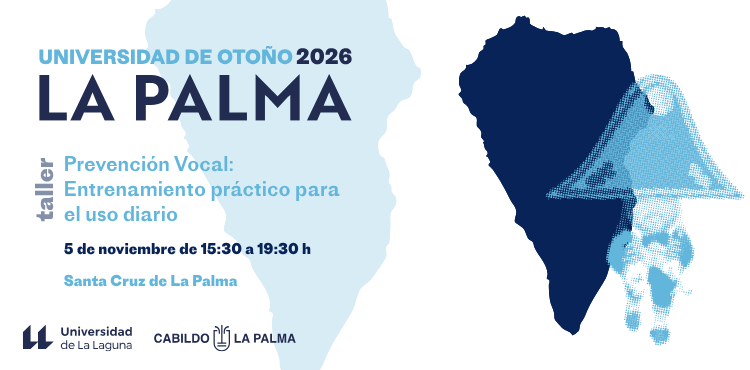
Santa Cruz de La Palma will host the University Extension workshop "Vocal Prevention: Practical Training for Daily Use," which will be held on November 5, 2026, at... |
11 events,
Nothing is what it seems, the new show by Dakris, The Invisible Magician, winner of the First National Magic Prize, a television creative and winner of the award for best magician...
-
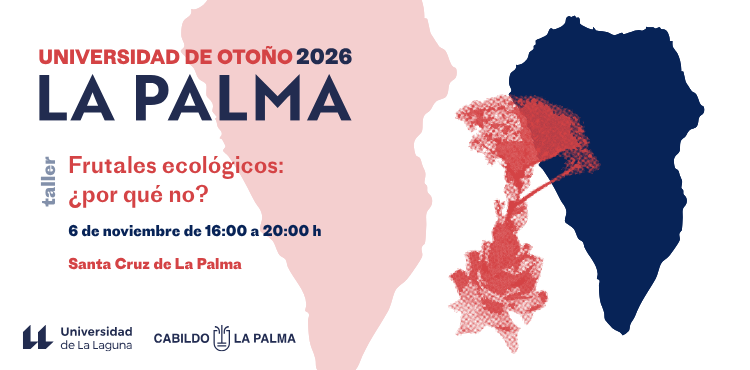
Santa Cruz de La Palma hosts the University Extension workshop "Organic fruit trees, why not?", which will be held on November 6, 2026 from 4:00 pm to 8:00 pm...
-

In the depths of the ocean, where light barely penetrates and conditions are extreme, marine mammals like the sperm whale have developed amazing survival skills, using sound as... |
8 events, |
8 events, |
7 events, |
14 events,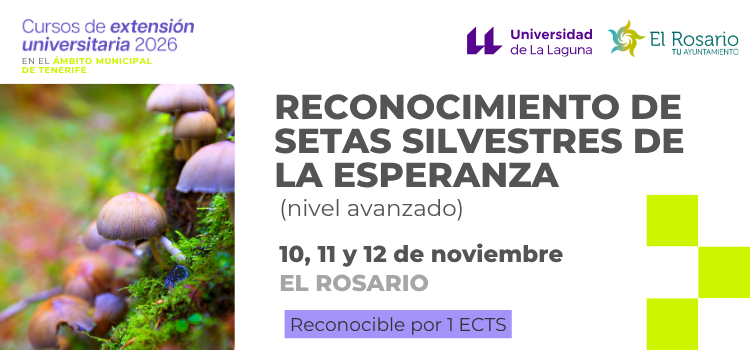
El Rosario hosts the course "Identification of wild mushrooms of La Esperanza (advanced level)", jointly organized by the Vice-Rectorate for Culture and University Extension and the Illustrious City Council of El Rosario,... 
Los Realejos hosts the course "Artificial Intelligence: critical, safe and productive use in academic and professional contexts", jointly organized by the Vice-Rectorate for Culture and University Extension and the City Council... 
The 1st International Conference on Renewable Energy will take place on the island of El Hierro from November 10th to 13th, 2026. El Hierro is not just the setting... 
The Research Group: Law, Person and Family, is organizing these conferences which will be held at the Faculty of Law on Tuesdays, November 10 and 17, 2026, at the following times...
-
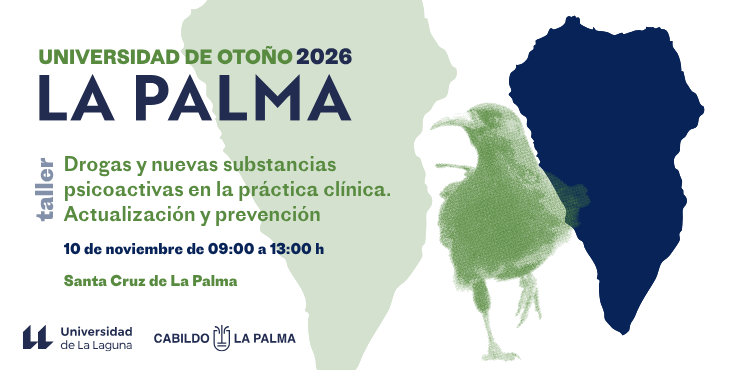
Santa Cruz de La Palma will host the University Extension workshop "Drugs and new psychoactive substances in clinical practice. Update and prevention," which will be held on November 10th...
-

The 2nd Conference "Take Care of Your Sexuality: Young Women, Disabilities and Prevention of Sexual Violence" is an initiative promoted within the framework of collaboration between the General Directorate of...
-

Every time Petite Lorena moves across the stage, she effortlessly traverses the precipice that separates political correctness from incorrectness, a precipice that is, incidentally, more slippery than ever now.... |
9 events,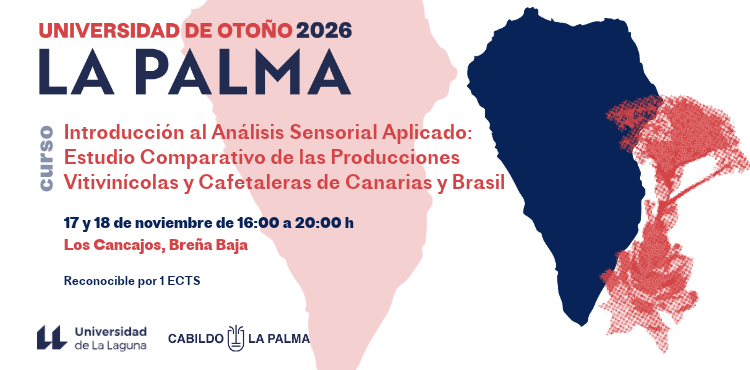
Breña Baja hosts the University Extension course "Introduction to Applied Sensory Analysis: Comparative Study of Wine and Coffee Production in the Canary Islands and Brazil," which will be held on...
-
Every time Petite Lorena moves across the stage, she effortlessly traverses the precipice that separates political correctness from incorrectness, a precipice that is, incidentally, more slippery than ever now.... |
13 events,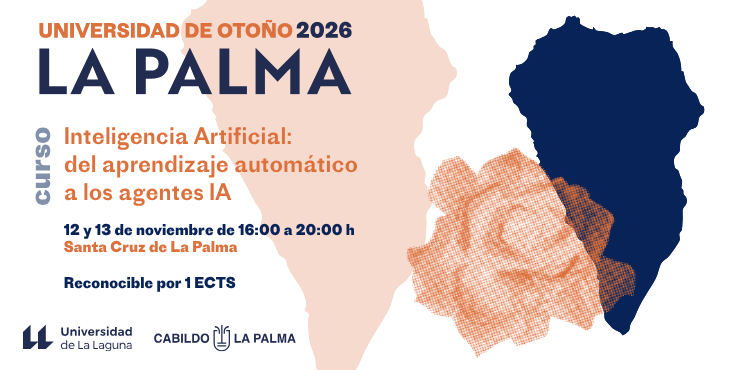
Santa Cruz de La Palma hosts the University Extension course "Artificial Intelligence: from machine learning to AI agents", which will be held on November 12 and 13... 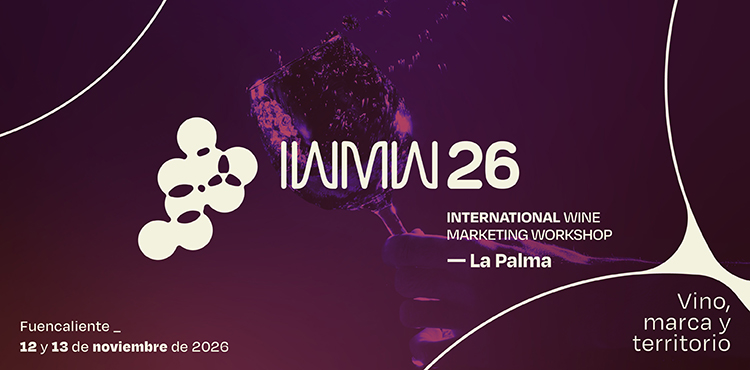
The "1st International Wine Marketing Workshop. La Palma 2026" will be held at the San Antonio Volcano Visitor Centre in the municipality of Fuencaliente on the 12th and 13th... 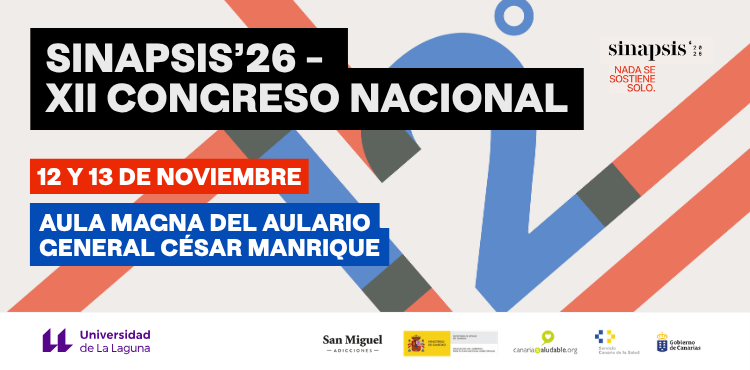
The twelfth edition of Sinapsis will be held on November 12th and 13th in the Aula Magna of the César Manrique General Lecture Hall at the University of La Laguna. This... 
The 3rd International Technical Conference on Sustainable Viticulture will be held on the island of La Gomera on November 12, 13 and 14, 2026. This event,...
-

The workshop "Debunking Fallacies on Social Media: Keys from Neuroscience to Think Before You Share" is part of the 2026 University Extension Workshops program "Connect+ Workshops". It...
-
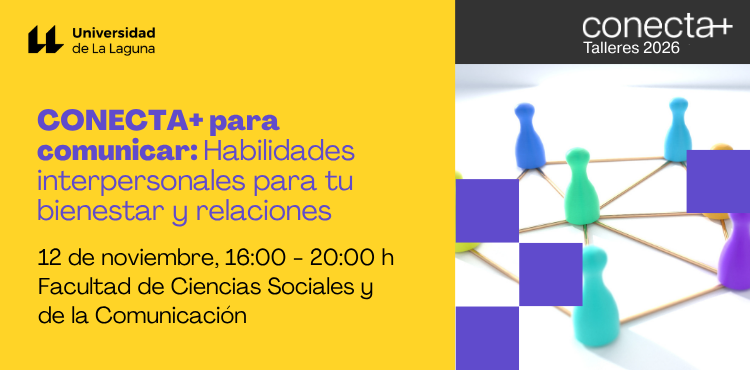
The workshop "CONNECT+ to communicate: Interpersonal skills for your well-being and relationships" is part of the 2026 University Extension Workshops program, "Connect+ Workshops." It will be held at the Faculty...
-
Every time Petite Lorena moves across the stage, she effortlessly traverses the precipice that separates political correctness from incorrectness, a precipice that is, incidentally, more slippery than ever now.... |
10 events,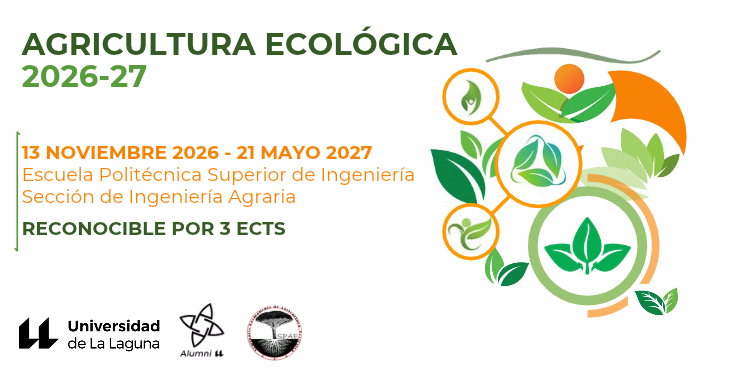
The Permanent Seminar on Organic Agriculture (SPAE) and the Association of Former Students and Friends of the University of La Laguna (Alumni ULL), with the collaboration of the Section of...
-
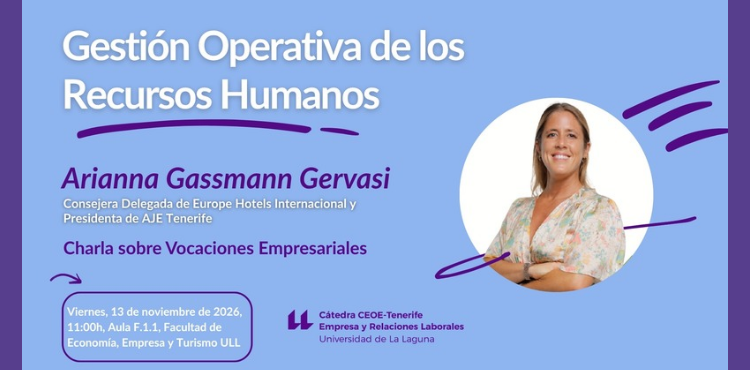
The CEOE-Tenerife Chair of Business and Labor Relations is organizing this talk, which will be held on Friday, November 13, 2026, from 11:00 a.m. to 1:00 p.m. in the Faculty of Economics,... |
7 events,
-
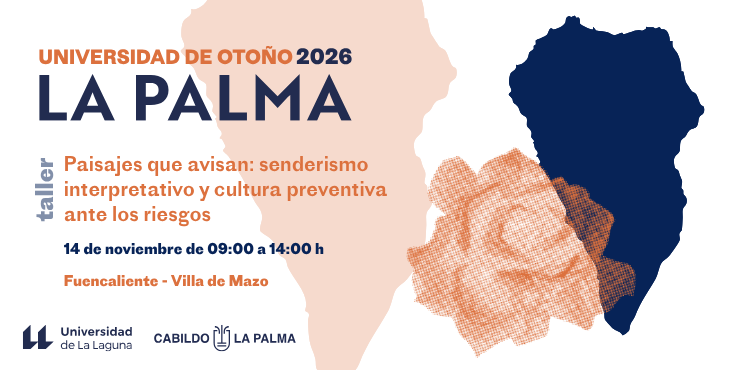
The University Extension workshop "Landscapes that warn: interpretive hiking and preventive culture in the face of risks" will be held on November 14, 2026 from 9:00 a.m. to 2:00 p.m.
-
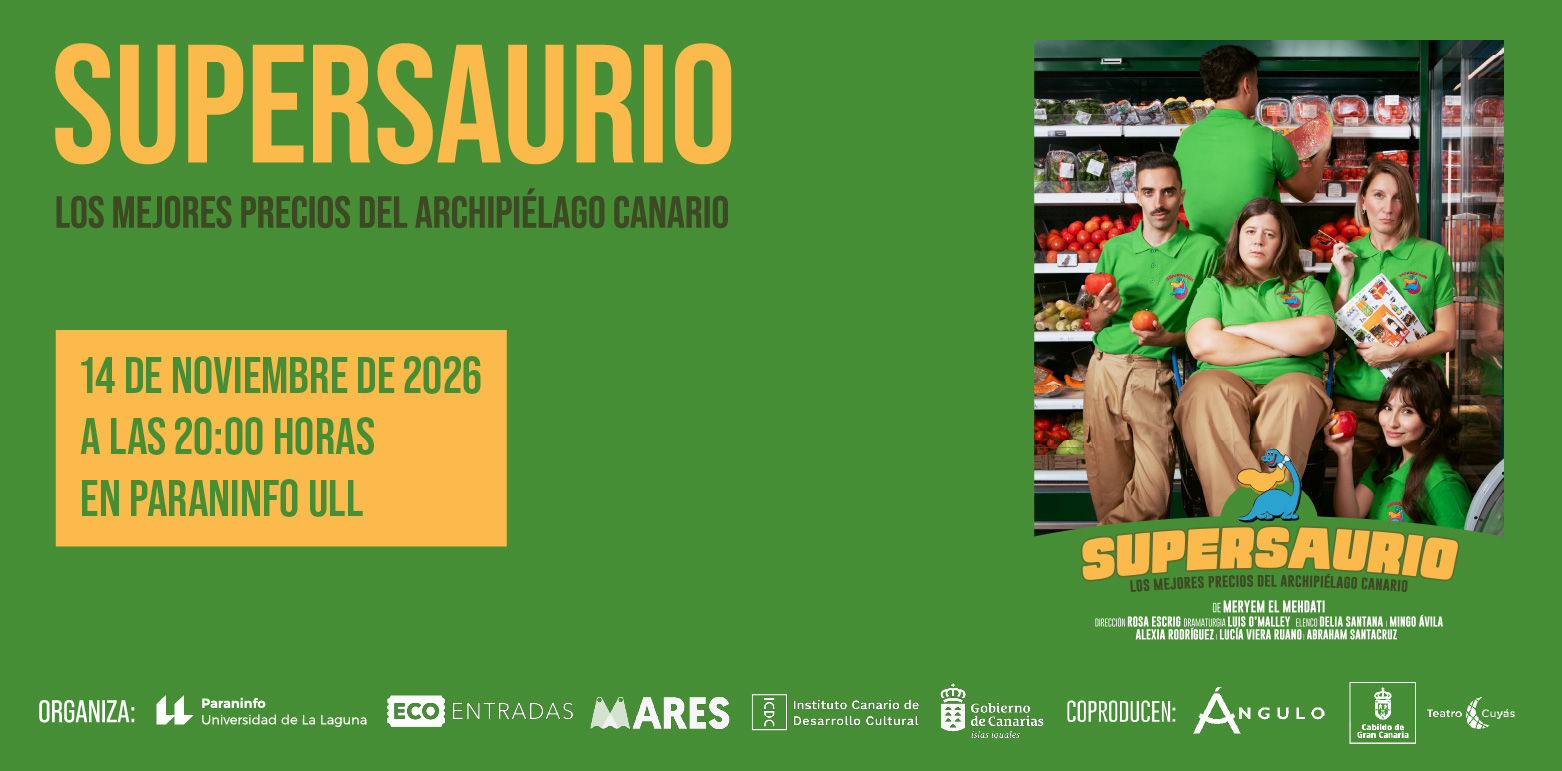
In an archipelago where opportunities seem to pass as slowly as Route 91, Meryem, a 25-year-old, tries to find her place amidst work at Supersaurio, the... |
4 events, |
8 events,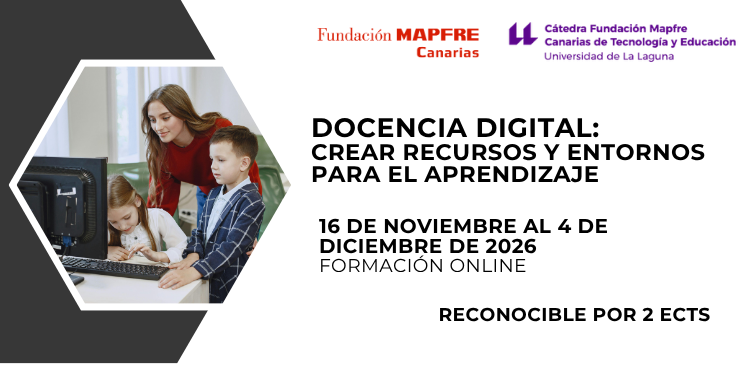
The Mapfre Canarias Foundation Chair of Technology and Education, in collaboration with the EDULLAB Research and Innovation Group (Laboratory of Education and New Technologies of the ULL), is organizing this... 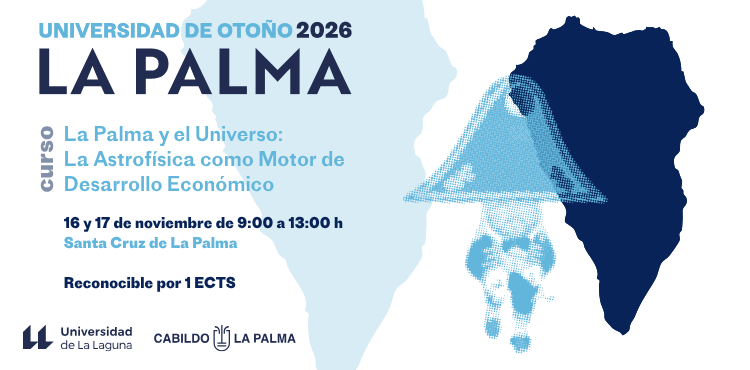
Santa Cruz de La Palma hosts the University Extension course "La Palma and the Universe: Astrophysics as an Engine of Economic Development", which will be held on the 16th and 17th...
-
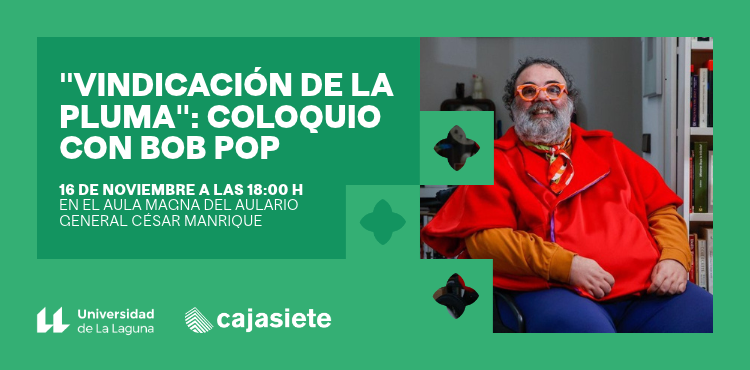
Within the framework of the structural project "Book Days: A Year to Inhabit the Word," the Vice-Rectorate for Culture and University Extension, in collaboration with the Cultural Center...
-

Argentine comedian Fede Cyrulnik, famous on social media, is returning to Spain! This time with his "Spanish Islands" tour, featuring new stand-up comedy and improvisations with live audiences on stages throughout the country... |
6 events,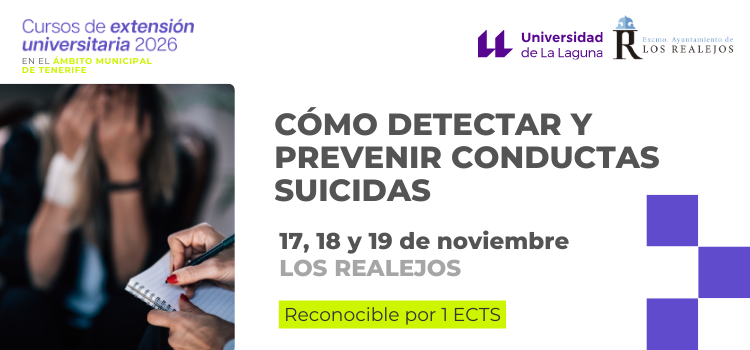
Los Realejos hosts the course "How to detect and prevent suicidal behavior," jointly organized by the Vice-Rectorate for Culture and University Extension and the Los Realejos City Council, within the framework of...
-

The "Historical Press Workshop" is part of the 2026 University Extension Workshops program, "Connect+ Workshops." It will be held in the Geography and History Building on Tuesday... |
6 events,
Between November 18 and 20, 2026, the Spanish University Network for Environmental History (RUEDHA) will hold its 5th Congress at the University of La Laguna. This Fourth... 
Porto will host the 11th World Congress on Childhood and Youth, a unique forum for reflection and dialogue on the challenges and opportunities facing children and young people in...
-
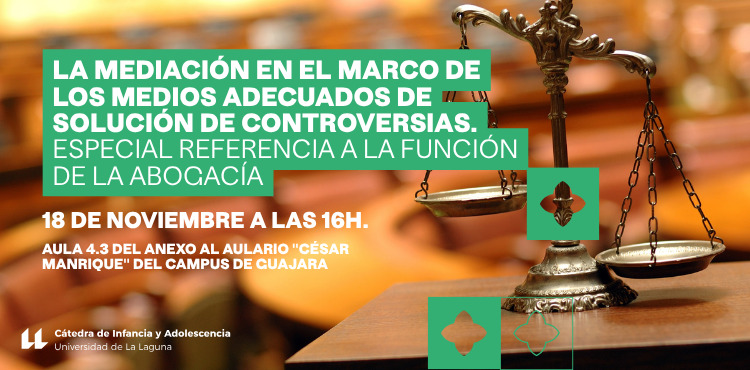
The "Law, Person and Family" Research Group of the University of La Laguna and the Institutional Chair of Childhood and Adolescence of the University of La Laguna are organizing the... |
9 events,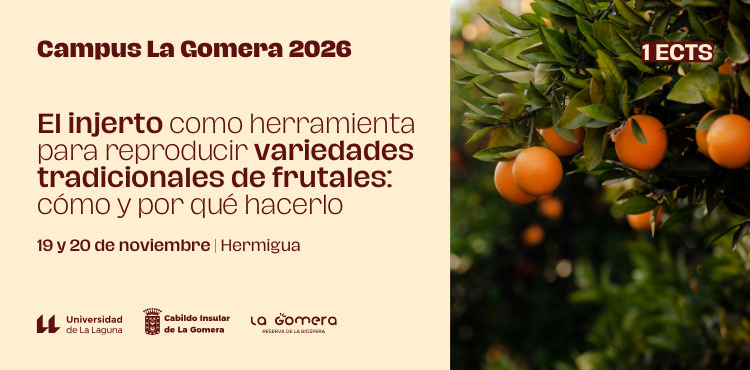
Hermigua hosts the University Extension course "Grafting as a tool to reproduce traditional fruit varieties: how and why to do it", which will be held on the 19th and 20th...
-

As every year, the Philosophy Department of the University of La Laguna will celebrate World Philosophy Day on the third Thursday of November, which will take place on the 19th...
-
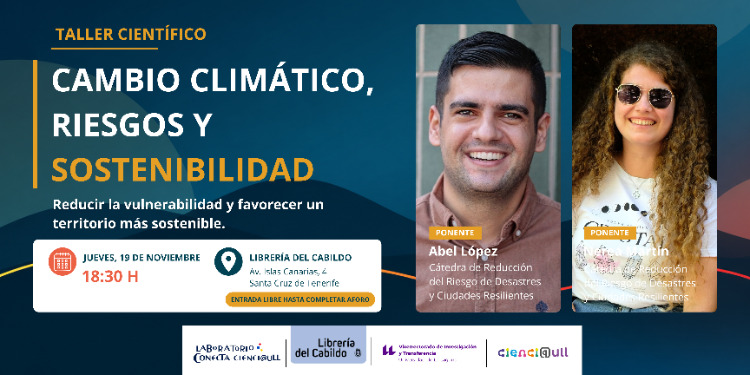
The Tenerife Island Council Bookstore will host a new activity of the Conecta Cienci@ULL Laboratory on Thursday, November 19th, a science outreach program promoted by the Vice-Rectorate for Research...
-

""La Guachafita Rochelera" is a live comedy show that brings together the humor, music, improvisation, and antics of Charly Mata and Rafucho, two great exponents of... |
8 events,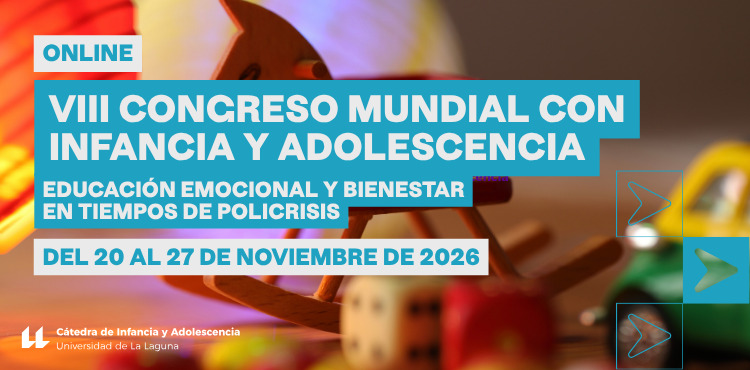
The 8th World Congress on Children and Adolescents, to be held online from November 20-27, 2026, constitutes an international space for meeting, reflection and...
-
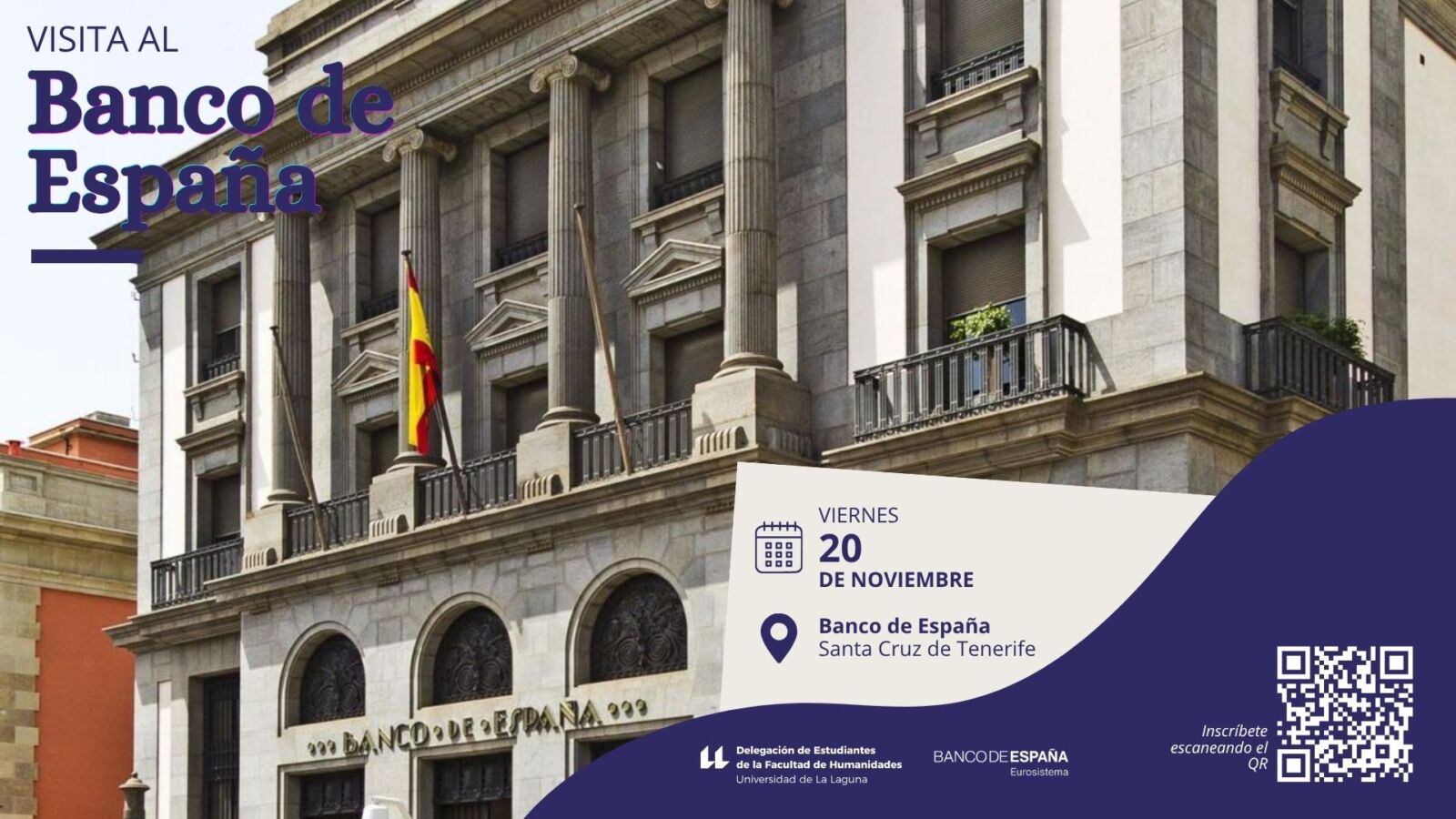
The Student Delegation of the Faculty of Humanities at the University of La Laguna is organizing a cultural visit to the Bank of... on October 20th at 10:00 am.
-
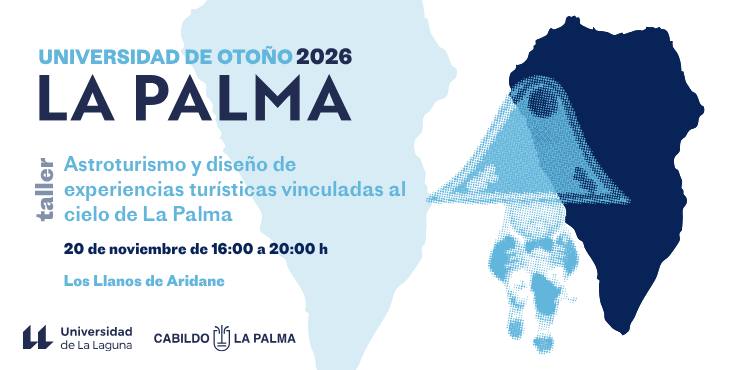
Santa Cruz de La Palma hosts the University Extension workshop "Astrotourism and design of tourist experiences linked to the sky of La Palma", which will be held on November 20th... |
7 events,
-
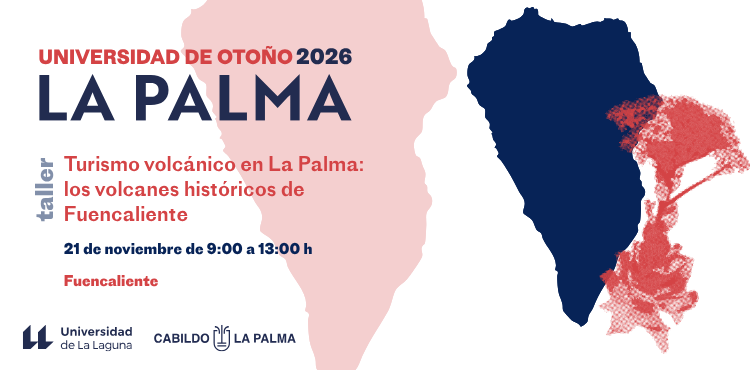
The University Extension workshop "Volcanic Tourism in La Palma: The Historical Volcanoes of Fuencaliente" will be held on November 21, 2026, from 9:00 a.m. to 1:00 p.m. at...
-

Is your mind racing? Are you constantly stressed? Discover how mindfulness meditation can help! Take advantage of the workshop that the Sports Department has scheduled for Saturday, the 21st...
-
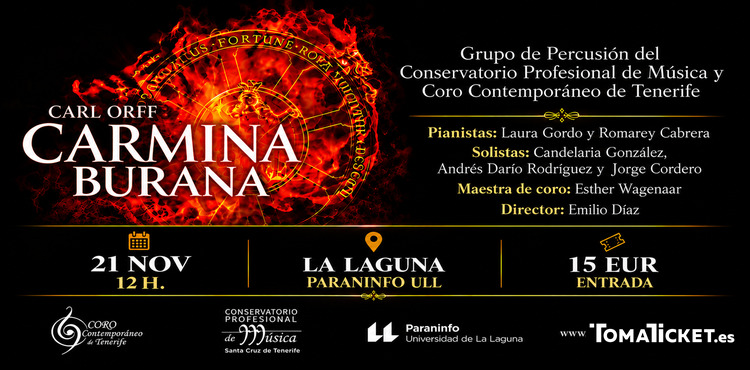
The Paraninfo of the University of La Laguna hosts Carmina Burana, the masterpiece by composer Carl Orff that has marked the history of music, one of the... |
5 events,
-
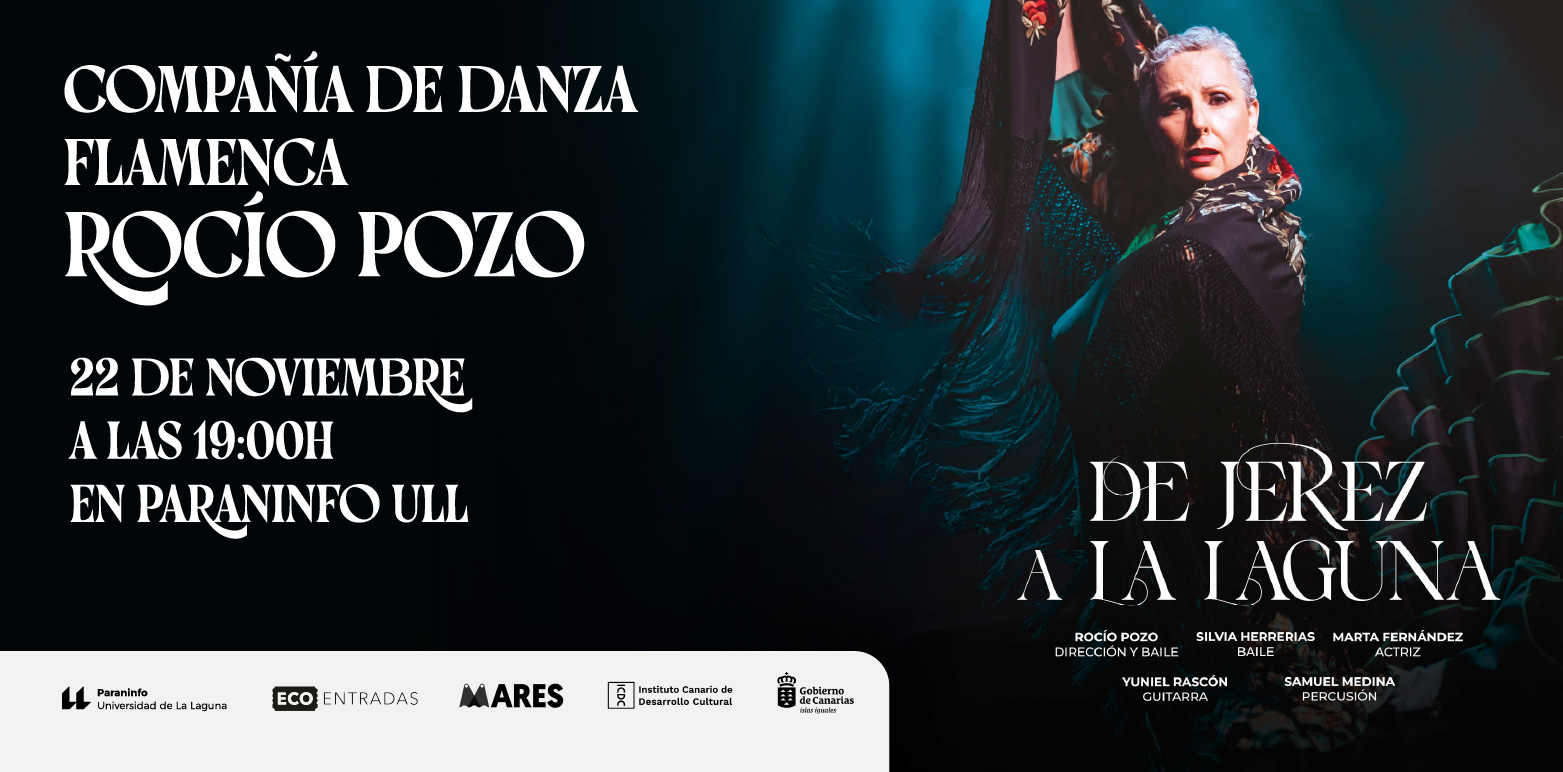
In this proposal, we explore the life and impact of an iconic figure in flamenco and a clear example of female empowerment, alongside other great women of her time.... |
8 events,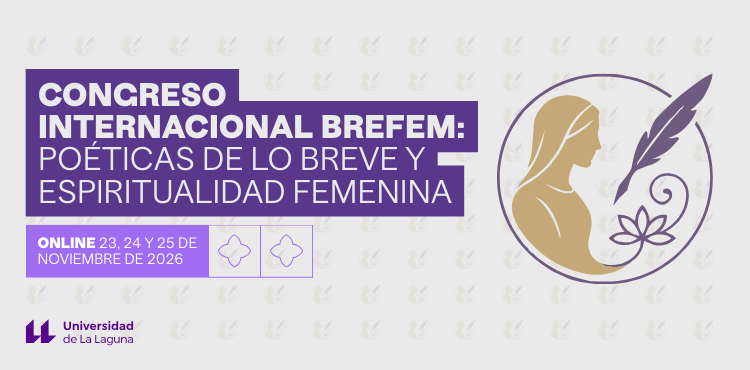
The BREFEM International Congress: Poetics of Brevity and Feminine Spirituality will take place virtually on November 23, 24 and 25, 2026, with the final day coinciding... 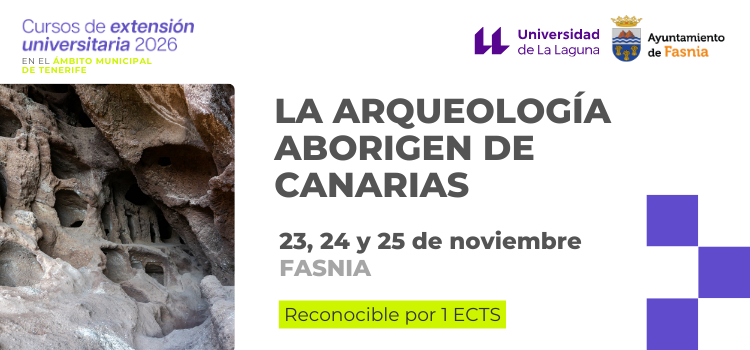
Fasnia hosts the course "The Aboriginal Archaeology of the Canary Islands", organized jointly by the Vice-Rectorate for Culture and University Extension and the Fasnia City Council, within the framework of the Courses program... 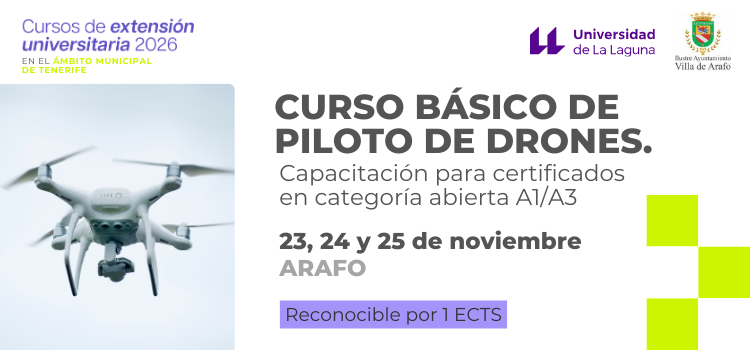
Arafo hosts the course "Basic Drone Pilot Course. Training for open category A1/A3 certificates", jointly organized by the Vice-Rectorate for Culture and University Extension and the Illustrious City Council... 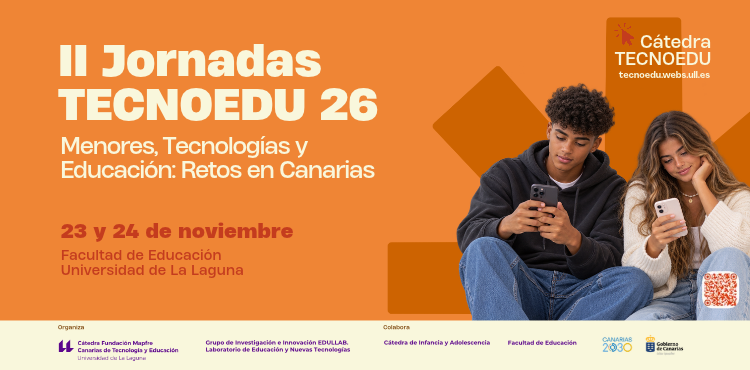
The 2nd TECNOEDU Conference will bring together specialists on November 23rd and 24th to address children's rights, the use of mobile phones in schools, and... |
7 events,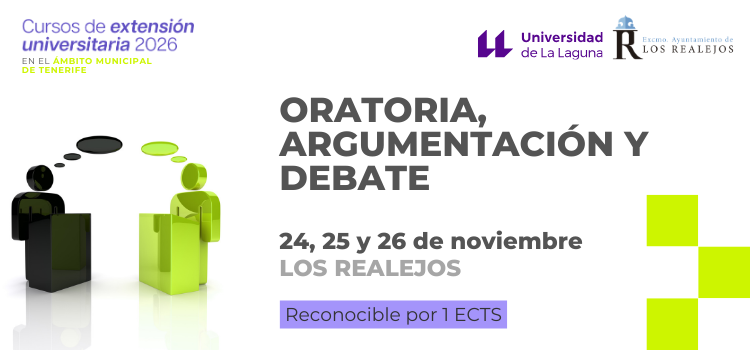
Los Realejos hosts the course "Public Speaking, Argumentation and Debate", jointly organized by the Vice-Rectorate for Culture and University Extension and the Los Realejos City Council, as part of the program of... |
9 events,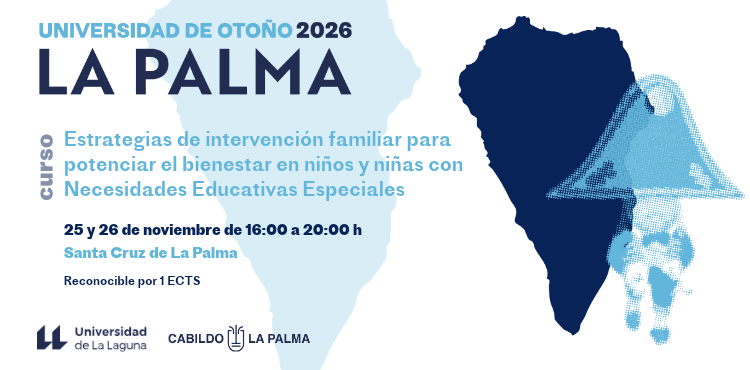
Santa Cruz de La Palma will host the University Extension course "Family Intervention Strategies to Enhance Well-being in Children with Special Educational Needs"... 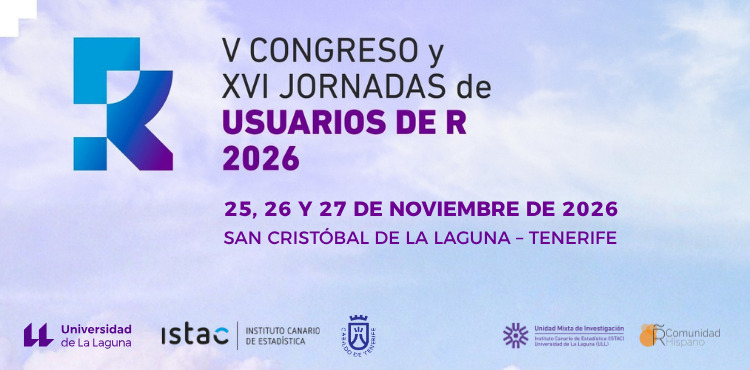
The 5th Congress and 16th R Users' Conference 2026 will bring together the Spanish-speaking community interested in the use of R, a free and open-source software programming language...
-
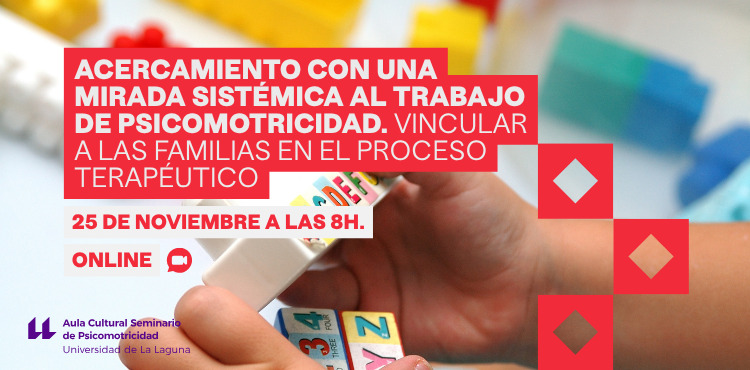
The work of a psychomotor therapist with children cannot be separated from the child's family reality. Involving the family in the therapeutic process entails...
-
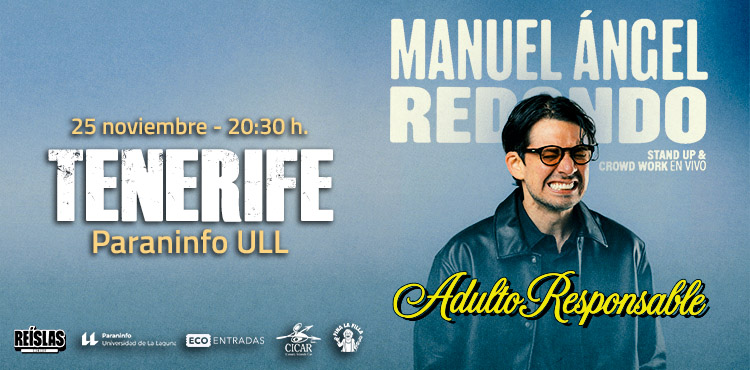
In 'Responsible Adult', Manuel Ángel Redondo presents a brand-new stand-up comedy and crowd work show about the strangest social experiment of all: adulthood. A show about... |
8 events,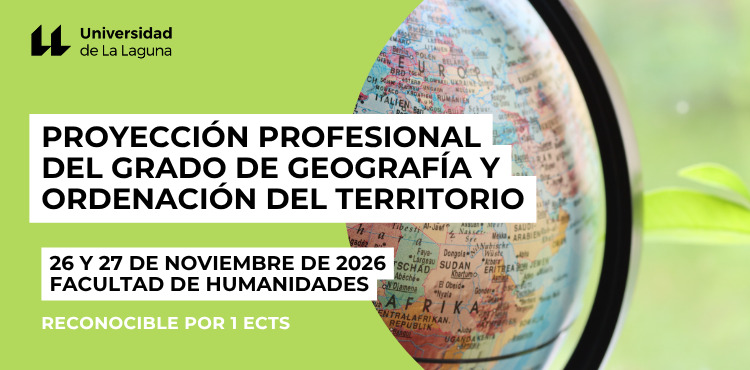
The knowledge acquired in a Geography degree, aimed at understanding the spatial component of the social and natural sciences, has gradually acquired a more focused approach...
-
The meeting aims to be a close-knit, participatory, and collaborative space that will strengthen relationships between the ULL's academic chairs, share experiences, identify synergies, and promote initiatives and...
-
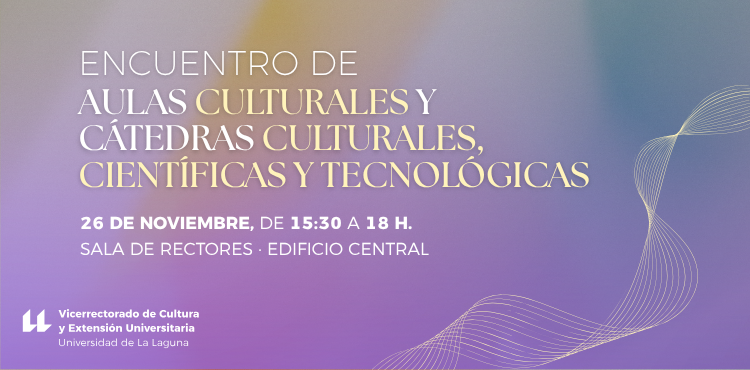
The meeting aims to be a close-knit, participatory, and collaborative space that will strengthen the relationships between the cultural classrooms and the cultural, scientific, and technological chairs of the ULL,... |
6 events,
-

After a long leave of absence, Gabriel, a music teacher, returns to work, doing what makes him happy: teaching. However, he has been assigned a... |
4 events,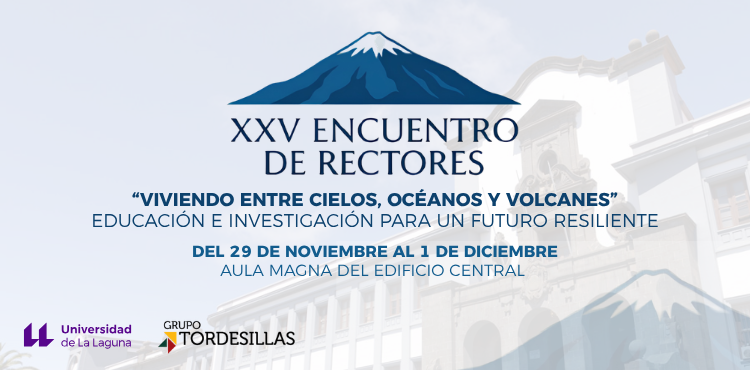
From November 29th to December 1st, the University of La Laguna will host the 25th Rectors' Meeting, entitled this year "Living between skies, oceans and volcanoes. Education...". |
|
5 events,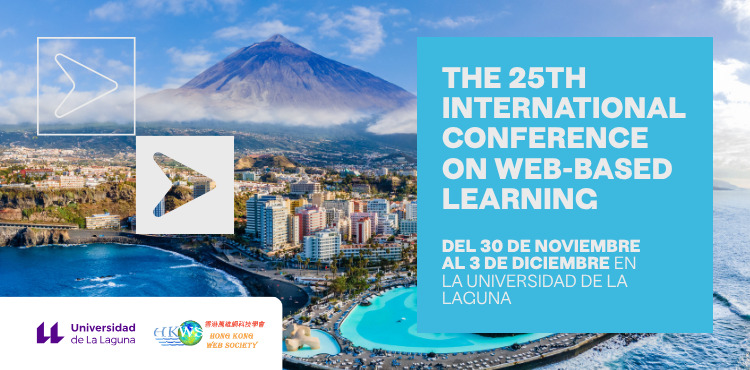
The ICWL is an annual international conference on web-based learning, founded by the Hong Kong Web Society. The first ICWL was held in... |
5 events,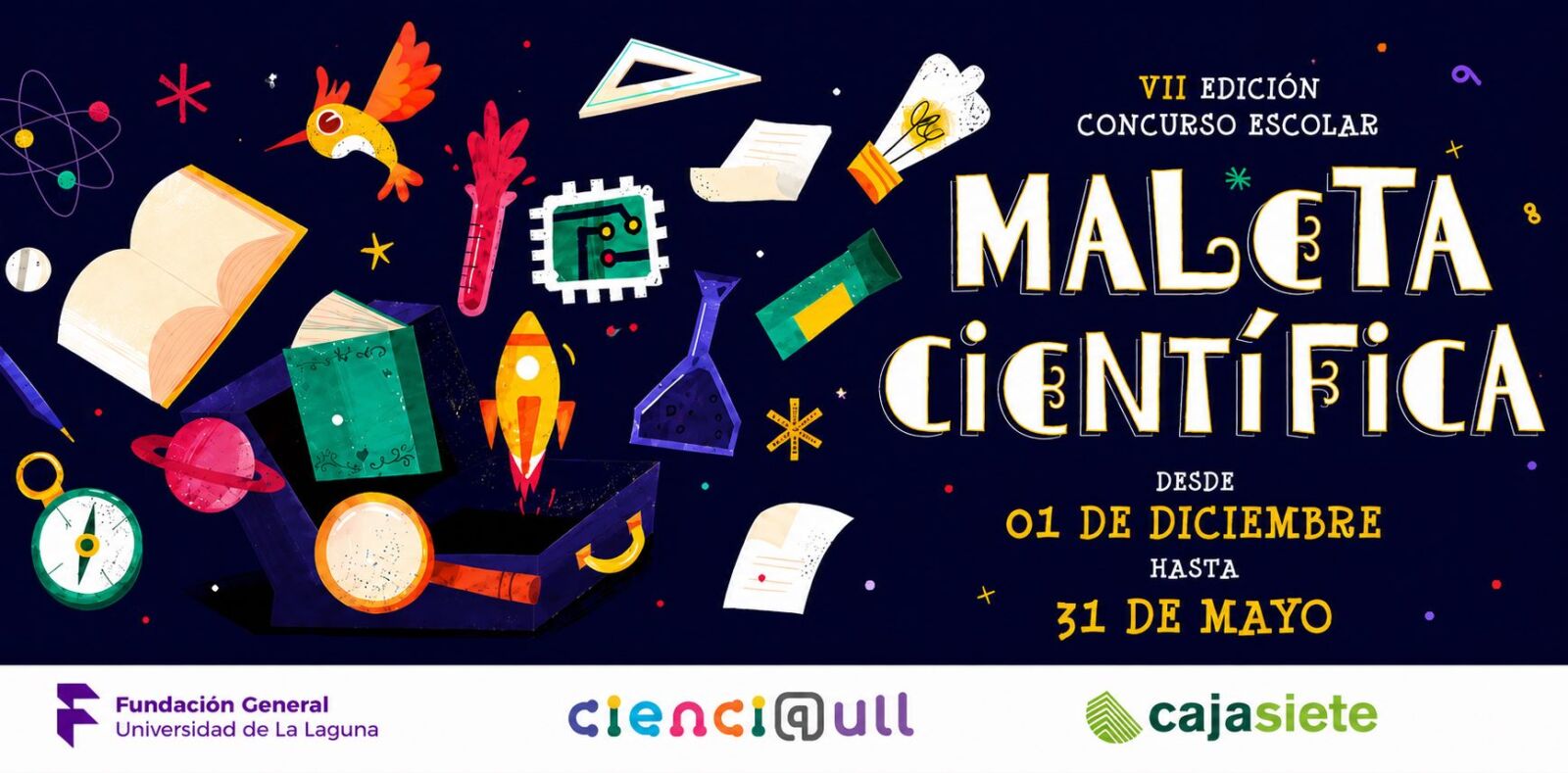
The University of La Laguna, through its Scientific Culture and Innovation Unit (Cienci@ULL), and Cajasiete present the seventh edition of the Scientific Suitcases School Competition... |
4 events, |
7 events,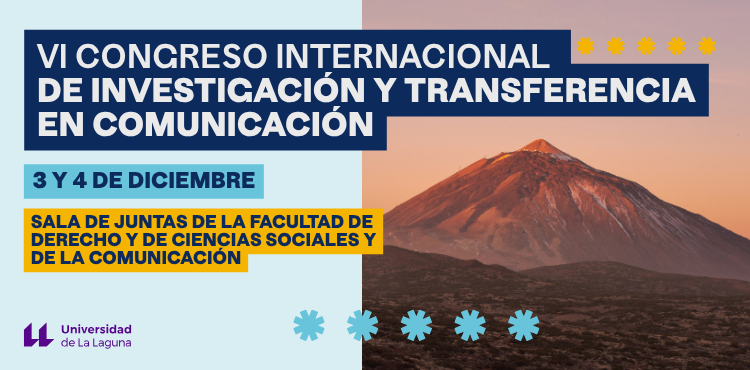
The Faculty of Social Sciences and Communication and the Faculty of Law of the University of La Laguna will host, on December 3 and 4, 2026,...
The Faculty of Social Sciences and Communication and the Faculty of Law of the University of La Laguna will host, on December 3 and 4, 2026,...
-
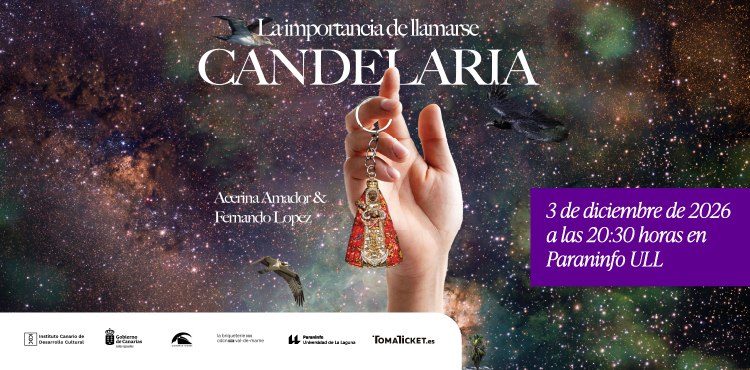
''The Importance of Being Named Candelaria' explores the various facets of the cult of the Virgin of Candelaria to investigate evangelization as a cultural instrument supporting colonization and... |
5 events, |
4 events,
-
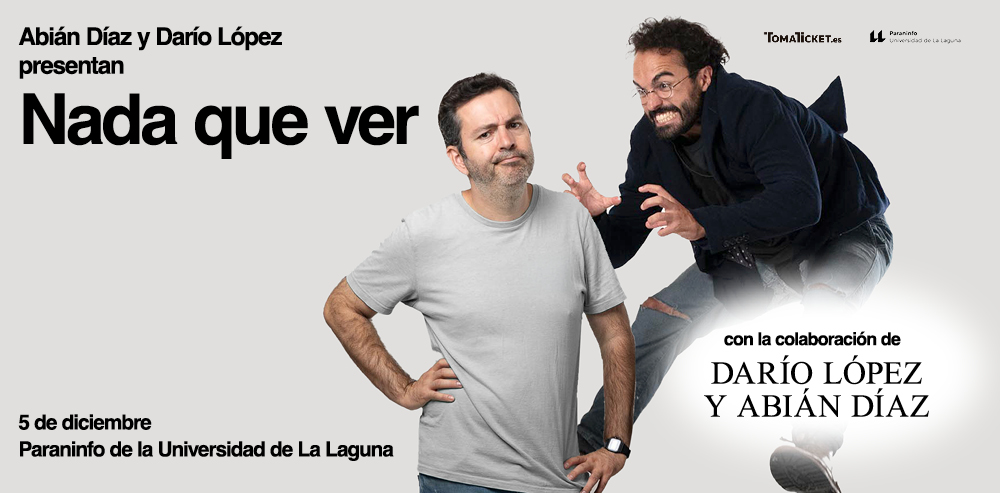
Hello, I'm Abián Díaz. Apparently, Darío López insists that I shouldn't be in charge of the synopsis. And this lack of confidence hurts. I'm convinced I have the ability... |
4 events,
-
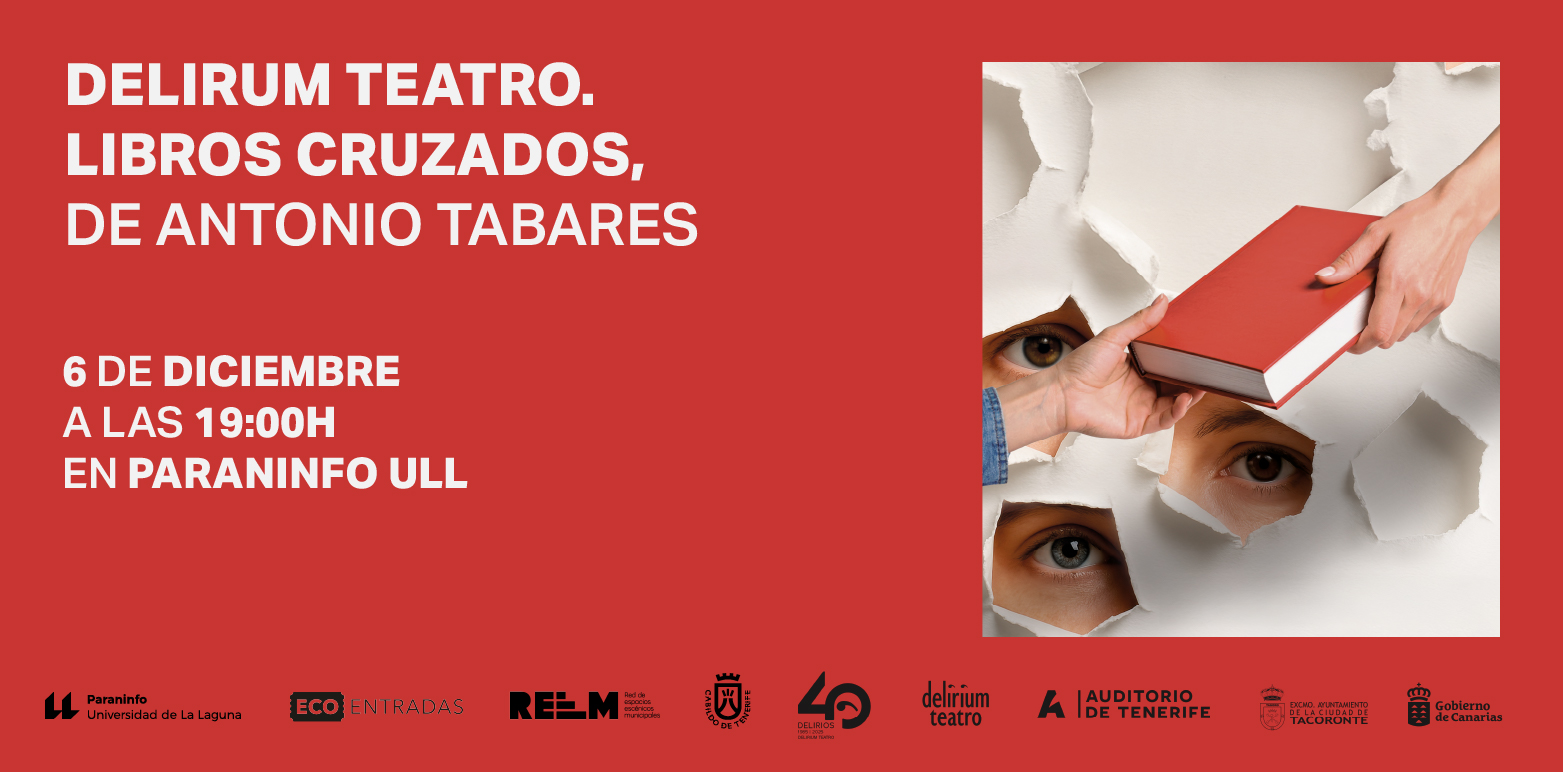
A book that keeps changing hands: 'Anna Karenina'. Three women rethink their lives after reading it. Mariana, a museum guard, recognizes herself... |
Government Pavilion, C/ Padre Herrera s/n
P.O. Box 456
38200, San Cristóbal de La Laguna
Santa Cruz de Tenerife - Spain
Switchboard Tel.: (+34) 922 31 90 00
Hours: Mon-Fri, 8:00 a.m. to 9:00 p.m.
